Banner
Synchrotron Could Shed Light On Exotic Dark Photons

There are many hypothetical particles proposed to explain dark matter and one idea to explore how...

The Pain Scale Is Broken But This May Fix It

Chronic pain is reported by over 20 percent of the global population but there is no scientific...
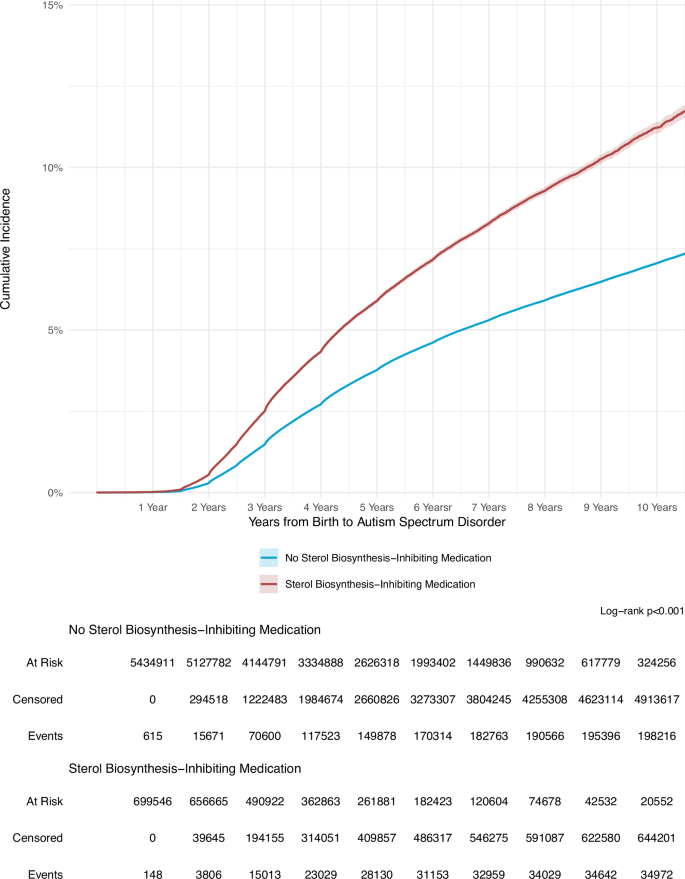
Study Links Antidepressants, Beta-blockers and Statins To Increased Autism Risk

An analysis of 6.14 million maternal-child health records  has linked prescription medications...

Pilot Study: Fibromyalgia Fatigue Improved By TENS Therapy

Fibromyalgia is the term for a poorly-understood condition where people experience pain and fatigue...

User picture.
News StaffRSS Feed of this column.

News Releases From All Over The World, Right To You... Read More »

Blogroll

Your next wireless network could use light instead of radio waves. Researchers funded by a National Science Foundation grant expect to piggyback data communications capabilities on low-power light emitting diodes, or LEDs, to create "Smart Lighting" that would be faster and more secure than current network technology.

This initiative, known as the Smart Lighting Engineering Research Center (http://smartlighting.bu.edu), is part of an $18.5 million, multi-year NSF program awarded to Boston University, Rensselaer Polytechnic Institute and the University of New Mexico to develop the optical communication technology that would make an LED light the equivalent of a WiFi access point. This innovative alternative may one day replace most of today's lighting devices.

When astronauts land on the Moon again they may be able to get a critical commodity there – water.

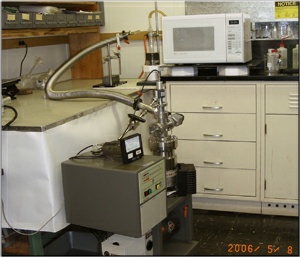
Bill Kaukler, an Associate Research Professor in the Center for Materials Research at The University of Alabama in Huntsville, has spent the past three years investigating the use of microwaves to replenish water on space missions or as a rocket fuel supply.

“A lot of people think that water doesn’t exist on the Moon,” said Kaukler. “It’s true that not all parts of the Moon have water. Where the Apollo missions landed, there isn’t much water because it is exposed to the sun half of the time. However, in the polar regions, exploratory satellites have found huge amounts of hydrogen, which is evidence that water exists.”

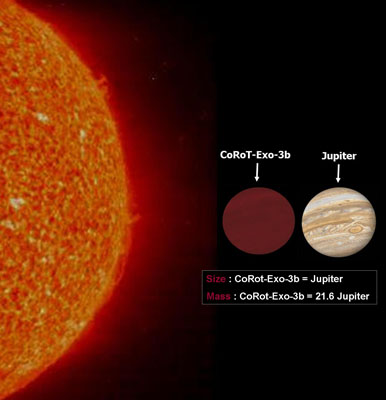
COROT has discovered a massive planet-sized object orbiting its parent star closely, unlike anything ever spotted before. It is so exotic, that scientists are unsure as to whether this oddity is actually a planet or a failed star.

The object, named COROT-exo-3b, is about the size of Jupiter, but packs more than 20 times the mass. It takes only 4 days and 6 hours to orbit its parent star, which is slightly larger than the Sun.

As a planet, COROT-exo-3b would be the most massive and the densest found to date - more than twice as dense as lead. Studying it will help them better understand how to categorise such objects. The mystery is how such a massive object formed so close to its parent.

New research suggests that the identification and examination of key cell signaling events required for initiation and progression of cancer might be best accomplished at the single cell level. The research in Cancer Cell may lead to better diagnosis and treatment of some complex cancers.

Recent advances in flow cytometry, a technique that allows detailed examination of individual cells, have enabled simultaneous measurement of cell type and signaling pathways. Lead study authors Dr. Garry P. Nolan from the Stanford University School of Medicine and Dr. Mignon L. Loh from the UCSF Children's Hospital and the Helen Diller Family Comprehensive Cancer Center were interested in determining whether examination of cellular signaling abnormalities caused by genetic mutations associated with cancer could provide a precise correlation between aberrant signaling events and disease physiology.

A gene contained in laboratory yeast has helped an international team of researchers uncover new findings about the process by which protein molecules bind to control sequences in genes in order to initiate gene expression, says a new study.

Previously thought to be inert carriers of the genetic instructions from DNA, so-called non-coding RNAs turn out to reveal a novel mechanism for creating access to DNA required by transcriptional activation proteins for successful gene expression, according to Boston College Biology Professor Charles Hoffman, a co-author of the study in Nature with researchers from two Japanese universities.

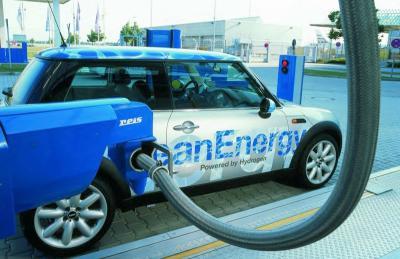
Researchers in Greece report design of a new material that almost meets the U.S. Department of Energy (DOE) 2010 goals for hydrogen storage and could help eliminate a key roadblock to practical hydrogen-powered vehicles. Their study on a way of safely storing hydrogen, an explosive gas, is scheduled for the Oct. 8 issue of ACS' Nano Letters.

Georgios K. Dimitrakakis, Emmanuel Tylianakis, and George E. Froudakis note that researchers long have sought ways of using carbon nanotubes (CNTs) to store hydrogen in fuel cell vehicles. CNTs are minute cylinders of carbon about 50,000 times thinner than the width of a human hair. Scientists hope to use CNTs as miniature storage tanks for hydrogen in the coming generation of fuel cell vehicles.