Banner
Pilot Study: Fibromyalgia Fatigue Improved By TENS Therapy

Fibromyalgia is the term for a poorly-understood condition where people experience pain and fatigue...

High Meat Consumption Linked To Lower Dementia Risk

Older people who eat large amounts of meat have a lower risk of dementia and cognitive decline...

Long Before The Inca Colonized Peru, Natives Had A Thriving Trade Network

A new DNA analysis reveals that long before the Incan Empire took over Peru, animals were...

Mesolithic People Had Meals With More Tradition Than You Thought

The common imagery of prehistoric people is either rooting through dirt for grubs and picking berries...

User picture.
News StaffRSS Feed of this column.

News Releases From All Over The World, Right To You... Read More »

Blogroll

Nagoya, Japan - During cultivation of wild cereals such as rice for human agricultural use, a number of domestication-related traits have been selected for over time. These include an upright growth habit, the ability of the plant to keep its seed when ripe rather than dispersing it, and a lack of awns, which are bristles that grow from grass ears. Both Asian and African cultivated rice species share these traits despite their geographical isolation from each other. This suggests the traits' usefulness in promoting agriculture. Indeed, awnlessness aids planting, harvesting, and storage of seeds. It was recently shown that awn development has been lost through human selection on sets of genes that differ between Asian and African rice.

The upconversion of photons allows for a more efficient use of light: Two photons are converted into a single photon having higher energy. Researchers at KIT now showed for the first time that the inner interfaces between surface-mounted metal-organic frameworks (SURMOFs) are suited perfectly for this purpose - they turned green light blue. The result, which is now being published in the Advanced Materials journal, opens up new opportunities for optoelectronic applications such as solar cells or LEDs. (DOI: 10.1002/adma.201601718)

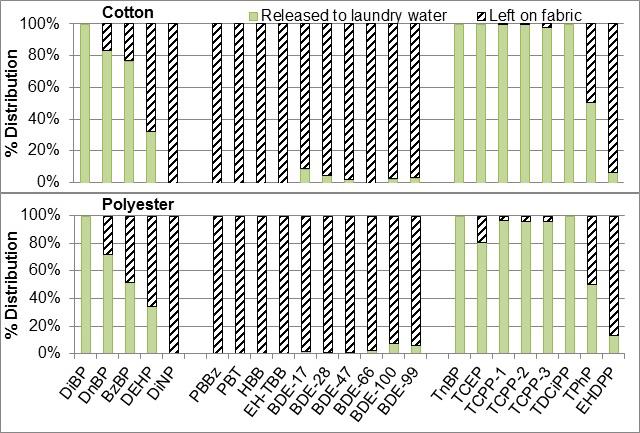
In recent years, litigation attorneys and environmental epidemiologists have attempted to link flame retardants, which were put in furniture and electronics to prevent immolation by national mandate, to health problems. Studies have shown that the substances, or their constituents, can leach out of products, and end up in indoor dust,  over time. In a world where we can now detect parts per quadrillion, they can also be found in us.

A new paper in Environmental Science&Technology discusses how flame retardants in our homes could also be ending up in surface water, via our laundry.

Heavy users of partisan media outlets are more likely than others to hold political misperceptions that are in defiance of facts. So if you think Republicans blocked Zika funding by withholding money for Planned Parenthood, or that Hillary Clinton is having DNC staffers whacked, it is a good indication you partake in fringe media sites.

Tumor shrinkage is not the only measure of a successful anti-cancer therapy. A University of Colorado Cancer Center article published in the journal Frontiers in Oncology describes a promising alternative: metabolic imaging. Tumors rush their metabolism to grow and proliferate. By recognizing a drug's ability to stop this energy overuse, doctors may be able to determine a patient's response to a new, targeted therapy far earlier and with far more precision than watching and waiting for a tumor to shrink.

New, highly curative hepatitis C therapy is both safe and effective as a treatment option for people who inject drugs,  the major population affected by the virus, according to a paper in the Annals of Internal Medicine.