Banner
Pilot Study: Fibromyalgia Fatigue Improved By TENS Therapy

Fibromyalgia is the term for a poorly-understood condition where people experience pain and fatigue...

High Meat Consumption Linked To Lower Dementia Risk

Older people who eat large amounts of meat have a lower risk of dementia and cognitive decline...

Long Before The Inca Colonized Peru, Natives Had A Thriving Trade Network

A new DNA analysis reveals that long before the Incan Empire took over Peru, animals were...

Mesolithic People Had Meals With More Tradition Than You Thought

The common imagery of prehistoric people is either rooting through dirt for grubs and picking berries...

User picture.
News StaffRSS Feed of this column.

News Releases From All Over The World, Right To You... Read More »

Blogroll

A virus that has been specifically designed by scientists to be safe to normal tissue but deadly to cancer is showing early promise in a preliminary study, researchers said today at the ESMO Conference Lugano (ECLU), Switzerland, 5-8 July 2007.

The virus, called NV1020, is a type of herpes simplex virus modified so that it selectively replicates in virus cells, killing them in the process.

In some regions of Central Europe, salad dressing is made with pumpkin seed oil, which has a strong characteristic nutty flavor and striking color properties - in the bottle it appears red, but it looks green in a salad dressing.

Samo and Marko Kreft's paper examines the remarkable two-tone (or dichromatic) color of pumpkin seed oil, by the use of a combination of imaging and CIE (International Commission on Illumination) chromaticity coordinates. The paper also explains why human vision perceives substances like pumpkin seed oil as dichromatic or polychromatic (exhibiting a variety of colors).

Two phenomena explain the perceived shift in color of pumpkin seed oil from red to green:

First, the change in color is due to a change in oil layer thickness.

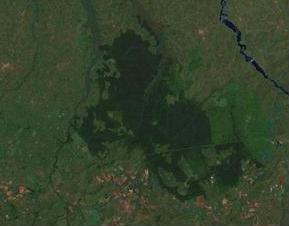
The Ugandan government wants to change the law to allow Mabira Forest Reserve, the 30,000 hectare rainforest in Uganda which has been protected since 1932, to be carved up and a quarter of it used for sugar cane production by huge firms, notably the Mehta Group, which has close ties to politicians within and outside the country.

The forest is home to nearly one third of Uganda's bird life.

A world leader in medical implants calls for a rethink in our approach to building medical implants.

Currently so-called biomaterials are chosen because they are reasonably successful at hiding from the body’s immune system, and are consequently not rejected. All the same, within a month of implanting them, the body isolates implants by wrapping them in a collagenous, avascular sac. Materials are considered to be ‘biocompatible’ if this sac is not too thick.

Salk Institute neurobiologists are beginning to tease apart the complex brain networks that enable humans and other higher mammals to fix our gaze on one object while independently directing attention to others - that pesky method mom used to always know you were doing something wrong when her back was turned.

In a study published in the July 5, 2007 issue of Neuron, the researchers report two classes of brain cells with distinct roles in visual attention, and highlight at least two mechanisms by which these cells mediate attention.

Mention "outsourcing" and people tend to think of fields like manufacturing or telemarketing; theoretical physics isn't even on the list.

Yet the scientists who develop theoretical predictions for high-energy particle physics experiments say "outsourcing" in their field has allowed the U.S. to lag behind in this area of high-profile, global science.

"This is the wrong kind of outsourcing," says Ulrich Baur, Ph.D., professor of physics in the University at Buffalo College of Arts and Sciences and a co-founder of the Large Hadron Collider-Theory Initiative.