Banner
Pilot Study: Fibromyalgia Fatigue Improved By TENS Therapy

Fibromyalgia is the term for a poorly-understood condition where people experience pain and fatigue...

High Meat Consumption Linked To Lower Dementia Risk

Older people who eat large amounts of meat have a lower risk of dementia and cognitive decline...

Long Before The Inca Colonized Peru, Natives Had A Thriving Trade Network

A new DNA analysis reveals that long before the Incan Empire took over Peru, animals were...

Mesolithic People Had Meals With More Tradition Than You Thought

The common imagery of prehistoric people is either rooting through dirt for grubs and picking berries...

User picture.
News StaffRSS Feed of this column.

News Releases From All Over The World, Right To You... Read More »

Blogroll

An electrical circuit that should carry enough power to produce the long-sought goal of controlled high-yield nuclear fusion and, equally important, do it every 10 seconds, has undergone extensive preliminary experiments and computer simulations at Sandia National Laboratories' Z machine facility.

Z, when it fires, is already the largest producer of X-rays on Earth and has been used to produce fusion neutrons. But rapid bursts are necessary for future generating plants to produce electrical power from sea water.

Consumers may claim they don't like diet soda because of the taste of artificial sweeteners, but Shelly Schmidt, a University of Illinois professor of food chemistry, thinks people are also influenced by a subtle difference called "mouth-feel." Think body, fullness, thickness; regular soda contains high-fructose corn syrup, diet soda doesn't.

What makes these scientists think mouth-feel is the culprit? For one thing, artificial sweeteners have been greatly improved and extensively studied. "Taste profiles for artificial sweeteners now closely match the one for sucrose, which humans describe as the perfect sweetness," Lee said.

Think you can come up with the best playlist for astronauts in the International Space Station? ESA wants to hear from you.

Everyone has a list of favorite tunes but what if you were suddenly transported 400 km above the Earth? What music would you take with you for entertainment as you floated around the world 16 times a day?

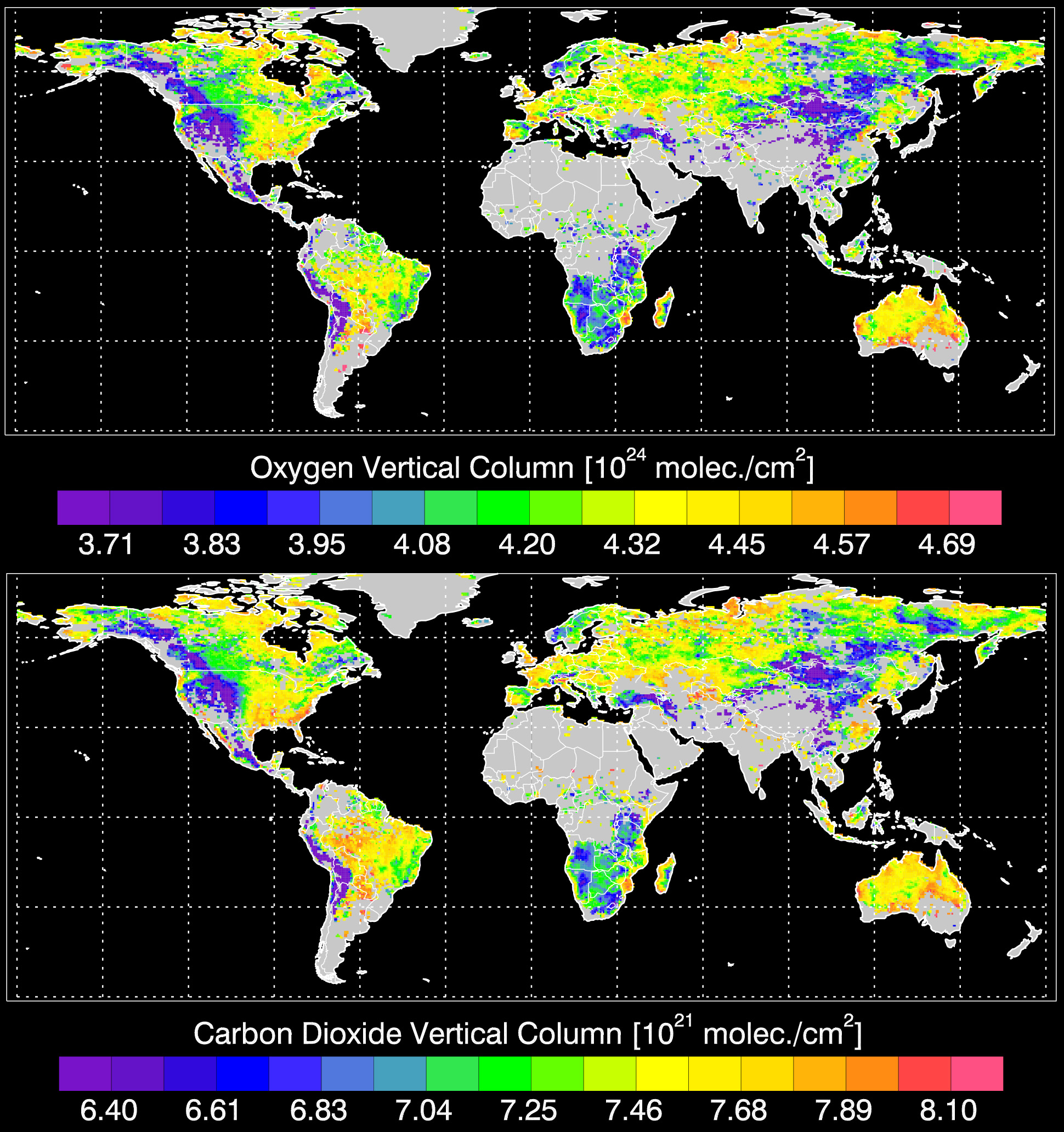
The total number of carbon atoms on Earth is fixed – they are exchanged between the ocean, atmosphere, land and biosphere. The fact that human activities are pumping extra carbon dioxide into the atmosphere, by fossil fuel burning and deforestation, is well known.

Because of this, atmospheric carbon dioxide concentrations are higher today than they have been over the last half-million years or so. Scientists are now using satellite instruments to locate sinks and sources of CO2 in the ocean and land. Across land and sea, our world's plant life uses the process called photosynthesis to convert incoming sunlight into chemical energy. Plants accumulate carbon dioxide during photosynthesis and store it in their tissues, making them carbon sinks.

That's right, you can roll your own robot. But why are you reading about it? Go to the TeRK web site and start building . The Qwerk controller is available for sale from Charmed Labs.

These are sophisticated machines that wirelessly connect to the Internet but anyone can build them from off-the-shelf parts.

Cell membranes are like two-dimensional fluids whose molecules are distributed evenly through lateral diffusion but many important cellular processes depend on cortical polarity, the locally elevated concentration of specific membrane proteins.

Roland Wedlich-Soldner at the Max Planck Institute of Biochemistry in Martinsried, Germany, and his colleagues at Harvard Medical School, Boston, The Stowers Institute for Medical Research, Kansas City, and the University of Texas Southwestern Medical Center, Dallas, have analysed and quantified how cortical polarity develops and how an asymmetric distribution of molecules can be dynamically maintained.