Banner
Pilot Study: Fibromyalgia Fatigue Improved By TENS Therapy

Fibromyalgia is the term for a poorly-understood condition where people experience pain and fatigue...

High Meat Consumption Linked To Lower Dementia Risk

Older people who eat large amounts of meat have a lower risk of dementia and cognitive decline...

Long Before The Inca Colonized Peru, Natives Had A Thriving Trade Network

A new DNA analysis reveals that long before the Incan Empire took over Peru, animals were...

Mesolithic People Had Meals With More Tradition Than You Thought

The common imagery of prehistoric people is either rooting through dirt for grubs and picking berries...

User picture.
News StaffRSS Feed of this column.

News Releases From All Over The World, Right To You... Read More »

Blogroll

Gene therapy - the idea of using genetic instructions rather than drugs to treat disease - has tickled scientists' imaginations for decades, but is not yet a viable therapeutic method. One sizeable hurdle is getting the right genes into the right place at the right time.

Engineers at the University of Wisconsin-Madison are now developing a tool to tackle this problem.

David M. Lynn and his colleagues have created ultrathin, nanoscale films composed of DNA and water-soluble polymers that allow controlled release of DNA from surfaces. When used to coat implantable medical devices, the films offer a novel way to route useful genes to exactly where they could do the most good.

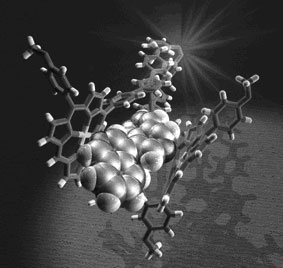
Researchers in Japan have developed a pair of molecular-scale scissors that open and close in response to light. The tiny scissors are the first example of a molecular machine capable of mechanically manipulating molecules by using light, the scientists say.

The scissors measure just three nanometers in length, small enough to deliver drugs into cells or manipulate genes and other biological molecules, says principal investigator Takuzo Aida, Ph.D., professor of chemistry and biotechnology at the University of Tokyo.


The scissors-like molecular machine extends or folds in response to different wavelengths of light. Credit: University of Tokyo.

The medication tilarginine, a drug that was believed could be beneficial for patients who develop cardiogenic shock (low blood pressure due to impaired cardiac function) after a heart attack, did not reduce the risk of death up to six months after a heart attack, according to a JAMA study published online March 26. The study is being released early to coincide with its presentation at the American College of Cardiology's annual conference.

High concentrations of nitrogen dioxide gas — inhaled for even very brief periods following fires, explosions of military munitions or detonations of terrorist devices — could cause serious lung damage, scientists reported today at the 233rd national meeting of the American Chemical Society.

Dr. Zengfa Gu, M.D., Ph.D., and colleagues at the Walter Reed Army Institute of Research, Silver Spring, Md., reached that conclusion based on experiments with laboratory rats that were exposed to the toxic gas. Gu explained that previous research showed that chronic exposure to low and moderate levels of nitrogen dioxide could damage the lungs. However, there was no clear information on the health risks of brief, high-level exposures lasting only a few minutes.

Researchers at the U.S. Department of Energy’s Ames Laboratory are employing some modern day alchemy in an effort to find a material with properties of rare and high-priced palladium. If they’re successful, it could remove a major roadblock from the path of hydrogen fuel-cell powered vehicles.

Hydrogen fuel-cell technology sounds almost too good to be true. You combine cheap and plentiful hydrogen and oxygen gas, the fuel cell generates electricity and the by-product is simply water. But it’s a little more involved.

The size, type, and dispersion of nanomaterials could all play a role in how these materials impact human health and the environment, according to two groups of researchers at Rensselaer Polytechnic Institute. In new studies, the teams found that while carbon nanotubes inhibited growth in mammalian cells, they sustained the growth of commonly occurring bacteria.

The seemingly contradictory findings highlight the need for society to better grasp the impacts these infinitesimally small particles could have when released into the environment or the human body, the researchers said.