Banner
Pilot Study: Fibromyalgia Fatigue Improved By TENS Therapy

Fibromyalgia is the term for a poorly-understood condition where people experience pain and fatigue...

High Meat Consumption Linked To Lower Dementia Risk

Older people who eat large amounts of meat have a lower risk of dementia and cognitive decline...

Long Before The Inca Colonized Peru, Natives Had A Thriving Trade Network

A new DNA analysis reveals that long before the Incan Empire took over Peru, animals were...

Mesolithic People Had Meals With More Tradition Than You Thought

The common imagery of prehistoric people is either rooting through dirt for grubs and picking berries...

User picture.
News StaffRSS Feed of this column.

News Releases From All Over The World, Right To You... Read More »

Blogroll

A recent study has shown that emissions in major cities caused by restaurants such as pizzerias and steakhouses using wood burners can be damaging to the urban environment.

The findings published in the journal Atmospheric Environment points out the underlining pollution causes of the Latin American city of Sao Paulo in Brazil. This work is a collaborative effort by ten leading air pollution experts from seven universities, led by the University of Surrey's Dr Prashant Kumar from the Department of Civil and Environmental Engineering, under the umbrella of University Global Partnership Network (UGPN).

Warsaw, Poland, 17 June 2016 - A new study from the UK Centre for Substance Use Research, being presented today at the Global Forum on Nicotine, shows e-cigarettes are playing an important role in reducing the likelihood of young people smoking, in many cases acting as a 'roadblock' to combustible tobacco.

In detailed qualitative interviews with young people aged 16 to 25 across Scotland and England, the majority of participants viewed e-cigarettes as having reduced - not increased - the possibility of both themselves and other people smoking.

Diminishing a person's belief in free will leads to them feeling less like their true selves, according to recent research published in Social Psychological and Personality Science. In a pair of studies, researchers from Texas A&M University manipulated people's beliefs in free will to see how this would affect the subjects' sense of authenticity, their sense of self.

"Whether you agree that we have free will or that we are overpowered by social influence or other forms of determinism, the belief in free will has truly important consequences," says lead author Elizabeth Seto, a Graduate Student at the Department of Psychology at Texas A&M University.

An effective and less expensive tool for the inspection of food and drugs could soon be a reality. Scientists from the Fritz Haber Institute of the Max Planck Society in Berlin have been working with national and international partners to develop a conceptually new source of terahertz radiation. The innovation makes it much easier to generate this radiation, which is well suited to the analysis of soft materials and could therefore be more widely used in the food and pharmaceutical industry in future.

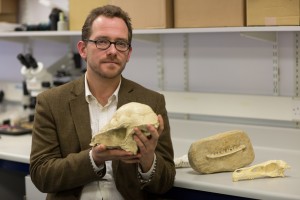
A new paper in the Journal of Evolutionary Biology reviewed all mammal species known from the end of the Cretaceous period in North America and found that over 93 percent became extinct across the Cretaceous-Paleogene (K-Pg) boundary, due to the same asteroid that killed the dinosaurs in the Cretaceous period 66 million years ago.

That's significantly more than previously thought - but mammals also recovered far more quickly than previously though.  

Celiac disease is a rare immune-based condition brought on by the consumption of gluten in genetically susceptible patients. In recent years a larger number of people have stated they are gluten sensitive or even celiac despite lack of a diagnosis, and many dismissed that as the nocebo effect - people who give up something harmless and feel better, the opposite of people who take something harmless and feel better, a placebo. They argued that people who were embracing it because of pop culture books on wheat.