Banner
Pilot Study: Fibromyalgia Fatigue Improved By TENS Therapy

Fibromyalgia is the term for a poorly-understood condition where people experience pain and fatigue...

High Meat Consumption Linked To Lower Dementia Risk

Older people who eat large amounts of meat have a lower risk of dementia and cognitive decline...

Long Before The Inca Colonized Peru, Natives Had A Thriving Trade Network

A new DNA analysis reveals that long before the Incan Empire took over Peru, animals were...

Mesolithic People Had Meals With More Tradition Than You Thought

The common imagery of prehistoric people is either rooting through dirt for grubs and picking berries...

User picture.
News StaffRSS Feed of this column.

News Releases From All Over The World, Right To You... Read More »

Blogroll

Simon Fraser University research aimed at helping people get to sleep will be highlighted at an international sleep conference next week. Luc Beaudoin, an adjunct professor in cognitive science and education, created the mySleepButton® app two years ago (a new version with the world's first configurable "body scan" will be released shortly).

It uses what he calls a "cognitive shuffle," or Serial Diverse Imagining (SDI), a method that essentially "scrambles" one's thoughts and keeps the mind off issues that may prevent sleep. "A racing mind, worries and uncontrollable thoughts are common bedtime complaints among poor sleepers," Beaudoin notes.

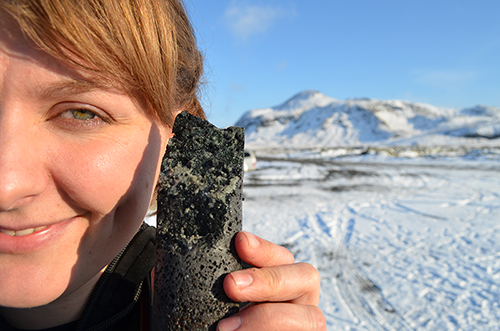
Hellisheidi power plant in Iceland is the world's largest geothermal facility and now it has one other distinction. Engineers there have shown that carbon dioxide emissions can be pumped into the earth and changed chemically to stone within months, far faster than believed.

Researchers have developed a compound that can transform near-infrared light into broadband white-light, offering a cheap, efficient means to produce visible light. The emitted light is also exceedingly directional, a desirable quality for devices like microscopes that require high spatial resolution, or for applications with high throughput, such as projection systems. Nils Wilhelm Rosemann and colleagues designed their compound of tin and sulfur, and with a diamondoid-like structure, then coating this scaffolding with organic ligands. When a laser directs near-infrared light into the compound, the structure of the compound alters the wavelength of the light through a non-linear interaction process, producing light at wavelengths that are visible to the human eye.

RIVERSIDE, Calif. - Toxoplasma gondii, a protozoan parasite about five microns long, infects a third of the world's population. Ingested via undercooked meat or unwashed vegetables, the parasite infects 15-30 percent of the US population. In France and Brazil, up to 80 percent of the population has the infection.

Particularly dangerous during pregnancy - infection in pregnant women can cause serious congenital defects and even death of the fetus - this chronic infection has two components: the unicellular parasite, and inflammation of tissues it causes.

An isolated population of honeybees, the Cape bees, living in South Africa has evolved a strategy to reproduce without males. A research team from Uppsala University has sequenced the entire genomes of a sample of Cape bees and compared them with other populations of honeybees to find out the genetic mechanisms behind their asexual reproduction.

Most animals reproduce sexually, which means that both males and females are required for the species to survive. Normally, the honeybee is no exception to this rule: the female queen bee produces new offspring by laying eggs that have been fertilised by sperm from male drones. However, one isolated population of honeybees living in the southern Cape of Africa has evolved a strategy to do without males.

Magicians could join composers and artists in finding new ideas for their performances by using computers to create new magic effects, according to computer scientists at Queen Mary University of London (QMUL).

Writing in the open access journal Frontiers in Psychology, the scientists, one of whom is also practicing magician, have looked at modelling particular human perceptual quirks and processes, and building computer systems able to search and find designs for new tricks based on these potential responses from the audience.