Banner
Pilot Study: Fibromyalgia Fatigue Improved By TENS Therapy

Fibromyalgia is the term for a poorly-understood condition where people experience pain and fatigue...

High Meat Consumption Linked To Lower Dementia Risk

Older people who eat large amounts of meat have a lower risk of dementia and cognitive decline...

Long Before The Inca Colonized Peru, Natives Had A Thriving Trade Network

A new DNA analysis reveals that long before the Incan Empire took over Peru, animals were...

Mesolithic People Had Meals With More Tradition Than You Thought

The common imagery of prehistoric people is either rooting through dirt for grubs and picking berries...

User picture.
News StaffRSS Feed of this column.

News Releases From All Over The World, Right To You... Read More »

Blogroll

Two studies published by The BMJ today evaluate treatments for patients with cardiac arrest in hospital.

The first study suggests that advice to delay giving a second heart shock, known as defibrillation, to patients with cardiac arrest in hospital is not associated with improved survival.

Guidelines previously called for "stacked" shocks with minimal time delay between defibrillation attempts. But in 2005 the guidelines were revised to recommend deferring a second attempt at defibrillation to allow time for chest compressions.

However, data on the effect of these changes on survival for patients with cardiac arrest in hospital are lacking.

Everyone has known a coworker who wastes time, mismanages resources, and has been known to engage in activities that are conflicts of interest, yet they "do no wrong" in the eyes of the company.

Why?

Because they produce. 

A new paper in Personnel Psychology discusses surveys of why employees' unethical behaviors may be tolerated or rejected. The scholars conducted three studies and surveyed 1,040 people, including more than 300 pairs of supervisors and their employees.


Survey results show:


If you trace our evolutionary tree way back to its roots, before the shedding of gills or the development of opposable thumbs, you will likely find a common ancestor with the amazing ability to regenerate lost body parts. Descendants of this creature, including today's salamanders or zebrafish, can still perform the feat, but humans lost much of their regenerative power over millions of years of evolution. 

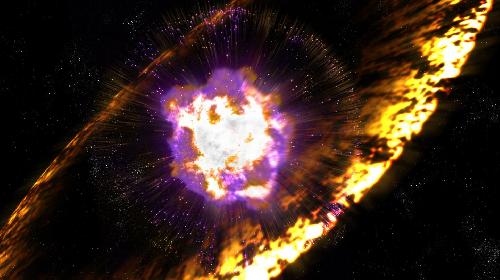
An international team of scientists has found evidence of a series of massive supernova explosions near our solar system, which showered the Earth with radioactive debris.

The scientists found radioactive iron-60 in sediment and crust samples taken from the Pacific, Atlantic and Indian Oceans.

The iron-60 was concentrated in a period between 3.2 and 1.7 million years ago, which is relatively recent in astronomical terms, said research leader Dr Anton Wallner from The Australian National University (ANU).

pic

Artist's impression of supernova. Credit: Greg Stewart, SLAC National Accelerator Lab

The world's soils could store an extra 8 billion tonnes of greenhouse gases, helping to limit the impacts of climate change, research suggests.

Adopting the latest technologies and sustainable land use practices on a global scale could allow more emissions to be stored in farmland and natural wild spaces, the study shows.

Growing crops with deeper root systems, using charcoal-based composts and applying sustainable agriculture practices could help soils retain the equivalent of around four-fifths of annual emissions released by the burning of fossils fuels, the team says.

According to a new study in Nature, the Northern Hemisphere has experienced considerably larger variations in precipitation during the past twelve centuries than in the twentieth century. Researchers from Sweden, Germany, and Switzerland have found that climate models overestimated the increase in wet and dry extremes as temperatures increased during the twentieth century. The new results will enable us to improve the accuracy of climate models and to better predict future precipitation changes.

Variations in decadal to centennial-scale drought and pluvial episodes - across the Northern Hemisphere - have been reliably reconstructed back to the ninth century for the first time.