Banner
Pilot Study: Fibromyalgia Fatigue Improved By TENS Therapy

Fibromyalgia is the term for a poorly-understood condition where people experience pain and fatigue...

High Meat Consumption Linked To Lower Dementia Risk

Older people who eat large amounts of meat have a lower risk of dementia and cognitive decline...

Long Before The Inca Colonized Peru, Natives Had A Thriving Trade Network

A new DNA analysis reveals that long before the Incan Empire took over Peru, animals were...

Mesolithic People Had Meals With More Tradition Than You Thought

The common imagery of prehistoric people is either rooting through dirt for grubs and picking berries...

User picture.
News StaffRSS Feed of this column.

News Releases From All Over The World, Right To You... Read More »

Blogroll

Having emerged late during evolution, seeds have transformed many plants into miniature travelers, contributing greatly to their colonization of terrestrial habitats. Researchers at the University of Geneva (UNIGE), Switzerland, have just discovered one of the keys to this success: the cuticle. Present as a thick waxy layer in the seed coat and composed of cutin -- a type of fatty acid --, the cuticle increases seeds' viability, their resistance to reactive oxygen species, and contributes to maintaining their dormant state. Seeds have thus recycled an ancient terrestrial plant protection mechanism that allows their leaves to be covered with an impermeable film preventing excessive transpiration. The results are published in the journal PLoS Genetics.

Their analysis revealed that the periods of Algol (2.85 days) and the Moon (29.6 days) strongly regulate the actions of deities in this calendar.

- Until now, there were only conjectures that many of the mythological texts of the Cairo Calendar describe astronomical phenomena. We can now unambiguously ascertain that throughout the whole year the actions of many deities in the Cairo Calendar are connected to the regular changes of Algol and the Moon, says Master of Science Sebastian Porceddu.

This research confirms that the first variable star, as well as its period, were discovered much earlier than was previously thought. These two "classical" milestones in the history of natural sciences need to be shifted three millennia backwards in time to 1244 - 1163 BC.

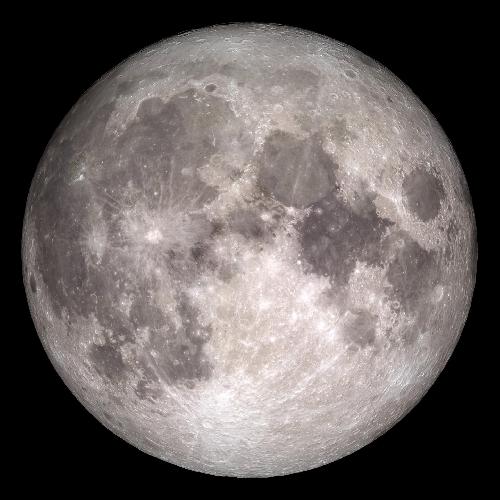
Not since 1977 has a full moon dawned in the skies on Christmas. But this year, a bright full moon will be an added gift for the holidays.

December's full moon, the last of the year, is called the Full Cold Moon because it occurs during the beginning of winter. The moon's peak this year will occur at 6:11 a.m. EST.

This rare event won't happen again until 2034. That's a long time to wait, so make sure to look up to the skies on Christmas Day.

pic

How the moon will appear on Christmas, 2015. Credit: NASA/Goddard/Lunar Reconnaissance Orbiter

The anti-evolution movement, and specifically alternative beliefs to science like Intelligent Design, are wheezing their last, but because education is local in America, it can still happen in some school districts on education.

The most famous example of a legal opposition to teaching evolution began in the 1920s with the so-called Scopes Monkey Trial (science won) and the most famous recent example was the Kitzmiller
versus Dover case in 2005 (science won).

UW researchers working in collaboration with Kineta Inc. and the University of Texas at Galveston have shown that making a drug-like molecule to turn on innate immunity can induce genes to control infection in several -known viruses. The findings being published in the Journal of Virology Dec. 18 show promising evidence for creating a broad spectrum antiviral that can suppress a range of RNA viruses, including West Nile, dengue virus, hepatitis C, influenza A, respiratory syncytial, Nipah, Lassa and Ebola.

"Our study shows that our compound has an antiviral effect against all these viruses," said Michael Gale Jr., UW professor of immunology and director of the UW Center for Innate Immunity and Immune Disease.

Researchers reporting in the Cell Press journal Current Biology on December 17 have uncovered a direct link between the behavioral symptoms of people with autism and reduced action of an inhibitory neurotransmitter called GABA. GABA's primary responsibility is to dampen neural activity in the brain.

The findings suggest that drugs that increase brain concentrations of GABA might have potential for autism treatment, the researchers say.

"These findings mark the first empirical link between a specific neurotransmitter measured in the brains of individuals with autism and an autistic behavioral symptom," says Caroline Robertson of Harvard University and MIT's McGovern Institute for Brain Research.