Banner
Pilot Study: Fibromyalgia Fatigue Improved By TENS Therapy

Fibromyalgia is the term for a poorly-understood condition where people experience pain and fatigue...

High Meat Consumption Linked To Lower Dementia Risk

Older people who eat large amounts of meat have a lower risk of dementia and cognitive decline...

Long Before The Inca Colonized Peru, Natives Had A Thriving Trade Network

A new DNA analysis reveals that long before the Incan Empire took over Peru, animals were...

Mesolithic People Had Meals With More Tradition Than You Thought

The common imagery of prehistoric people is either rooting through dirt for grubs and picking berries...

User picture.
News StaffRSS Feed of this column.

News Releases From All Over The World, Right To You... Read More »

Blogroll

A pesticide called heptachlor epoxide and used in 1970s was found in milk at that time - and it being linked to Parkinson's disease now, in a paper in Neurology.

Syracuse Earth sciences professor Christopher Scholz and former Ph.D. student Robert Lyons have an unprecedented glimpse into the past of a lake with explosive biodiversity. Along with colleagues from six other universities, Scholz and Lyons have unearthed a 380-meter-deep time capsule from Lake Malawi.

Lyons says the core shows that "East African moisture history over the last 1.3 million years is a lot more complicated than was previously postulated."

It has long been suspected that sulfur emissions can brighten clouds. Water droplets tend to clump around particles of sulfuric acid, causing smaller droplets that form brighter, more reflective clouds.

But while humans have pumped sulfur into Earth's atmosphere since the Industrial Revolution, it's been hard to measure how this affects the clouds above. New University of Washington research uses a huge volcanic eruption in Iceland to measure the change.

The new study, to be published in Geophysical Research Letters, a journal of the American Geophysical Union, shows that sulfur emissions do indeed result in smaller cloud droplet size, leading to brighter clouds that reflect significantly more sunlight.

As world leaders hold climate talks in Paris, research shows that land surface temperatures may rise by an average of almost 8C by 2100, if significant efforts are not made to counteract climate change.

Such a rise would have a devastating impact on life on Earth. It would place billions of people at risk from extreme temperatures, flooding, regional drought, and food shortages.

The study calculated the likely effect of increasing atmospheric levels of greenhouse gases above pre-industrialisation amounts. It finds that if emissions continue to grow at current rates, with no significant action taken by society, then by 2100 global land temperatures will have increased by 7.9C, compared with 1750.

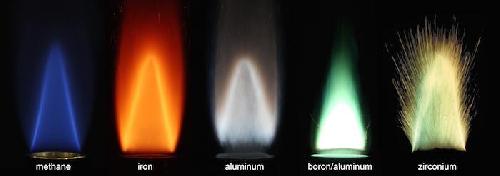
Can you imagine a future where your car is fueled by iron powder instead of gasoline?

Metal powders, produced using clean primary energy sources, could provide a more viable long-term replacement for fossil fuels than other widely discussed alternatives, such as hydrogen, biofuels or batteries, according to a study in the Dec. 15 issue of the journal Applied Energy.

pic

Stabilized flames of different metal powders burn with air, compared to a methane-air flame. Credit: Alternative Fuels Laboratory/McGill University

A study of a million UK women has shown that happiness has no direct effect on mortality nor does unhappiness and stress directly cause ill health.

Studies that claim it had simply confused cause and effect.  

Life-threatening poor health can cause unhappiness, and so unhappiness is associated with increased mortality but that is more confirmation bias than neutral analysis. Smokers also tend to be unhappier than non-smokers but accounting for previous ill health, smoking, and other lifestyle and socio-economic factors, the investigators found that unhappiness itself was no longer associated with increased mortality.