Banner
Pilot Study: Fibromyalgia Fatigue Improved By TENS Therapy

Fibromyalgia is the term for a poorly-understood condition where people experience pain and fatigue...

High Meat Consumption Linked To Lower Dementia Risk

Older people who eat large amounts of meat have a lower risk of dementia and cognitive decline...

Long Before The Inca Colonized Peru, Natives Had A Thriving Trade Network

A new DNA analysis reveals that long before the Incan Empire took over Peru, animals were...

Mesolithic People Had Meals With More Tradition Than You Thought

The common imagery of prehistoric people is either rooting through dirt for grubs and picking berries...

User picture.
News StaffRSS Feed of this column.

News Releases From All Over The World, Right To You... Read More »

Blogroll

Agriculturally rich nations are a little spoiled about food. A few years ago Europe even limited how 'ugly' fruit could be when it was being sold to the public, presumably because Europeans deserve pretty fruit.

For that reason, it's little surprise that there is concern about browning in apples. After being sliced open, the color starts to fade quickly, and in a hyper-vigilant culture where 99 percent of the public has never worked on a farm, parents and consumers may think that this 'browning' means the apple is bad. It gets thrown away, which leads to food waste.

Recent experiments at the Large Plasma Device (LAPD) at the University of California, Los Angeles, have successfully excited elusive plasma waves, known as whistler-mode chorus waves, which have hitherto only been observed in the Earth's near-space environment. These chorus waves were accidentally discovered as early as World War I by radio operators deploying long lines intended to intercept enemy communication, and were subsequently dubbed "dawn chorus" since the sound of the radio signal when played through loudspeakers sounded like the distant chirping of a rookery of birds.

For more than 60 years, fusion scientists have tried to use "magnetic bottles" of various shapes and sizes to confine extremely hot plasmas, with the goal of producing practical fusion energy. But turbulence in the plasma has, so far, confounded researchers' ability to efficiently contain the intense heat within the core of the fusion device, reducing performance. Now, scientists have used one of the world's largest supercomputers to reveal the complex interplay between two types of turbulence known to occur in fusion plasmas, paving the way for improved fusion reactor design.

Placebo-controlled trials are the recognized standard for demonstrating the efficacy of clinical and pharmacological treatments so it is significant to proponents of mindfulness meditation that it reduced pain more effectively than placebo.

The paper Journal of Neuroscience says that study participants who practiced mindfulness meditation reported greater pain relief than placebo. The study used a two-pronged approach - pain ratings and brain imaging - to determine whether mindfulness meditation is merely a placebo effect. Seventy-five healthy, pain-free participants were randomly assigned to one of four groups: mindfulness meditation, placebo meditation ("sham" meditation), placebo analgesic cream (petroleum jelly) or control.

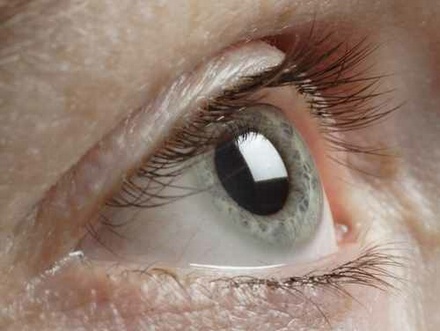
You know our eyelids blink but less know is that so does the human brain, dropping a few frames of visual information here and there.

Those lapses of attention come fast -- maybe just once every tenth of a second. But some people may be missing more than others, according to psychologists at the University of Wisconsin-Madison.

"Intuitively we have this sense that we're viewing the world in a continuous stream, constantly taking in the same amount of information," says Jason Samaha, a University of Wisconsin-Madison doctoral student in psychology. "So if I told people that every 100 milliseconds their brains were taking a bit of a break, I think that would surprise a lot of them."

Gymnastic feats like balance beam routines clearly require a great deal of coordination. But even seemingly trivial actions such as crossing stepping-stones on a river or just walking in a straight line require these very same skills. The group of Dr. Megan Carey, principal investigator at Champalimaud Centre for the Unknown, has developed a novel tool to investigate how the brain generates coordinated movement.