Banner
Pilot Study: Fibromyalgia Fatigue Improved By TENS Therapy

Fibromyalgia is the term for a poorly-understood condition where people experience pain and fatigue...

High Meat Consumption Linked To Lower Dementia Risk

Older people who eat large amounts of meat have a lower risk of dementia and cognitive decline...

Long Before The Inca Colonized Peru, Natives Had A Thriving Trade Network

A new DNA analysis reveals that long before the Incan Empire took over Peru, animals were...

Mesolithic People Had Meals With More Tradition Than You Thought

The common imagery of prehistoric people is either rooting through dirt for grubs and picking berries...

User picture.
News StaffRSS Feed of this column.

News Releases From All Over The World, Right To You... Read More »

Blogroll

A research group at Tohoku Medical Megabank Organization (ToMMo) has successfully constructed a Japanese population reference panel (1KJPN), from the genome information of 1,070 individuals who had participated in the cohort studies*1 of the Tohoku Medical Megabank Project.

ToMMo identified through this high-coverage sequencing (32.4 × on average), 21.2 million, including 12 million novel, single-nucleotide variants (SNVs) *2 at an estimated false discovery rate of

ToMMo also catalogued structural variants, including 3.4 million insertions and deletions, and 25,923 genic copy-number variants. The 1KJPN was effective for imputing genotypes of the Japanese population genome wide.

Protected and intact forests have been lost at a rapid rate during the first 12 years of this century. According to researchers at Aalto University, Finland, 3% of the protected forest, 2.5% of the intact forest, and 1.5% of the protected intact forest in the world were lost during 2000 - 2012. These rates of forest loss are high compared to the total global forest loss of 5% for the same time period.

In Australia and Oceania, as well as North America, the loss in protected forests exceeded 5%. Worryingly, in parts of Africa, Central Asia, and Europe, the relative forest loss was higher inside protected areas than outside. However, in several countries of South America and Southeast Asia, protection was found to substantially prevent forest loss.

A small freshwater plant that has evolved to live in harsh seawater is giving scientists insight into how living things adapt to changes in their environment.

The findings could help scientists better understand how species have been able to adapt to major shifts of circumstances in the past, such as transferring from water to land, or from light to dark environments.

In adapting to new surroundings, organisms must develop ways to perform everyday functions, such as securing food and oxygen, and reproducing. The latest study is one of the first to track such a significant lifestyle transition in the lab, instead of relying on fossil clues.

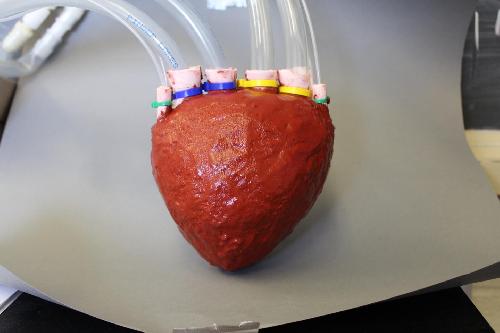
Researchers have developed a new lightweight and stretchable material with the consistency of memory foam that has potential for use in prosthetic body parts, artificial organs and soft robotics. The foam is unique because it can be formed and has connected pores that allow fluids to be pumped through it.

The polymer foam starts as a liquid that can be poured into a mold to create shapes, and because of the pathways for fluids, when air or liquid is pumped through it, the material moves and can change its length by 300 percent.

While applications for use inside the body require federal approval and testing, Cornell researchers are close to making prosthetic body parts with the so-called "elastomer foam."

X smoked a pack of cigarettes a day, used alcohol like a fish uses water, and lived to a ripe old age. His brother Y did the same thing and succumbed to cancer at age 55. Why do some individuals develop certain diseases or disorders while others do not?

A new approach uses artificial intelligence to illuminate cellular processes and suggest possible targets to correct aberrations.  What is interesting is they used artificial intelligence to do it.

Miss Georgia tripped in the final round of the 2015 Miss America Pageant and actress Jennifer Lawrence stumbled on her way to accept an Academy Award.

It has happened to all of us. And it happens to robots as well.

Researchers at Georgia Tech have identified a way to teach robots how to fall with grace and without serious damage. The work is important as costly robots become more common in manufacturing alongside humans. The skill becomes especially important, too, as robots are sought for health care or domestic tasks - working near the elderly, injured, children or pets.