Banner
Pilot Study: Fibromyalgia Fatigue Improved By TENS Therapy

Fibromyalgia is the term for a poorly-understood condition where people experience pain and fatigue...

High Meat Consumption Linked To Lower Dementia Risk

Older people who eat large amounts of meat have a lower risk of dementia and cognitive decline...

Long Before The Inca Colonized Peru, Natives Had A Thriving Trade Network

A new DNA analysis reveals that long before the Incan Empire took over Peru, animals were...

Mesolithic People Had Meals With More Tradition Than You Thought

The common imagery of prehistoric people is either rooting through dirt for grubs and picking berries...

User picture.
News StaffRSS Feed of this column.

News Releases From All Over The World, Right To You... Read More »

Blogroll

In the kidney, injured cells can be kicked into reparative mode by a gene called Sox9, according to a new paper.  Sox9 also plays a key role in the normal development of the kidney and the authors found that surviving injured cells switch on the Sox9 gene as a response to kidney damage.

This regenerates the injured cellular lining of the nephron, the functional unit of the kidney, and repairs the kidney after acute kidney injury (AKI).  

By recruiting the majority of the surviving cells of the epithelium to aid in the timely repair of a severely injured organ, the kidney's Sox9 strategy contrasts with the stem cell-based repair strategy of many other organ systems.

Women who undergo implant based female sterilization have a significantly heightened risk of reoperation following complications, suggests a large study published in The BMJ this week.

Female sterilization is one of the most common contraception methods worldwide. Laparoscopic sterilization has been the primary method for decades. It is a surgical procedure that clips, stitches or burns the fallopian tubes to prevent pregnancy.

Hysteroscopic sterilization was developed more recently and involves implanting the "Essure" device to block the fallopian tubes. It does not require general anaesthetic or surgery unlike laparoscopic sterilization.

The likelihood of a transgender person attempting suicide is very high and a new study examined factors that may prevent them. Its conclusions also inform medical and mental health professionals who work with transgender clients. 

For a survey of "suicide protective factors" among transgender adults, the scholars recruited 133 transgender individuals living in Canada, ranging in age from 18 to 75, who responded to questions through an online, anonymous survey about their thoughts on and attempts at suicide. Nearly 45 percent of respondents said they had had a suicide plan at least once in their lives; 26 percent indicated they had attempted suicide at least once. The majority of the study participants indicated they experienced suicidal thoughts.

A new study of newborns treated with hypothermia for hypoxic-ischemic encephalopathy (HIE) - a condition that occurs when the brain is deprived of an adequate oxygen supply - confirms its neuroprotective effects on the brain.

Therapeutic hypothermia or targeted cooling of the brain is the first therapy for neuroprotection in neonates with HIE. Without treatment, these babies often develop cerebral palsy or other severe complications. World-wide, nearly one million babies will die and another million will be left with disabilities.

A new study shows that surface water temperature in the Chesapeake Bay is increasing more rapidly than air temperature, signaling a need to look at the impact of warming waters on one of the largest and most productive estuaries in the world. The study was completed by Haiyong Ding and Andrew Elmore of the University of Maryland Center for Environmental Science's Appalachian Laboratory.

"I was surprised that the pattern of increasing water temperature was so clear," said study co-author Andrew Elmore. "If you take any group of five years, they are generally warmer than the previous five years. A consistent warming trend happening over a really large portion of the Bay."

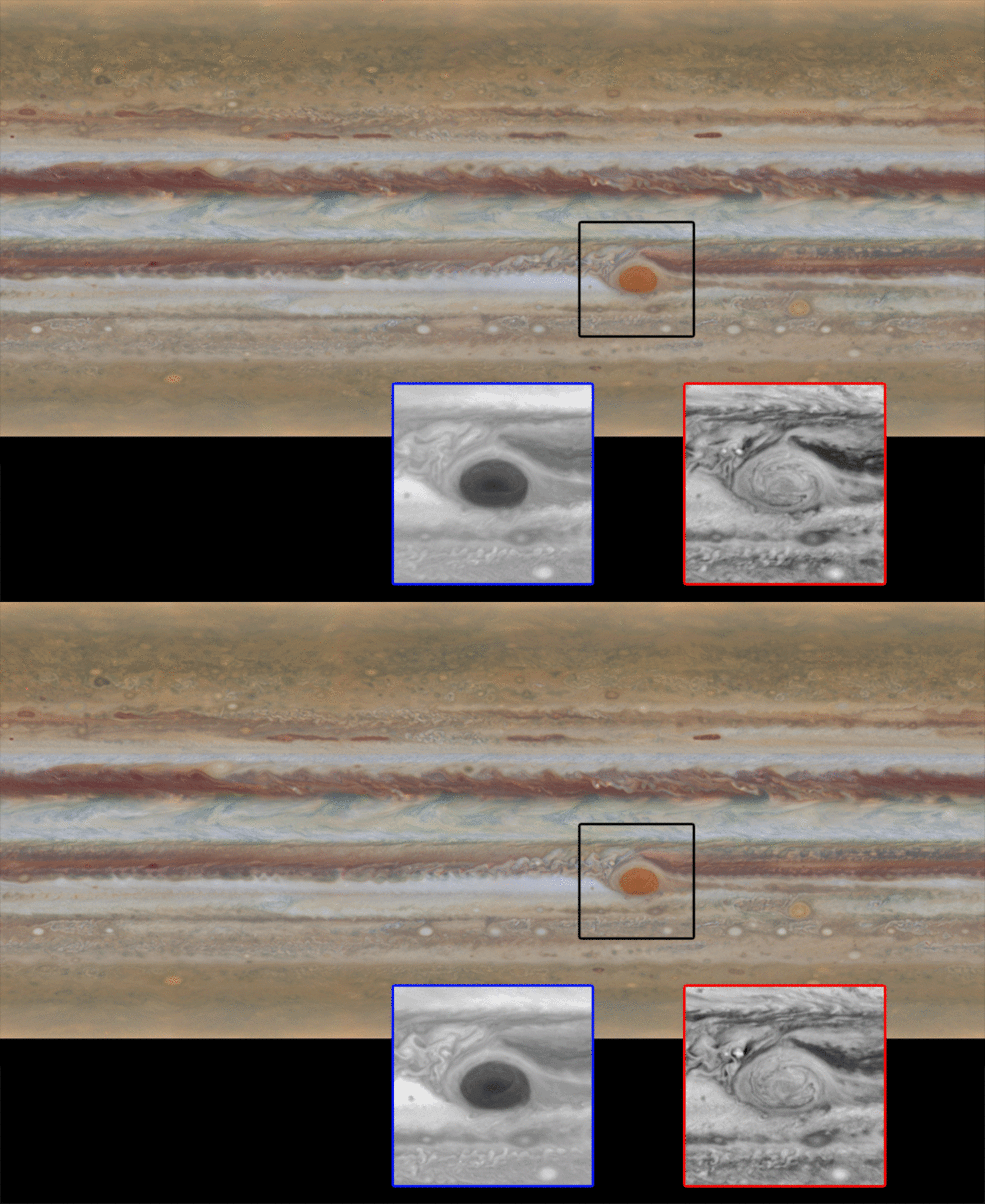
Scientists using NASA's Hubble Space Telescope have produced new maps of Jupiter -- the first in a series of annual portraits of the solar system's outer planets.

Collecting these yearly images -- essentially the planetary version of annual school picture days for children -- will help current and future scientists see how these giant worlds change over time. The observations are designed to capture a broad range of features, including winds, clouds, storms and atmospheric chemistry.

Already, the Jupiter images have revealed a rare wave just north of the planet's equator and a unique filamentary feature in the core of the Great Red Spot not seen previously.