Banner
Pilot Study: Fibromyalgia Fatigue Improved By TENS Therapy

Fibromyalgia is the term for a poorly-understood condition where people experience pain and fatigue...

High Meat Consumption Linked To Lower Dementia Risk

Older people who eat large amounts of meat have a lower risk of dementia and cognitive decline...

Long Before The Inca Colonized Peru, Natives Had A Thriving Trade Network

A new DNA analysis reveals that long before the Incan Empire took over Peru, animals were...

Mesolithic People Had Meals With More Tradition Than You Thought

The common imagery of prehistoric people is either rooting through dirt for grubs and picking berries...

User picture.
News StaffRSS Feed of this column.

News Releases From All Over The World, Right To You... Read More »

Blogroll

It's an old joke: Practical nuclear fusion power plants are just 30 years away -- and always will be.

Maybe sooner, this time. Advances in magnet technology have led researchers at MIT to propose a new design for a practical compact tokamak fusion reactor that might be realized in as little as a decade, they say. Practical fusion power, should it ever happen, could offer a nearly inexhaustible energy resource.

The key is new commercially available superconductors, rare-earth barium copper oxide (REBCO) superconducting tapes, to produce high-magnetic field coils "just ripples through the whole design," says Dennis Whyte, a professor of Nuclear Science and Engineering and director of MIT's Plasma Science and Fusion Center. "It changes the whole thing."

A new psychology paper finds that people with high levels of autistic traits are more likely to produce unusually creative ideas.

The authors examined the relationship between autistic-like traits and creativity. While they found that people with high autistic traits produced fewer responses when generating alternative solutions to a problem - known as 'divergent thinking' - the responses they did produce were more original and creative. They say they are the first paper to claim a link between autistic traits and the creative thinking processes.

Researchers from the Georgia Institute of Technology College of Computing developed a new cyber security analysis method that discovered 11 previously unknown Internet browser security flaws. Their findings were honored with the Internet Defense Prize, an award presented by Facebook in partnership with USENIX this week at the 24th USENIX Security Symposium.

Ph.D. students Byoungyoung Lee and Chengyu Song, with Professors Taesoo Kim and Wenke Lee, of Georgia Tech received $100,000 from Facebook to continue their research and increase its impact to make the Internet safer.

n findings never before seen in melanoma, a novel combination therapy was found to be highly effective at treating patients with skin metastases, new research has shown. 

The research found that Interleukin (IL)-2 combined with imiquimod and topical retinoid therapy in patients with so-called "in-transit metastases" is a promising therapeutic option. 
The authors note that the study has limitations in that the records of only 11 patients were analyzed, and there were no experiments conducted to determine the effects of the therapeutic regimen on the systemic immune response.

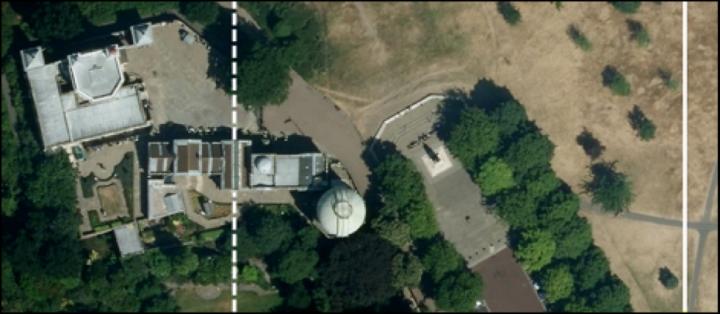
In 1884, a delegation of international representatives convened in Washington, D.C. to recommend that Earth's prime meridian (the north-south line marking zero degrees longitude) should pass through the Airy Transit Circle at the Royal Observatory in Greenwich, England.

(A transit circle is an instrument for measuring star positions, and could be used for determining local time; this one was named for its designer, British Astronomer Royal George Airy.)

Human learning is a complex, sometimes mysterious process. Most of us have had experiences where we have struggled to learn something new, but also times when we've picked something up nearly effortlessly.

What if a fusion of computer science and psychology could help us understand more about how people learn, making it possible to design ideal lessons?

That long-range goal is moving toward reality thanks to an effort led by professors in the University of Wisconsin-Madison departments of computer sciences, psychology and educational psychology. Their collaborative research aims to break new ground in what computer scientist Jerry Zhu calls "machine teaching"-- a twist on the more familiar concept of machine learning.