Banner
Pilot Study: Fibromyalgia Fatigue Improved By TENS Therapy

Fibromyalgia is the term for a poorly-understood condition where people experience pain and fatigue...

High Meat Consumption Linked To Lower Dementia Risk

Older people who eat large amounts of meat have a lower risk of dementia and cognitive decline...

Long Before The Inca Colonized Peru, Natives Had A Thriving Trade Network

A new DNA analysis reveals that long before the Incan Empire took over Peru, animals were...

Mesolithic People Had Meals With More Tradition Than You Thought

The common imagery of prehistoric people is either rooting through dirt for grubs and picking berries...

User picture.
News StaffRSS Feed of this column.

News Releases From All Over The World, Right To You... Read More »

Blogroll

How much does diet affect the cancer patient? Do "antioxidants" really play an important role in health - or are they causing more cancers than they cure? And what exactly is the relationship between obesity and cancer?

The latest Special Issue in ecancermedicalscience collects four original articles from experts in cancer and metabolism, addressing the hottest areas of research in this rapidly developing field.

"In our clinical practice, cancer patients often ask 'Doctor, is there something specific I should eat or avoid eating?'" says Guest Editor of this Special Issue, Dr Luca Mazzarella of the European Institute of Oncology, Milan, Italy.

Since 2010, the best estimate of the age of Earth’s magnetic field has been 3.45 billion years but new research says the magnetic field is far older. John Tarduno, a geophysicist at the University of Rochester and a leading expert on Earth’s magnetic field, and his team of researchers say they believe the Earth’s magnetic field is at least four billion years old.

Cancer can be caused solely by protein imbalances within cells, a study of ovarian cancer has found. The discovery is a major breakthrough because genetic aberrations have been seen as the main cause of almost all cancer. 

The odds of being attacked and castrated by a variety of parasitic flatworms increases for marine horn snails the farther they are found from the tropics. A Smithsonian-led research team discovered this exception to an otherwise globally observed pattern--usually biodiversity is greatest in the tropics and decreases toward the poles.

The study makes a case for using host-parasite relationships as a tool to understand why there are typically more species--and more interactions between species--in the tropics than anywhere else in the world.

Next time you are in your local grocery store, step in to look a little more closely at the beer cooler. Amid the brightly colored, creative packaging lies the final battle for the ultimate goal – your purchases.

But, what battles were fought to get the beer to that particular cooler? More importantly, what might those battles say about larger trends in business today?

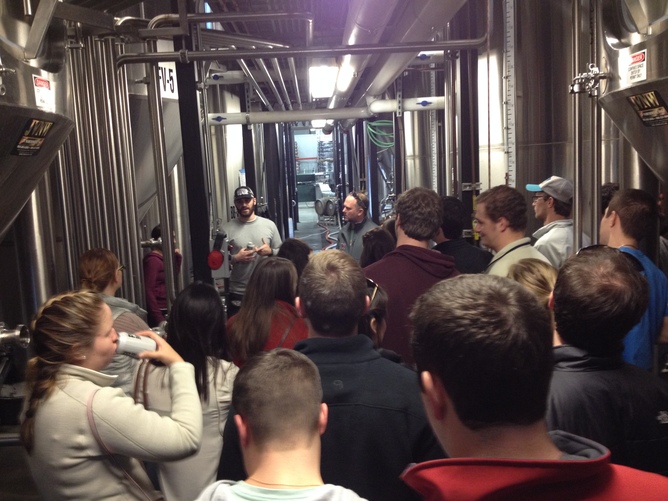
At Miami University’s Farmer School of Business, we designed an experiential class to go in depth with these issues, leveraging the lessons of the beer industries as a way to better understand larger trends in business strategy and supply chains.

What can the beer industry teach us?

A new paper links adults born very premature with being socially withdrawn and displaying signs of autism. The work was led by Professor Dieter Wolke at the department of psychology and Warwick Medical School, University of Warwick. He and coauthors correlate adults born very preterm scored highly for displaying a socially withdrawn personality, indicated by autistic features, neuroticism, introversion and decreased risk taking.