Banner
Ousiometrics Analysis Says All Human Language Is Biased

A new tool drawing on billions of uses of more than 20,000 words and diverse real-world texts claims...

Wavelengths Of Light Are Why CO2 Cools The Upper Atmosphere But Warms Earth

There are concerns about projected warming on the Earth’s surface and in the lower atmosphere...

Here's Where Your Backyard Was 300 Million Years Ago

We may use terms like "grounded" and terra firma to mean stability and consistency but geology...

Convergent Evolution Cheat Sheet Now 120 Million Years Old

One tenet of natural selection is a random walk of genes but nature may be more predictable than...

User picture.
News StaffRSS Feed of this column.

News Releases From All Over The World, Right To You... Read More »

Blogroll
The world market for diagnostics was about $54.6 billion in 2013 and is expected to grow 4% annually, to $65 billion, by 2018.

That figure in Kalorama's biennial survey of the IVD industry, The Worldwide Market for In Vitro Diagnostic Tests, 9th Edition, includes all laboratory and hospital-based products, and OTC product sales. New technology is leading the charge, according to Kalorama. Diagnostic laboratory technology has changed dramatically due to the publication of the human genome project and advances in functional genomics, bioinformatics, miniaturization and microelectronics.  
In a world that is constantly changing, are attempts to eradicate disease realistic?

Over 40 years ago, researchers were happy to have a War on Cancer. President Richard Nixon made it a national priority and it came with a lot of funding, so no one corrected what became an obvious point decades and billions of dollars later; you can't cure cancer.

Efforts at eradicating diseases may be doomed because of a mismatch between the ways humans structure the world and the ways pathogens move through the world, according to a paper in The Lancet Infectious Diseases. Polio is the poster child for diseases science has successfully conquered but the deadline for its eradication came and went in 2013 and is now 2018. What is going to change by then?
Soil moisture plays a major role in the environment/climate system because the transport of water within the land and at the land-atmosphere interface is strongly dependent on the state of soil water in a region.

Despite its importance, lack of soil moisture measurements at various spatial scales has limited our understanding of how individual physical factors control soil moisture dynamics.

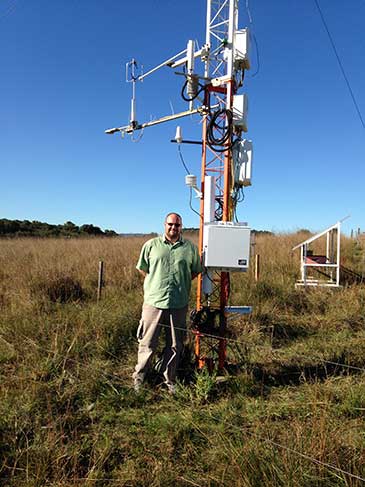
AMUSED (A MUlti-scale Soil moisture-Evapotranspiration Dynamics study) is a project that will monitor soil moisture using cosmic-rays sensors in combination with land surface modeling, satellite remote sensing, model diagnostics and data assimilation methods.

Nearly forgotten research from decades ago complicates the task of quantifying earthquake hazards in the Pacific Northwest, according to a new report.

The report focuses on the Cascadia subduction zone—a giant active fault that slants eastward beneath the Pacific coast of southern British Columbia, Washington, Oregon, and northern California.

Geologic studies in the past three decades have provided increasingly specific estimates of Cascadia earthquake sizes and repeat times. The estimates affect public safety through seismic provisions in building design and tsunami limits on evacuation maps.
Scientists have known for years that women are protected from cardiovascular disease before menopause, but their risk increases significantly after menopause.

Although estrogen is thought to be the protective factor, post-menopausal hormone replacement therapy remains controversial due to the side effects.
Researchers are searching for a sustainable, environmentally-friendlier source of soil conditioner and crop fertilizer that could reduce costs to farmers -  all from renewable energy waste.

A collaborative project between Stopford Energy and Environment Limited, the James Hutton Institute, Aqua Enviro Limited and the University of Lancaster builds upon Stopford research looking at using a mixture of digestates, derived from anaerobic digestion, and ash, from burnt biomass, as an alternative to existing crop fertilizers.