Banner
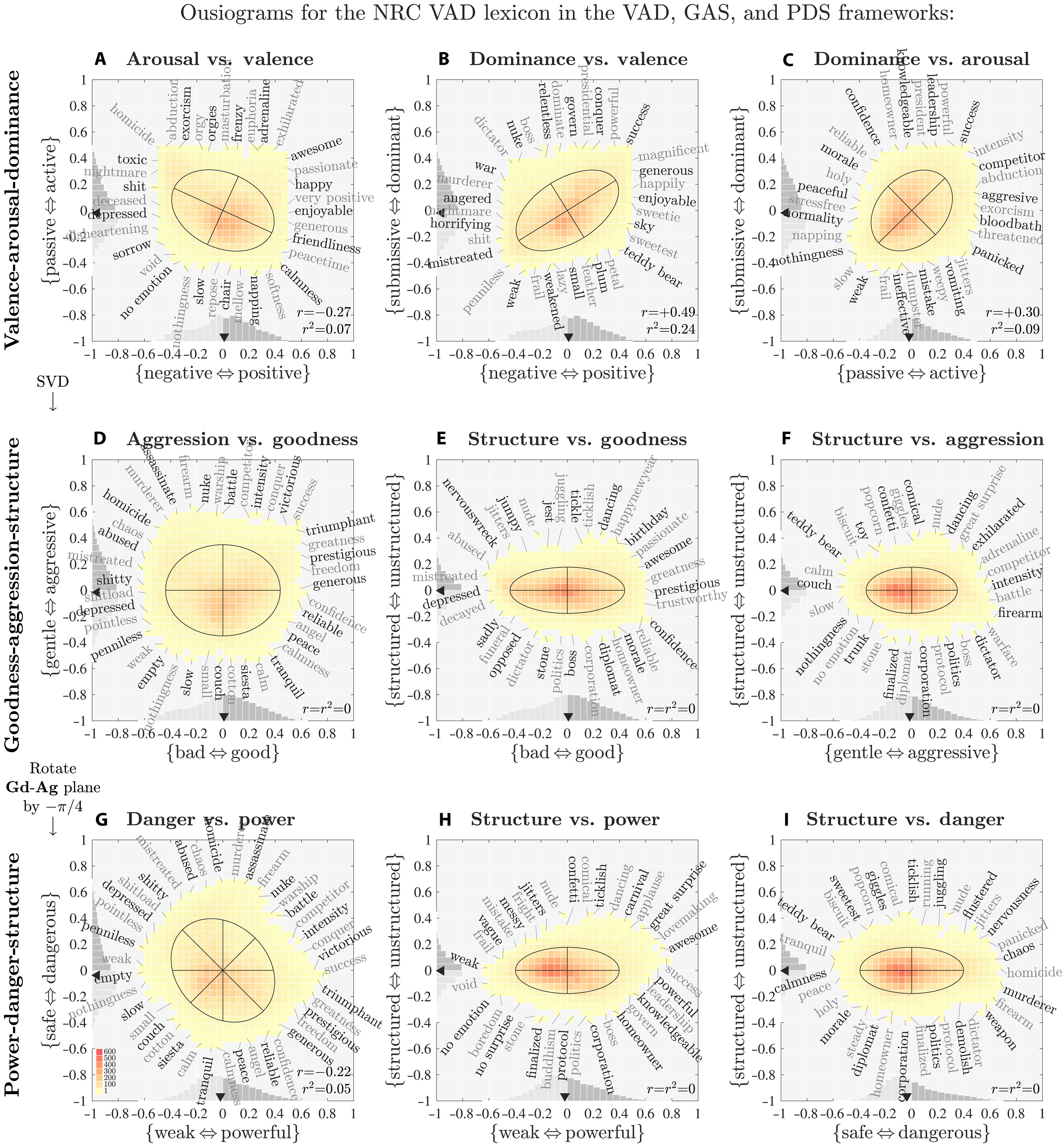
Ousiometrics Analysis Says All Human Language Is Biased

A new tool drawing on billions of uses of more than 20,000 words and diverse real-world texts claims...

Wavelengths Of Light Are Why CO2 Cools The Upper Atmosphere But Warms Earth

There are concerns about projected warming on the Earth’s surface and in the lower atmosphere...

Here's Where Your Backyard Was 300 Million Years Ago

We may use terms like "grounded" and terra firma to mean stability and consistency but geology...

Convergent Evolution Cheat Sheet Now 120 Million Years Old

One tenet of natural selection is a random walk of genes but nature may be more predictable than...

User picture.
News StaffRSS Feed of this column.

News Releases From All Over The World, Right To You... Read More »

Blogroll

"No Child Left Behind" was a bipartisan law overwhelmingly approved by both Democrats and Republicans and signed into law by US President George W. Bush. It was created to address crippling flaws in an American education system that was still operating in the 1920s.

And it worked. For the first time in history, boys and girls achieved parity in math scores and scores for minorities went up across the board. Yet the law was vilified and when President Obama took office he honored the wishes of his education union campaign donors and gutted the program.

2,500 years after acupuncture - inserting needles into the body to control energy flow - was first used by the ancient Chinese, it remains in the realm of alternative medicine.

Some people swear by it, just like some swear by Atkins Diets and homeopathy, but alternative medicine does not become real medicine unless it survives double-blind clinical trials, and acupuncture can't beat placebos in those. As a substitute, we get a meta-analysis of randomized, clinical trials. A new meta analysis in Menopause indicates that acupuncture can affect the severity and frequency of hot flashes for women in natural menopause.  

Hospice is the name for palliative care, primarily of terminally ill patients. There are few examples of more gracious, compassionate people, so if a patient wants antibiotics they are going to get them - even though there is little evidence that such medications improve symptoms or quality of life, and the downside is they may cause unwanted side effects.

Antibiotics are ingrained in contemporary medicine - they have saved an unknown number of lives, but in the hundreds of millions. 21 percent of patients being discharged from hospitals directly to a hospice program leave with a prescription for antibiotics, even though more than one fourth of them don't have a documented infection during their hospital admission.

 In the most recent Diagnostic and Statistical Manual of Mental Disorders, DSM-5, the age of onset criterion for
attention-deficit/hyperactivity disorder (ADHD)
was changed from 7, where it was placed in DSM-IV, to 12.

The writers said they changed the age to reflect the importance of clinical presentation during childhood for accurate diagnosis, while also acknowledging the difficulties in establishing precise childhood onset retrospectively. A recent paper in the Journal of the American Academy of Child and Adolescent Psychiatry says it has validated that decision.

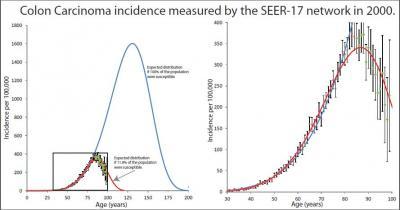
Cancer, it is said, is nature's way of telling us to 'get the hint'. At a certain age, we all have more friends who get cancer. The older we get, the more often it happens. Even if we somehow slow aging, we would end up with cancer eventually, just like Gilles-Eric Séralini's experimental rats were predestined to get cancer when he let them live long enough.

Cancer is inevitable.

Perhaps not all cancer. The risk of developing several common cancers decreases with age, which has been a mystery. Mystery or not, it is what it is and researchers want to be able to take advantage of what they know. 

The Centers for Disease Control and Prevention is rightfully concerned that the U.S. faces “potentially catastrophic consequences” from the growing threat of antibiotic-resistant infections, which kill about 23,000 Americans a year.

One solution is personalized antibiotic therapy, but that would require both rapid bacterial identification and narrow-spectrum antibiotics. Tailored antibiotic therapy would not only extend the clinical lifetime of new antibiotics by better managing resistance, it might also revive old antibiotics that have been abandoned due to resistance, toxicity, or their inability to penetrate bacterial membranes.