Banner
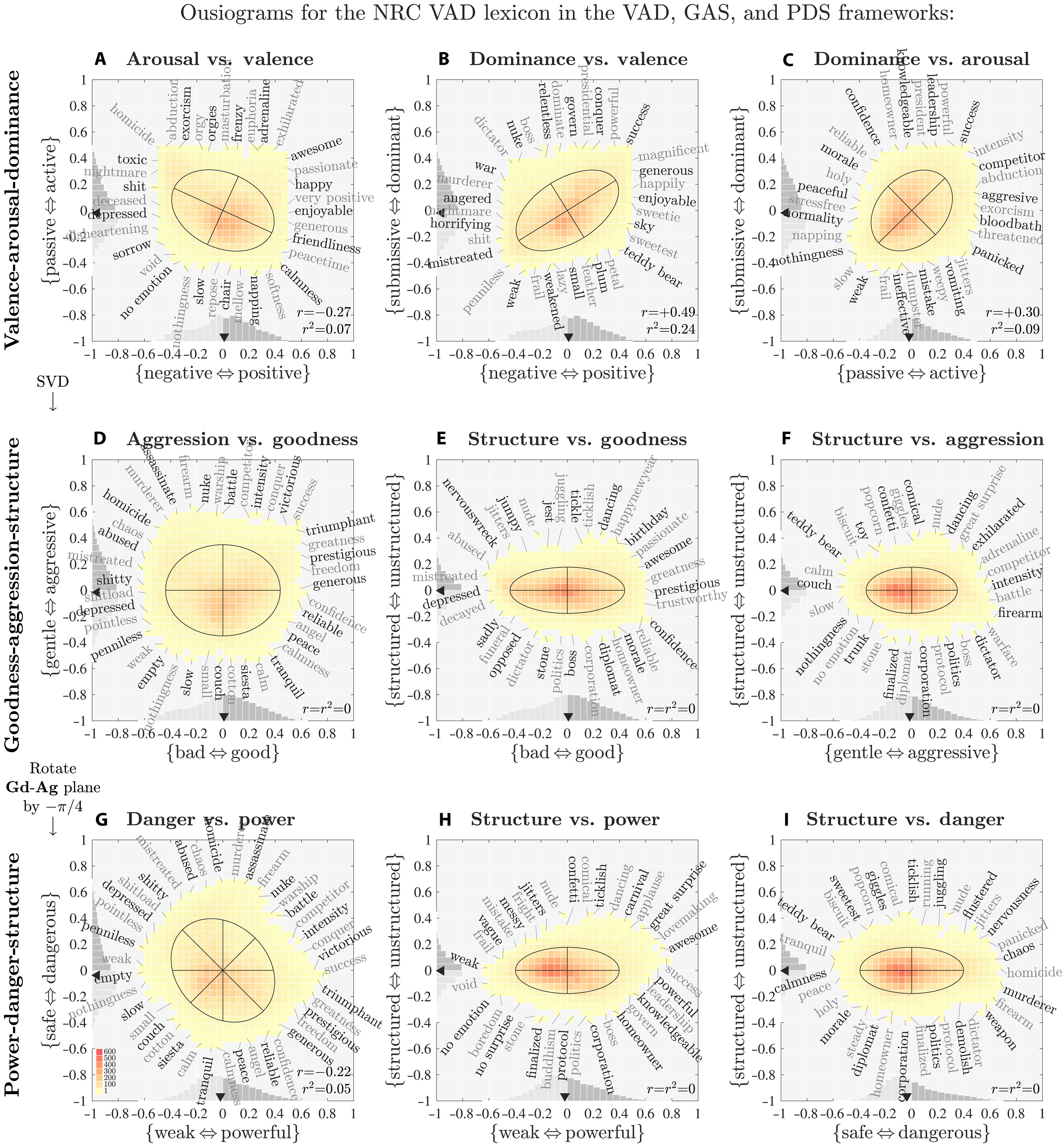
Ousiometrics Analysis Says All Human Language Is Biased

A new tool drawing on billions of uses of more than 20,000 words and diverse real-world texts claims...

Wavelengths Of Light Are Why CO2 Cools The Upper Atmosphere But Warms Earth

There are concerns about projected warming on the Earth’s surface and in the lower atmosphere...

Here's Where Your Backyard Was 300 Million Years Ago

We may use terms like "grounded" and terra firma to mean stability and consistency but geology...

Convergent Evolution Cheat Sheet Now 120 Million Years Old

One tenet of natural selection is a random walk of genes but nature may be more predictable than...

User picture.
News StaffRSS Feed of this column.

News Releases From All Over The World, Right To You... Read More »

Blogroll

COLUMBUS, Ohio – Scientists have identified a protein that is essential to the survival of E. coli bacteria, and consider the protein a potential new target for antibiotics.

In the study, the researchers confirmed that this protein, called MurJ, flips a fatty molecule from one side of a bacterial cell membrane to the other. If that molecule isn't flipped, the cell cannot construct a critical layer that keeps pressurized contents of the cell contained. If those contents aren't contained, the cell bursts.

In recent years, biology has been thrown around like a football. Activists in numerous areas invoke it - those against food science say scientists are tinkerers with no expertise while those against pesticides claim that the biology clearly shows what your grandparents ate made you obese.

Re-introducing a type of polio vaccine, the injected polio vaccine (IPV), that fell out of favor in the 1960s could hasten eradication of the disease, according to new research.

The injected polio vaccine is rarely used today, it lost in competition against the oral polio vaccine (OPV), but it could provide better and longer lasting protection against infection if used in combination with the more commonly used live OPV, write researchers from Imperial College London and the Christian Medical College in Vellore, India, today in The Lancet.

A new type of telescope made by stitching together telephoto lenses recently discovered seven celestial surprises while probing a nearby spiral galaxy - previously undetected dwarf galaxies.
 
Pieter van Dokkum, chair of Yale's astronomy department, designed the robotic telescope with University of Toronto astronomer Roberto Abraham. Their Dragonfly Telephoto Array uses eight telephoto lenses with special coatings that suppress internally scattered light. This makes the telescope uniquely adept at detecting the very diffuse, low surface brightness of the newly discovered galaxies.

Washington, DC (July 10, 2014) — Using an expensive agent to prevent blood clots in kidney failure patients' dialysis catheters may turn out to be less costly overall due to its ability to reduce medical complications, according to a study appearing in an upcoming issue of the Journal of the American Society of Nephrology (JASN).

(Boston) – Emergency Medical Service (EMS) responders felt better prepared to respond to an active shooter incident after receiving focused tactical training according to a new study in the journal Prehospital and Disaster Medicine. This is the first study to specifically examine the EMS provider comfort level with respect to entering a scene where a shooter has not yet been neutralized or working with law enforcement personnel during that response.