Banner
Ousiometrics Analysis Says All Human Language Is Biased

A new tool drawing on billions of uses of more than 20,000 words and diverse real-world texts claims...

Wavelengths Of Light Are Why CO2 Cools The Upper Atmosphere But Warms Earth

There are concerns about projected warming on the Earth’s surface and in the lower atmosphere...

Here's Where Your Backyard Was 300 Million Years Ago

We may use terms like "grounded" and terra firma to mean stability and consistency but geology...

Convergent Evolution Cheat Sheet Now 120 Million Years Old

One tenet of natural selection is a random walk of genes but nature may be more predictable than...

User picture.
News StaffRSS Feed of this column.

News Releases From All Over The World, Right To You... Read More »

Blogroll

Obesity is so common among U.S. Hispanics, particularly among young Hispanics,  that it is at crisis proportions, according to data from a study of 16,344 people of diverse Hispanic origin in four U.S. cities; New York City (Bronx), Chicago, Miami and San Diego. Men were average age 40 and women were average age 41. People with Mexican roots were the largest group (about 37 percent), followed by Cuban (20 percent) and Puerto Rican (16 percent) backgrounds. 

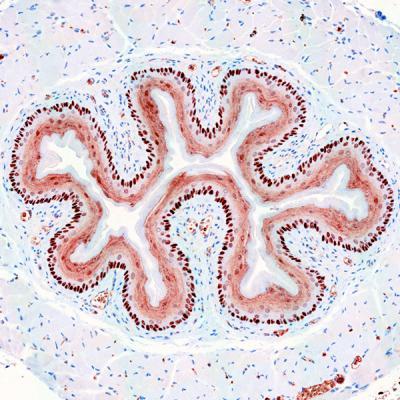
New research has discovered that NANOG, an essential gene for embryonic stem cells, also regulates cell division in stratified epithelia, which form part of the epidermis of the skin or cover the oesophagus or the vagina in developed organisms. This factor could also play a role in the formation of tumors derived from stratified epithelia of the oesophagus and skin.

Pluripotency factor NANOG is active during just two days before implantation of the embryo in the uterus, from day 5 to day 7 post-fertilization. At this critical period of development, NANOG contributes to giving embryonic stem cells the extraordinary capacity to make up all of the tissues that become the adult organism, an ability known as pluripotency. 

New York City residents think everything is about New York City. A NYC storm automatically becomes a Super Storm, the population between the Hudson River and the San Francisco Bay bridge are assumed to be mutant church Republican zombies, they even think it's hotter in the city than everywhere else.

On that last part, they may be right. There has long been a belief in the "urban heat island" (UHI) effect, which makes the world's cities warmer than the surrounding countryside. In an analysis of 65 cities across North America, researchers found that variation in how efficiently urban areas release heat back into the lower atmosphere — convection — is the dominant factor in the daytime heat island effect. 

Feelings are personal and subjective, just like all of psychology, but the human brain turns them into a standard code that objectively represents emotions across different senses, situations and even people, according to a new paper.

In some parts of the world, amphibian numbers are in decline. Activists are quick to blame everything from fracking to pesticides for reduced numbers of some frogs, but scientists have linked it to an emerging fungal disease called chytridiomycosis.

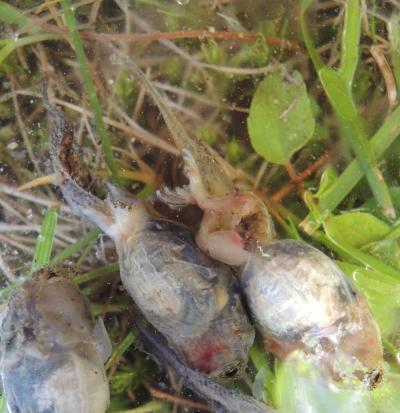
New research from the National Institute for Mathematical and Biological Synthesis (NIMBioS) findss that another pathogen, ranavirus, may also contribute. In a series of mathematical models, researchers showed that ranavirus, which causes severe hemorrhage of internal organs in frogs, could cause extinction of isolated populations of wood frogs if they are exposed to the virus every few years, a scenario that has been documented in wild populations.

Each year, roughly 250,000 people in the United States require hospital care for
Clostridium difficile (C. difficile) infection and at least 14,000 people die from it, according to the U.S. Centers for Disease Control and Prevention (CDC). As a result, the CDC identified C. difficile as an urgent public health threat in its 2013 report on antibiotic resistance.

The National Institute of Allergy and Infectious Diseases (NIAID) has launched an early-stage clinical trial of CRS3123, an investigational oral antibiotic intended to treat C. difficile infection.  CRS3123 (previously known as REP3123) is a narrow-spectrum agent that inhibits C. difficile growth while sparing normal intestinal bacteria.