Banner
Ousiometrics Analysis Says All Human Language Is Biased

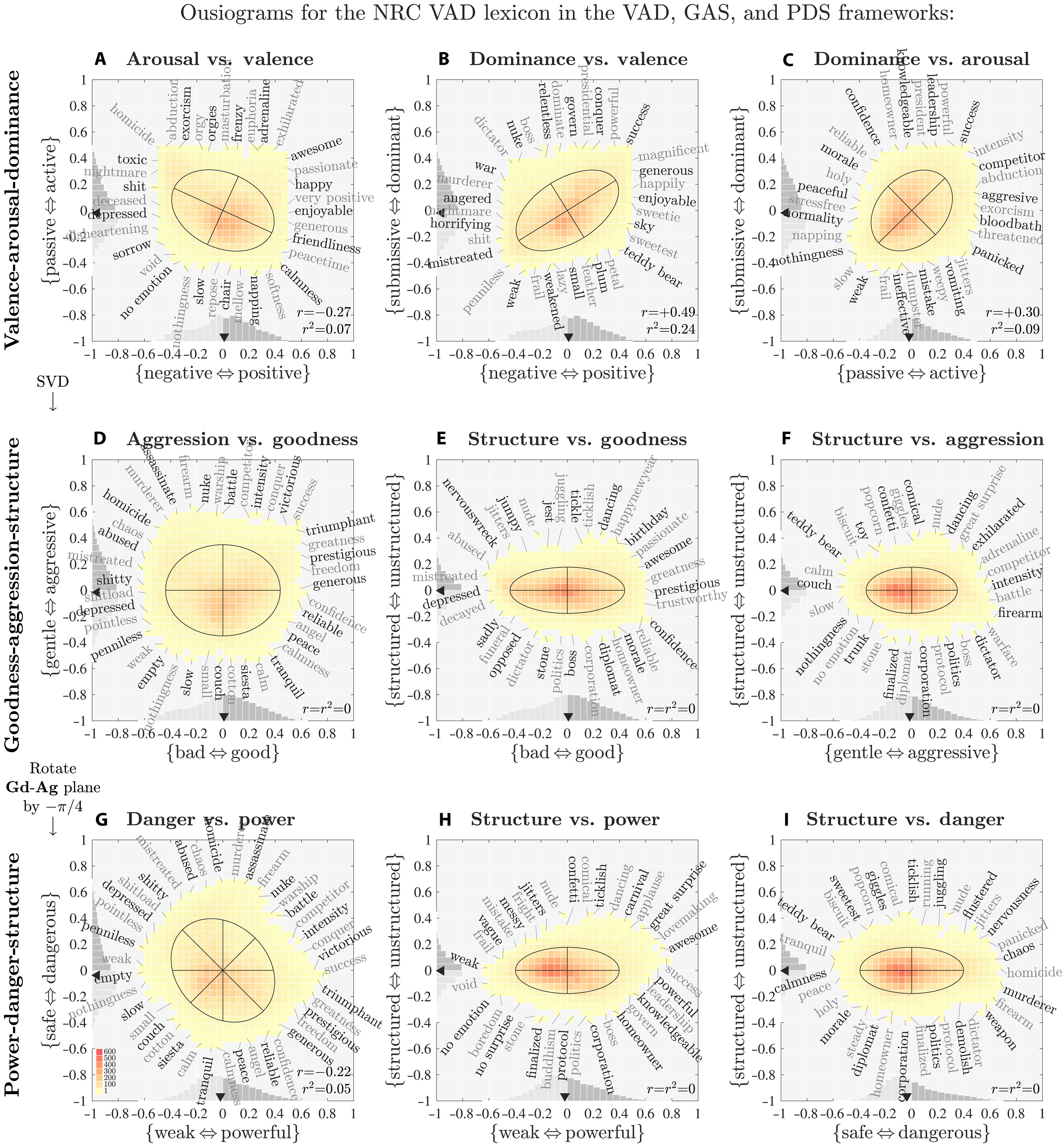
A new tool drawing on billions of uses of more than 20,000 words and diverse real-world texts claims...

Wavelengths Of Light Are Why CO2 Cools The Upper Atmosphere But Warms Earth

There are concerns about projected warming on the Earth’s surface and in the lower atmosphere...

Here's Where Your Backyard Was 300 Million Years Ago

We may use terms like "grounded" and terra firma to mean stability and consistency but geology...

Convergent Evolution Cheat Sheet Now 120 Million Years Old

One tenet of natural selection is a random walk of genes but nature may be more predictable than...

User picture.
News StaffRSS Feed of this column.

News Releases From All Over The World, Right To You... Read More »

Blogroll

Erythritol is the sweetener most people in the western world have never heard about. It can only be produced with the help of special kinds of yeast in highly concentrated molasses but it has a number of advantages: it does not make you fat, it does not cause tooth decay, it has no effect on the blood sugar and, unlike other 'artificial' sweeteners, it does not have a laxative effect.

Erythritol is more common in Asia and researchers at TU Vienna have developed a method that could make it popular in the US and Europe - they can produce it from ordinary straw with the help of a mold fungus. The experiments have been a big success, and now the procedure will be optimized for industry.

Can emotional states be measured quantitatively?

A team of researchers at KAIST in Daejeon, South Korea has developed a flexible, wearable 20mm x 20mm polymer sensor that can directly measure the degree and occurrence of  piloerection
- commonly known as goose bumps, which is caused by sudden changes in body temperature or emotional states. 

Interesting science and technology, but also a dream for politicians and advertisers. Imagine a world in which real-time physical and emotional response helped to determine the experience of political campaigns, online ads or the temperature in the room. 

Around 165 million years ago, a bizarre parasite lived in the freshwater lakes of present-day Inner Mongolia - fly larva with a thorax formed entirely like a sucking plate.

With this odd thorax, the animal could adhere to salamanders and suck their blood with its mouthparts formed like a sting. To date no insect is known that is equipped with a similar specialised design. 

Mental fitness tools are all the rage. Companies are pushing out various brain games that claim they can boost cognitive powers. Do they work? Most studies say no but a new paper finds that playing a puzzle game like Cut the Rope for as little as an hour a day led to improved executive functions.

Executive functions in the brain are important for making decisions in everyday life when you have to deal with sudden changes in your environment – better known as thinking on your feet. An example would be when the traffic light turns amber and a driver has to decide in an instant if he will be able to brake in time or if it is safer to travel across the intersection.

We can't even define dark matter, other than it being some blanket term for something that must exist due to unexplainable gravitational influence on the movements and appearance of stars or galaxies. 

Based on indirect evidence, astronomers believe that dark matter is the dominant type of matter in the Universe – everything else has been conjecture. But astronomers using high-energy observatories believe they may have discovered a clue that hints at this elusive invisible ingredient. 

Some studies have suggested a link between cannabis use and schizophrenia, but it has remained unclear whether this association is due to cannabis directly increasing the risk of the disorder. 

Cannabis is the most widely used illicit drug in the world, and its use is higher amongst people with schizophrenia than in the general population. Schizophrenia affects approximately 1 in 100 people and people who use cannabis are about twice as likely to develop the disorder. The most common symptoms of schizophrenia are delusions (false beliefs) and auditory hallucinations (hearing voices). The exact cause is unknown. A combination of physical, genetic, psychological and environmental factors can make people more likely to develop the disorder.