Banner
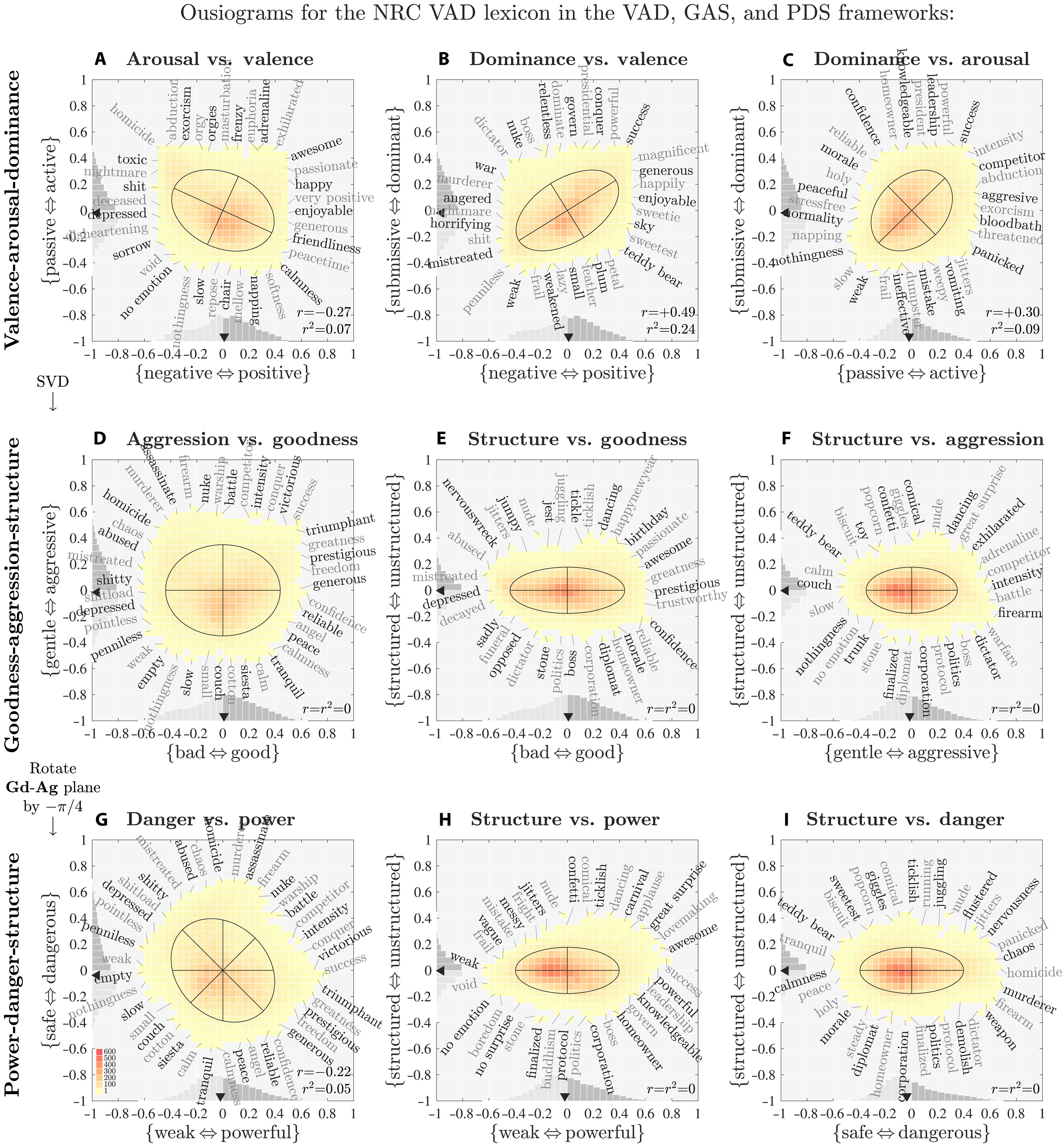
Ousiometrics Analysis Says All Human Language Is Biased

A new tool drawing on billions of uses of more than 20,000 words and diverse real-world texts claims...
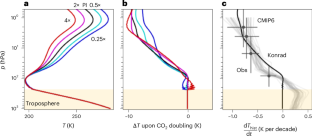
Wavelengths Of Light Are Why CO2 Cools The Upper Atmosphere But Warms Earth

There are concerns about projected warming on the Earth’s surface and in the lower atmosphere...

Here's Where Your Backyard Was 300 Million Years Ago

We may use terms like "grounded" and terra firma to mean stability and consistency but geology...

Convergent Evolution Cheat Sheet Now 120 Million Years Old

One tenet of natural selection is a random walk of genes but nature may be more predictable than...

User picture.
News StaffRSS Feed of this column.

News Releases From All Over The World, Right To You... Read More »

Blogroll

From the age of 30 onwards, physical inactivity exerts a greater impact on a woman's lifetime risk of developing heart disease than the other well-known risk factors, suggests research published online in the British Journal of Sports Medicine.

This includes overweight, the finding show, prompting the researchers to suggest that greater effort needs to be made to promote exercise.

The researchers wanted to quantify the changing contribution made to a woman's likelihood of developing heart disease across her lifetime for each of the known top four risk factors in Australia: excess weight (high BMI); smoking; high blood pressure; and physical inactivity.

Despite its name, the Dead Sea does support life, and not just in the sense of helping visitors float in its waters. Algae, bacteria, and fungi make up the limited number of species that can tolerate the extremely salty environment at the lowest point on Earth.

During implementation of the Affordable Care Act, states were pressured into increasing Medicaid coverage to higher incomes. Many did not want to do it, not because they were against health care but did not want a flawed program consuming even more of state budgets.

The federal government gives states a 100 percent subsidy - but only temporarily. Due to unwillingness by the government to negotiate a fix for Medicaid, 24 states have decided not to be burdened with the higher costs and worry that Medicaid, designed for the poorest and sickest, will be forcing those patients to compete with healthy 25-year-olds for appointments. Estimates were that up to 60 percent of new Medicaid patients would be people who drop private health insurance.

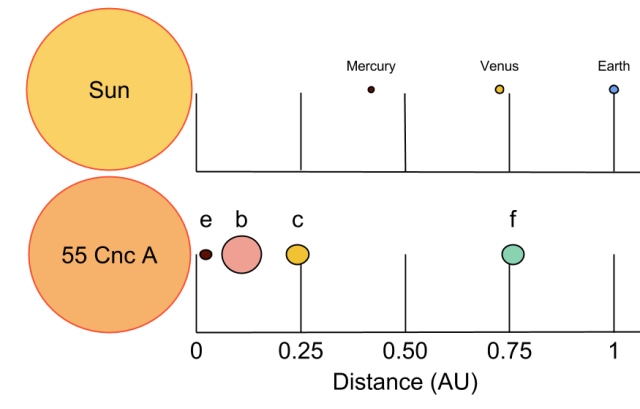
One of the most fascinating nearby planetary systems, 55 Cancri, is now less mysterious.

Hopefully. The authors say theirs is the first viable model for  the planetary system of 55 Cancri, one the first stars discovered to have planets.

Numerous studies since 2002 had failed to determine a plausible model for the masses and orbits of two giant planets located closer to 55 Cancri than Mercury is to our Sun. Astronomers had struggled to understand how these massive planets orbiting so close to their star could avoid a catastrophe such as one planet being flung into the star, or the two planets colliding with each other.
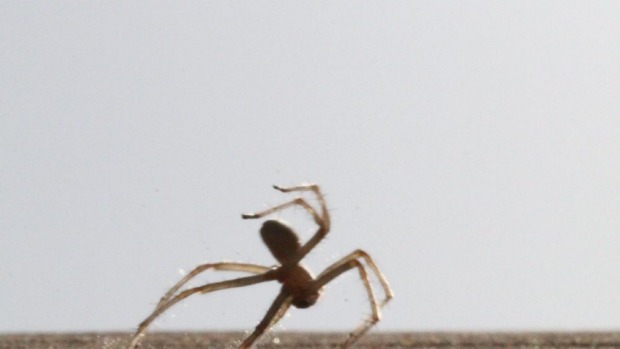
A spider in the Moroccan Sahara rolls like a tumbleweed and can do powerful, acrobatic flips through the air.

Cebrennus rechenbergi runs for a short time, then stretches out its front legs, spinning into the air and returning to touch the ground with its hind legs.  The move doubles the spider’s speed, to two meters per second. But since it uses so much energy, the maneuver is a last resort, called on only to escape predators. 

“I can’t see any other reason,”  said Peter Jäger, a taxonomist at the Senckenberg Research Institute and Natural History Museum in Frankfurt, Germany, who identified the spider. “It is a costly move. If it performs this five to 10 times within one day, then it dies.”
Everyone has heard of the Cuban Missile Crisis, a stand-off over missiles off the shores of America. It's considered a highwater mark during a Cold War culture that was concerned about mutual assured destruction.

Outside testing, nuclear weapons have not been detonated since 1945 but there have been ‘disturbing near misses in which nuclear weapons were nearly used inadvertently’ owing to miscalculation, error or sloppy practices. 

Not once, but nearly 13 times since 1962 - and the risk of nuclear weapons being detonated today is higher than people know.