
Banner
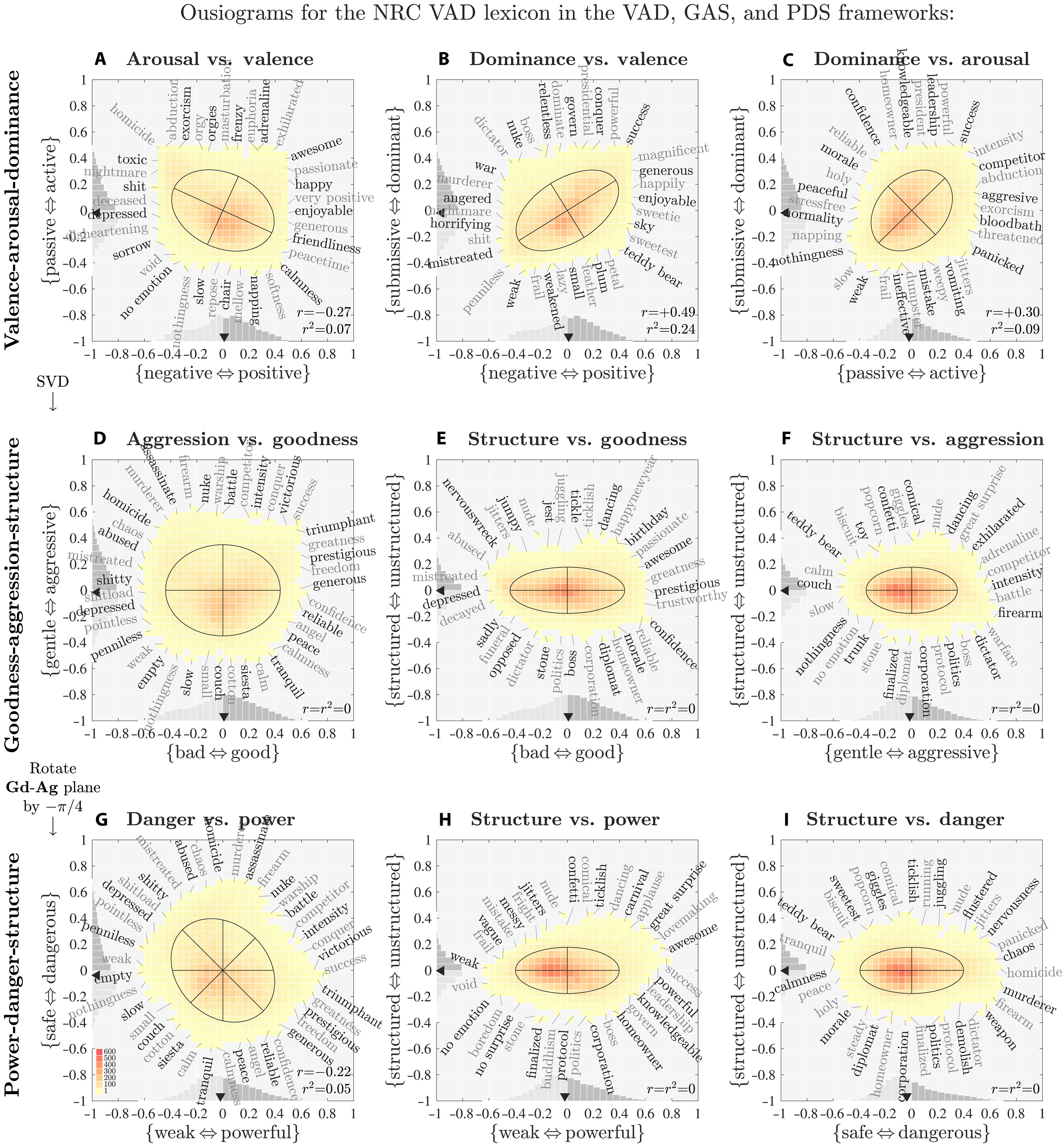
Ousiometrics Analysis Says All Human Language Is Biased

A new tool drawing on billions of uses of more than 20,000 words and diverse real-world texts claims...
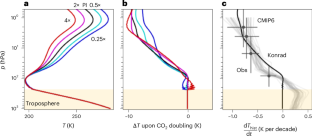
Wavelengths Of Light Are Why CO2 Cools The Upper Atmosphere But Warms Earth

There are concerns about projected warming on the Earth’s surface and in the lower atmosphere...

Here's Where Your Backyard Was 300 Million Years Ago

We may use terms like "grounded" and terra firma to mean stability and consistency but geology...

Convergent Evolution Cheat Sheet Now 120 Million Years Old

One tenet of natural selection is a random walk of genes but nature may be more predictable than...

User picture.
News StaffRSS Feed of this column.

News Releases From All Over The World, Right To You... Read More »

Blogroll

Significant progress toward creating "homo minutus" - a benchtop human - has gotten a little closer, thanks to successful development and analysis of a liver human organ construct that responds to exposure to a toxic chemical much like a real liver.

At the Society of Toxicology meeting in Phoenix, Vanderbilt University Professor John Wikswo said the achievement is the first result from a five-year, $19 million multi­-institutional effort led by he and Rashi Iyer, Senior Scientist at Los Alamos National Laboratory.

Until now, rings of material in a disc have been associated with giant planets like Saturn.

Chariklo, located two billion kilometers away, between Saturn and Uranus,  is the first miniature planet with two rings of ice and pebbles. Chariklo was located in the Kuiper Belt, a collection of thousands of dwarf planets and comets in orbit beyond Neptune on the edge of our solar system, but at some point it must have been thrown out of this belt and is now between Saturn and Uranus, where there is a collection of small objects, called Centaur.

Revelations of the extent of American government surveillance into the private lives of both the American public and foreign leaders worldwide has shone a spotlight on the lack of security in digital communications.

Even today's encrypted data is vulnerable but physics may come to the rescue, according to a Nature article by Artur Ekert and Renato Renner ("The ultimate physical limits of privacy", doi:10.1038/nature13132).

Six glaciers in West Antarctica are moving faster than they did 40 years ago.

The amount of ice draining collectively from those half-dozen glaciers increased by 77 percent from 1973 to 2013, causing global sea level to rise, according to new research. 

We know the Voyager spacecraft has left the solar system. What no one can really say is when. Boundaries in space are entirely human vanities, there is no 'Now leaving the Local System' sign after Pluto.

Well, it's all so unsettled that two percent of astronomers even decided Pluto wasn't even a planet. 

But no matter how we define a planet, the solar system has a new most-distant member, according to new work from Carnegie's Scott Sheppard and Chadwick Trujillo of the Gemini Observatory. In Nature, they report the discovery of the distant dwarf planet 2012 VP113 beyond the known 'edge' of the Solar System.

Natural history, the study of organisms in the environment, is in steep decline and for good reason.

A large part of the modern chemophobia that has undermined science acceptance in America is due to natural history - it became a haven for weak observational studies that got media headlines or, in the case of Rachel Carson and "Silent Spring", a book of anecdotes and observations. Modern scientists prefer experiments rather than observations and so the primary use of natural history has been for 'spray and count' practitioners who need to demonize pesticides or BPA or whatever the scare journalism of the week is.



