Capacity for vicarious experiences is a fundamental aspect of human social behavior. For example, seeing others experiencing pain can activate brain circuits that are known to support actual first-hand experience of pain.
A new study has revealed how the human brain’s opioid system modulates responses to other people’s pain. The less opioid receptors the participants had in their brain, the stronger were their emotion and pain circuits’ response to seeing others in distress. Similar association was not found for the dopamine system despite its known importance in pain management.
The effects of a "bug" in the analysis of functional neuroimages (AFNI) software was greatly exaggerated, a finding that is in defiance of numerous other studies which have found that false positive rates in the analysis of functional magnetic resonance imaging (fMRI) of the brain may negate the findings of countless previous studies.
The surface of water drops at 100 nm size changes with temperature. At room temperature, the surface water molecules of these droplets have much stronger interactions than a normal water surface. The structural difference corresponds to a difference in temperature of -50°C.
Nanometric-sized water drops are everywhere, as droplets or aerosols in air, in our bodies as medication, and in rocks and oil fields. How they interact with their hydrophobic environment, at the curved droplet interface, a sub-nanometric region that surrounds the small pocket of water, could boost our understanding of atmospheric, biological and geological processes.
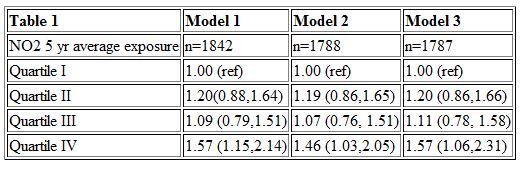
Tablet and phone marketing executives can sleep well tonight. While those devices are commonly blamed for recent sleep problems, beams of pure digital energy shot straight into the eyeballs will do that, a new paper seeks to shore up the failing claim that tiny particulate matter, PM 2.5 (2.5 microns per cubic meter of air), is impacting human health and should be the source of new regulations by the Environmental Protection Agency.
Though well-known cancers like breast and prostate cancer are still the most common, America has gotten really good at diagnosing rare cancers, according to a new study.
This is a significant achievement, because rare cancers can be challenging to diagnose, often resulting in numerous physician visits, misdiagnoses, and substantial delays in diagnosis. Rare cancers have become an area of priority for some researchers and public health advocates because treatment options are often more limited and less effective than for more common cancers.
Though the trend has been to listen to environmental claims about the benefits of trees in cities, in science they have a well-established dark side: in urban cities, they produce a lot of ground-level ozone, the very thing environmentalists spent decades lobbying against.
During hot days, trees emit compounds that worsen ozone, such as formaldehyde, which forms from isoprene, a volatile organic compound that trees can give off when temperatures are hot, and
terpenes, which also interact with sunlight to create a "natural" smog. If you have witnessed the haze of the Great Smoky Mountains, you are breathing in natural pollution.


 Pilot Study: Fibromyalgia Fatigue Improved By TENS Therapy
 High Meat Consumption Linked To Lower Dementia Risk
 Long Before The Inca Colonized Peru, Natives Had A Thriving Trade Network
 Mesolithic People Had Meals With More Tradition Than You Thought