Banner
Social Media Is A Faster Source For Unemployment Data Than Government

Government unemployment data today are what Nielsen TV ratings were decades ago - a flawed metric...

Gestational Diabetes Up 36% In The Last Decade - But Black Women Are Healthiest

Gestational diabetes, a form of glucose intolerance during pregnancy, occurs primarily in women...

Object-Based Processing: Numbers Confuse How We Perceive Spaces

Researchers recently studied the relationship between numerical information in our vision, and...

Males Are Genetically Wired To Beg Females For Food

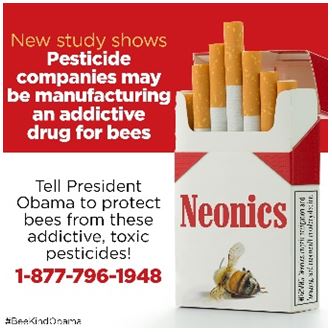
Bees have the reputation of being incredibly organized and spending their days making sure our...

User picture.
News StaffRSS Feed of this column.

News Releases From All Over The World, Right To You... Read More »

Blogroll

Researchers from the University of East Anglia are calling for medical trial data to be kept in national repositories.

A BMJ study published today reveals how a series of barriers stopped researchers from reviewing the effects of heart failure drugs such as beta blockers on patients.

Now they are calling for greater transparency in research and recommend that access to data should be a mandatory requirement of funding.

They warn that the risks of not doing so, could lead to "erroneous clinical decisions".

Want to hit a fastball like the New York Mets do? It won't surprise you much to learn that baseball players don't think much about hitting the ball - much of it comes from trained muscle memory and a great deal of visual ocularity.

The latest episode of “It’s Okay to Be Smart” outlines the combination of practice, strength, brainpower, and good eyesight that helps players predict the correct time to swing the bat. Fortunately none of those things will make you field the ball like David Murphy, even if you hit like him.

Human twin embryos created in the laboratory by splitting single embryos into two using a common method known as blastomere biopsy may be unsuitable both for IVF and for research purposes, according to a new study.

In the UK, the Human Fertilisation and Embryology Authority Code of Practice says that clinics should not be producing embryos for IVF treatment by embryo splitting, such genetically identical embryos should be used only for research purposes. However, in the US the Ethics Committee of the American Society for Reproductive Medicine has not indicated any major ethical objections to placing two or more artificially created embryos with the same genome into the uterus. 

MONTRÉAL (October 19, 2015)- Researchers from Mayo Clinic in Jacksonville, Florida, formed a multidisciplinary sepsis and shock response team (SSRT) to help alert emergency department providers when these disorders are suspected. An automated electronic sepsis alarm for early recognition, followed by standardized multidisciplinary management of patients with suspected sepsis or shock with SSRT, improved the compliance with standard care measures and overall mortality.

NEW YORK, NY -- A new and comprehensive study by investigators at the Celiac Disease Center at Columbia University Medical Center has found that celiac patients are at no increased risk for dementia before or after their diagnosis of celiac disease.

"Patients coming to our center have long described 'brain fog,' and it appears that gluten can cause cognitive effects in some individuals with and without celiac disease," said Peter Green, MD, the Phyllis and Ivan Seidenberg Professor of Medicine at Columbia University and the director of the Celiac Disease Center. "However, we didn't know if these effects have long-term consequences in the form of increased risk of dementia."

An international team have used cutting edge genomic methods to uncover key biological insights that help explain the protective effects of the world's most advanced malaria vaccine candidate, RTS,S/AS01 (RTS,S). 

RTS,S is the first malaria vaccine candidate to complete phase 3 trials. Originally designed by scientists at GlaxoSmithKline (GSK) in 1987, development of the vaccine is now being advanced by a public-private partnership between GSK and PATH Malaria Vaccine Initiative.

Applying highly sensitive sequencing technology to more patient samples than previously tested, the team was able to determine that genetic variation in the protein targeted by RTS,S influences the vaccine's ability to ward off malaria in young children.