A new, simpler programming language for wireless sensor networks, written with the novice programmer in mind, can be used by geologists for monitoring volcanoes and biologists who rely on them to understand birds' nesting behaviors.

Finding an embedded systems expert to program a sensor network is difficult and costly and can lead to errors because the person using the network is not the person programming it. The cost and disconnect associated with the situation means these networks aren't being used to their full potential.

Candy Gunther Brown, an associate professor in the Indiana University Bloomington Department of Religious Studies in the College of Arts and Sciences, has been awarded a $150,000 grant to pursue research on divine healing practices and their involvement in globalization. 

The grant comes from the Flame of Love Project, funded by the John Templeton Foundation. It complements a $64,500 in research funding that Indiana University has provided Brown in the past year.
Today, if you like playing with electricity, you can hop over to Amazon and buy the Extreme Snap Circuits set and put together transistors, switches, lamps, motors, resistors, and capacitors to build all sorts of fun projects, from an auto-off night light to the perpetually entertaining space war timer. More ambitious engineers can buy off-the-shelf parts to build appliances, computers, and control systems for Boeing's 787 Dreamliner.

What if you could engineer biology this way? What would you build? Physicist and scientific prophet Freeman Dyson would love to build genetically engineered pets and ornamental plants. Standford biologist Drew Endy envisions a collection of standardized biological parts called BioBricks, off-the-shelf modules that biological engineers can assemble like snap circuits into amazing biological machines. An annual undergraduate competition, the International Genetically Engineered Machine competition draws teams of biogeeks who design glowing microbes that spell "Hello World" on an agar plate and  gut bacteria that smell like mint or bananas.

This all sounds exciting, but what's the reality? Do biological engineers, or synthetic biologists (as they are most commonly called) have anything close to the know-how of today's electrical or aerospace engineers? The answer, obviously, is no.
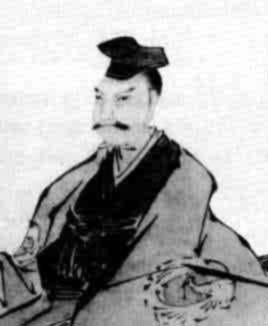
You'll be forgiven if you didn't know Seki Takakazu's work on matrices came out years before Gottfried Leibniz; Japan wanted it that way.  But out-Bernoulli'ing Bernoulli?   He needs to get some respect for that and I am here to help.

When is a Metal not a metal?  At high pressure, of course!

Last time I discussed reducing cognitive load in a new approach to scientific education:
Some ways to do so are obvious, such as slowing down. Others include having a clear, logical, explicit organization to the class (including making connections between different ideas presented and connections to things the students already know), using figures where appropriate rather than relying only on verbal descriptions and minimizing the use of technical jargon.
Addressing Beliefs

Update: check out this YouTube video - about 2:55 in, the cute kid videos start.

Can you increase your willpower? Can high levels of willpower lead to greater success in life?

Columbia University psychologist Walter Mischel says yes. In the 1960s, Mischel used hundreds of 4-year-olds to answer these questions in what is now referred to as the marshmallow test.

The ability to wait for gratification is considered a personality trait important for success later in life, and may even be a component of emotional intelligence. Those without this personality trait need their gratification instantly and suffer from poor impulse control.

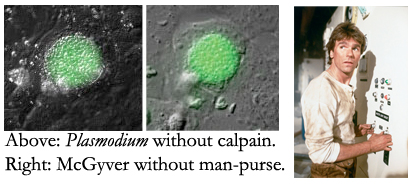
It’s the same story over and over: he enters a new environment, wastes it, and grabs what he needs from his surroundings to make a clever escape. But this time there’s less mullet and more microscope. Parasites like Plasmodium hijack your own enzymes to leave a dying cell, like opportunistic MacGyvers stuffing useful proteins into their microscopic man-purses.
Food is very complicated. You need food to fuel your body, so you need calories for energy. Your brain needs a constant supply of glucose, so that means sugars, starches and carbohydrates. Your muscles need protein, so that means meats, beans and veggies. Your body also needs other vitamins, minerals and protection from free radicals, meaning fruits and more veggies. Putting it all together can be confusing and convoluted, and so most of us revert to eating dinners composed of cheese and chocolate (my favorite kind), and thus America and the rest of the world have expanding waistlines.