





People have always been fascinated by bats, but mostly in their erratic flying and their bizarre habit of sleeping upside down.    But landing with bad eyesight is not so easy either and a research team is the first to document the landing approaches of three species of bats — two that live in caves and one that roosts in trees. What they found was that bats landing are like people parallel parking their cars; we recognize it, but they don't all do it the same way.
Evolutionary theorist Alastair Clarke says eight patterns are the basis of all the humor that has ever been imagined or expressed, regardless of civilization, culture or personal taste. 

That's right, if you thought you heard that Seinfeld joke before, it's because  it is part of your collective unconscious.

Clarke has stated before that humor is based on the 'surprise' recognition of patterns but now he has gone further and identified the precise nature of the patterns involved, addressing the deceptively simple unit and context relationships at their foundation. His research goes on to demonstrate the universality of the theory by showing how these few basic patterns are recognized in more than a hundred different types of humor. 
Researchers at the University of Florida have introduced 'Delicious', a new muscadine grape cultivar. 'Delicious' ripens early, produces high yields, and is disease-resistant. The black fruit features exceptional taste and texture with an edible skin, making it well-suited for fresh fruit consumption and the potential for wine production. The name 'Delicious' was selected based on the comments of vineyard visitors who sampled the fruit. 
A new study published today in the journal Addiction shows that drinking alcohol is the greatest risk factor for acetaldehyde-related cancer. Heavy drinkers may be at increased risk due to exposure from multiple sources.
It seems that music has extraordinary magical powers. Famed for being able to tame wild beasts, set a romantic mood, keep you exercising for longer and make babies smarter, music has taken a multifaceted and complex role in our society.  Our search for the panacea of our times may lie in your iPod. 

We’re all aware of the severe genetic and unpleasant physical consequences that result from reproducing with a closely related relative.  Aside from unfortunate aesthetics, inbreeding can also lead to the extinction of small organismal populations.  This decrease of reproductive success is referred to as “inbreeding depression” and mechanisms that cause it are still being debated by biologists. 

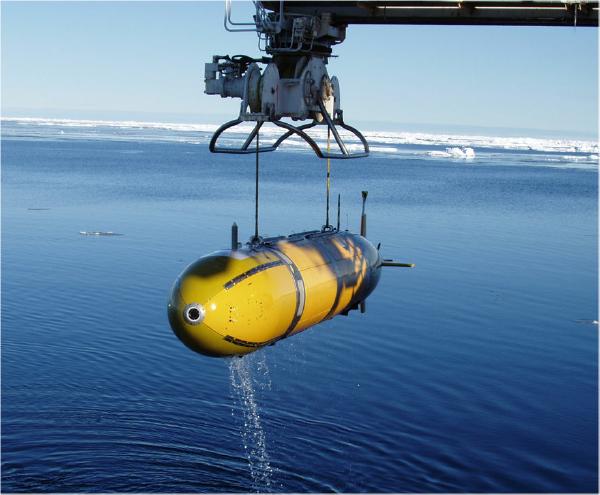
The Antarctic landmass is losing its frontier status.  Housing thousands of decreasingly rugged inhabitants in heated, internet-ready comfort, it’s been so well-mapped that we even know where to find the donuts.  Underwater, however, is a different story.  Harsh temperatures, currents, pressure and ice surfaces have kept the submerged landscapes of glaciers inaccessible to all but penguins and Morgan Freeman’s voiceover.

A joint US-British team has nominated a new Ernest Shackleford to explore the uncharted Antarctic underwater.  But this time around, he’s a robot.
There is an old gag which asks: "Why don't polar bears eat penguins?" The answer is that polar bears inhabit arctic regions, whereas penguins inhabit antarctic regions, as shown here.

There is a saying that the poles are where weather is made. Weather is a heat-driven system, the temperature difference between the poles and the equator, amongst other things, drives our weather. Air is constantly being either warmed or cooled in a planet-wide system, but air is warmed much more in the equatorial regions and cooled more in the polar regions.  (Please note: this is a deliberate oversimplification for purposes of explanation.)
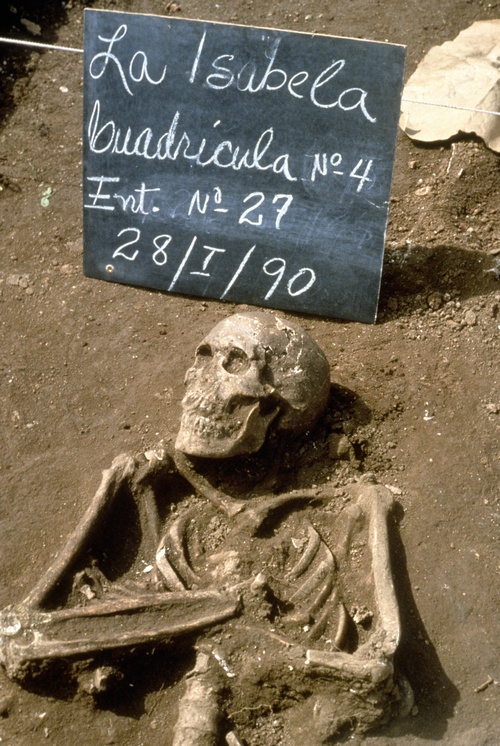
In the days of Columbus, dead men could tell no tales.  Today, dead men can tell us a lot and science has just taken that forensic interrogation to new heights.

A team of researchers from the University of Wisconsin-Madison is extracting the details of the lives of crew members who remained on the island of Hispaniola after the second voyage of Christopher Columbus to America in 1493-94.

