Want to know what will make you happy? Ask a stranger. Another person's objective opinion may be more informative than your own best guess. The study in Science was led by Daniel Gilbert, professor of psychology at Harvard and author of the 2007 bestseller "Stumbling on Happiness," along with Matthew Killingsworth and Rebecca Eyre, also of Harvard, and Timothy Wilson of the University of Virginia.
Previous research in psychology, neuroscience, and behavioral economics has shown that people have difficulty predicting what they will like and how much they will like it, which leads them to make a wide variety of poor decisions. Interventions aimed at improving the accuracy with which people imagine future events have been generally unsuccessful.
A new study says that some aspects of peoples' cognitive skills, like making rapid comparisons, remembering unrelated information and detecting relationships, will peak at about the age of 22 and then begin a slow decline starting around age 27.
Timothy Salthouse, a University of Virginia professor of psychology and the study's lead investigator, and a team conducted the study during a seven-year period, working with 2,000 healthy participants between the ages of 18 and 60.Participants were asked to solve various puzzles, remember words and details from stories, and identify patterns in an assortment of letters and symbols.
A new study says that the human brain lives "on the edge of chaos", at a critical transition point between randomness and order. Theoretical speculation? Well, yeah, but that's the nature of neuroscience.
The researchers say self-organized criticality (where systems spontaneously organize themselves to operate at a critical point between order and randomness), can emerge from complex interactions in many different physical systems, including avalanches, forest fires, earthquakes, and heartbeat rhythms.
Kids love sweet-tasting foods and new research indicates that this heightened liking for sweetness has a biological basis and is related to children's high growth rate.
Liking sweets is a cross-cultural phenomenon for kids, a pattern that declines during adolescence. To explore the biological underpinnings of this shift, Researchers looked at sweet preference and biological measures of growth and physical maturation in 143 children between the ages of 11 and 15.
Bell curves are everywhere. Pick 100 random people and measure them: measure their height, their weight, their blood pressure, their time to run a mile, or to sprint 50 yards, and their IQ, and you find that most of us fall in the middle of the spectrum, while there are always some people on either extreme. Why?
The puzzle grows deeper when you think about genetics. If a trait like height is controlled largely by genes, how is it that height falls into a bell-curve pattern? Bell-curves seem completely at odds with what we learn about the discrete genetics of Mendel's round and wrinkled peas in high school biology.
It turns out that the solution to this puzzle is fairly simple (although the details get messy). In fact, Darwin's cousin hit on the right answer (long before he or anyone else knew about Mendel's genetics), with what he called the "Supreme Law of Unreason": a bell curve is exactly what you expect when you toss together "a large sample of chaotic elements." In other words, genetics is like one big game of The Price Is Right.
How did life begin, anyway?
I am a research professor at the University of California, Santa Cruz, and over the past 30 years my students and I have been working to understand how cellular life arose. The unit of all life today is the cell, a molecular system of functional polymers (proteins and nucleic acids) that is bounded by a membrane composed of lipid.
New treatments for infertility could be closer to reality, thanks to a discovery from scientists at the Université de Montréal and Maisonneuve-Rosemont Hospital Research Centre.
According to a study published in the journal Molecular Human Reproduction, the researchers have become the first to clone, produce and purify a protein important for sperm maturation, termed Binder of Sperm (BSP), which may have implications for both fertility treatments and new methods of male contraception.
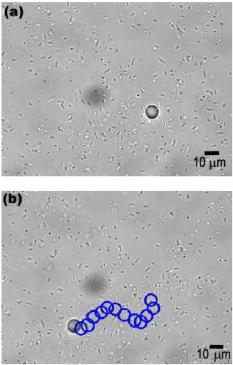
Half-biological and half-synthetic, an army of thousands of wrecking balls are contained within Dr. Metin Sitti's Carnegie Mellon laboratory. Once incited, they keep moving to the death. They run on sugar. And they can all be taken down by penicillin.
Sitti’s army is a cadre of Serratia marcensens bacteria-coated polystyrene microbeads, propelled by the bacteria’s innate restlessness. To Sitti, recruiting bacteria to form the propulsion side of a microprojectile is more than a fun day in the lab. These tiny living robots are the foundation for the future of biointegrated micromachines.
Professor Lynn Margulis is the biologist who had the incredible insight that the cells of modern organisms were originally formed by the symbiotic combination of prokaryotic cells and colonies of bacteria, and then had to battle for years to have this recognised by the science community.
The idea is so outlandish, but so significant, that it puts her right up there as one of the greats of biology.
To look at Matthew Houdek, you could never tell he was born with virtually no left ear.
A surgery at Loyola University Health System made it possible for Houdek to be fitted with a prosthetic ear that looks just like the real thing.
Ear-nose-throat surgeon Dr. Sam Marzo implanted three small metal screws in the side of Houdek's head. Each screw is fitted with a magnet, and magnetic attraction holds the prosthetic ear in place.
It takes only a few seconds for Houdek to put his prosthetic ear on in the morning and take it off when he showers or goes to bed. It doesn't fall off, and it's much more convenient than prosthetic ears that are attached with adhesive.