A new report, co-authored by a University of Hertfordshire academic, which will be launched this Thursday (22 January), has revealed that girls are more likely to have new technologies at home than boys and it is mothers rather than fathers who assist them.
The Learning in the Family report which looked at how families are involved in children’s learning, was funded by Becta, commissioned by Intuitive Media Research Services and co-authored by Robert Hart of Intuitive Media and Professor Karen Pine, at the University’s School of Psychology. They conducted two online surveys with a sample of 4,606 children aged six to fourteen, going into more depth with a further 2,535 children and then interviewed twelve families.
It has been difficult to prove that fast-swimming sperms have an advantage when it comes to fertilizing an egg but a research team at Uppsala University say that unfaithful females of the cichlid fish species do influence the males’ sperms - increased competition leads to both faster and larger sperms, and the research findings published in PNAS say that the much mythologized size factor does indeed count.
The findings also show that the speed and the size of sperms are closely related: larger sperms are faster. These sperms swim faster thanks to the greater power of a larger flagellum, but faster sperms also need to have a larger store of energy, which in turn results in larger sperms.
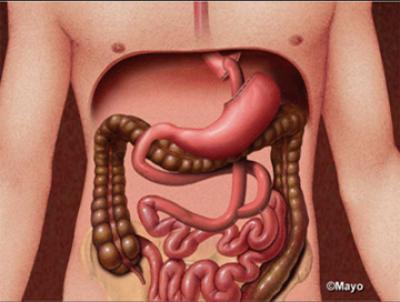
In terms of diversity and sheer numbers, the microbes occupying the human gut easily dwarf the billions of people inhabiting the Earth. Numbering in the tens of trillions and representing many thousands of distinct genetic families, this microbiome, as it's called, helps the body perform a variety of regulatory and digestive functions, many still poorly understood.
How this microbial mélange may be linked to body weight changes associated with morbid obesity is a relevant and important clinical question that has received recent attention. Now, a new study suggests that the composition of microbes within the gut may hold a key to one cause of obesity—and the prospect of future treatment.
The cast of "House" won't need to find new jobs any time soon but using a robotic assistant to remove a patient's gallbladder by key-hole surgery (laparoscopic cholecystectomy) was as safe as working with a human assistant, a Cochrane Review has concluded. Comparisons between robot- and human-assisted surgery showed that there were no differences in terms of morbidity, the need to switch to open surgery, total operating time, or length of stay in hospital.
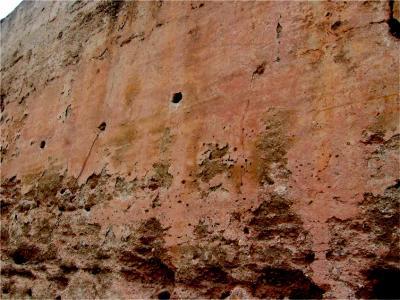
It's not quite a "Book of the Dead" but a 14th century brick oven uncovered by archaeologists in Spain found a unique use for animal bones just the same - strengthening city fortifications. The scientists report that the animal bones were burnt in the oven and mixed with other materials to produce a protective coating that strengthened the grand medieval walls of what is today Granada, Spain. It must have worked pretty well since Granada and the surrounding territory were the last bastion of Islamic Iberia during that period.
In a study scheduled to appear in the Jan. 15 issue of Analytical Chemistry, scientists describe how they found these materials thanks to their new testing method.
Edward Larson, author of a Pulitzer Prize-winning history of the Scopes trial (which I highly recommend), writes in
Bookforum about the
influence of racism on Darwin's thinking. Creationists argue (as most recently exemplified in Ben Stein's widely panned film
Expelled) that "practically all the harmful practices and deadly philosophies that plague mankind have their roots and pseudo-rationale in evolutionism." To these people, in this year of big Darwin bicentennial celebrations, "all the hoopla must seem like throwing a birthday party for Hitler."
In 1960, Dr. Frank Drake developed an equation that predicts the number of intelligent civilizations in our galaxy. It's a simple equation -- the number of intelligent civilizations in our galaxy is equal to the product of all the following numbers:
- The total number of stars in the galaxy
- The fraction of stars that have planets orbiting them
- The number of planets orbiting each star that are capable of supporting life
- The fraction of planets capable of supporting life that actually do support life
- The fraction of planets supporting life that support intelligent life
My elementary school art teacher used to discourage the use of rulers, claiming that “there are no straight lines in nature”. Mr. Dugan, your own cells are here to tell you it’s not true. Systems of taut fibers and light struts— as straight as the bars and chains of a swingset—are omnipresent in biological forms.
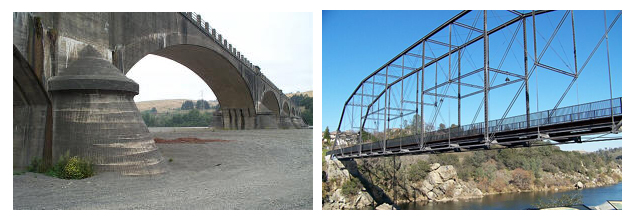
These organic analogs to popsicle sticks and rubber bands often occur in interwoven networks reminiscent of the geodesic domes that Buckminster Fuller promoted in the 1950’s. Since form follows function, it’s hardly surprising that these natural geodesics offer the same benefits in nature that they do in architecture: high strength, dynamic stability, and material frugality.
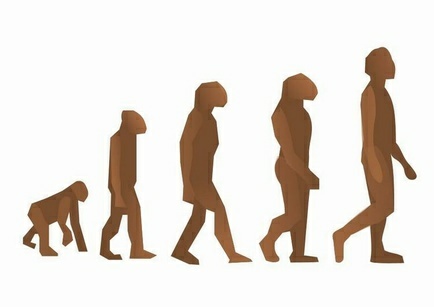
Michael Shermer of Michael Shermer: What Will ET Look Like? has inspired me to write a sci fi. Shermer's ET, whether a bipedal primate or not, is attractive for a theme of oceans and humans -- both representing new experiences. An extraterrestrial, you might agree, is also ideal to ask questions to our hero, as suggested by me, to be played by Michael Shermer.
The extracellular deposits of of the amyloid beta (Aβ) protein are the hallmarks of Alzheimer's disease(AD) brain. These Aβ deposits are result of-
1) increased production of Aβ (anabolism)- High activity and levels of β-secretase (BACE1) and γ-secretase
(presenilins) increase the amyloidogenic processing of Amyloid Precursor Protein (APP), leading to the increased production of Aβ AND/OR