




The National Geographic Society and the international polling firm GlobeScan today unveiled a new mechanism for measuring and comparing individual consumer behavior as it relates to the environment.

“Greendex™ 2008: Consumer Choice and the Environment — A Worldwide Tracking Survey” looks at environmentally sustainable consumption and behavior among consumers in 14 countries. This first-of-its-kind study reveals surprising differences between consumers in developed and developing countries in terms of environmentally friendly actions.

This year’s results are a baseline against which results of future annual surveys will be compared, in order to monitor improvements or declines in environmentally sustainable consumption at both the global level and within countries.

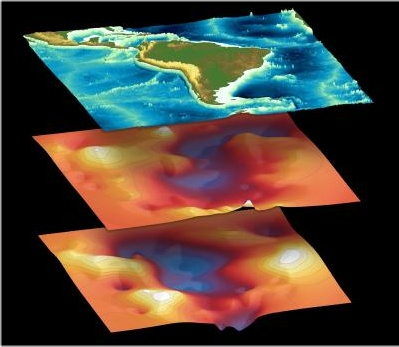
You wouldn't think that clean air would be bad for the Amazon rainforest but UK and Brazilian climate scientists writing in Nature say just that.

Reduced sulphur dioxide emissions from less burning coal and increased sea surface temperatures in the tropical north Atlantic, are causing a heightened risk of drought in the Amazon rainforest.

A team from the University of Exeter, Centre for Ecology and Hydrology, Met Office Hadley Centre and Brazilian National Institute for Space Studies used the Met Office Hadley Centre climate-carbon model to simulate the impacts of twenty-first century climate change on the Amazon rainforest. They compared the model to data from the 2005 drought, which caused widespread devastation across the Amazon basin.

A new approach to estimating tumor growth based on breast screening results from almost 400,000 women is published today in Breast Cancer Research. This new model can also estimate the proportion of breast cancers which are detected at screening (screen test sensitivity). It provides a new approach to simultaneously estimating the growth rate of breast cancer and the ability of mammography screening to detect tumors.

The results of the study show that tumor growth rates vary considerably among patients, with generally slower growth rates with increasing age at diagnosis. Understanding how tumours grow is important in the planning and evaluation of screening programs, clinical trials, and epidemiological studies. However, studies of tumour growth rates in people have so far been based mainly on small and selected samples.

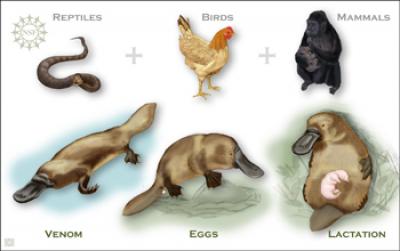
The first genome sequencing project of a mammal that lays eggs is complete and, like the animal itself, the DNA of the platypus is something of a patchwork.

The platypus, found in eastern Australia, including Tasmania, is one of the five species of mammals that lay eggs instead of giving birth to live young. The four species of echidna are the other mamimals that share this distinction.

The curious discovery of the duck-billed, egg-laying, otter-footed, beaver-tailed, venomous platypus in 1798, comfortable on land and in water, convinced British scientists that it must be a hoax. Sketches of its appearance were thought to be impossible.

But new research proves that the oddness of the platypus' looks isn't just skin-deep. Platypus DNA is an equally cobbled-together array of avian, reptilian and mammalian lineages that may hold clues for human disease prevention.

Rensselaer Polytechnic Institute graduating senior Jeffery Martin has put his basic knowledge of sugars to exceptional use by creating a lab-on-a-chip device that builds complex, highly specialized sugar molecules, mimicking one of the most important cellular structures in the human body - the Golgi Apparatus.

Among the most important and complex molecules in the human body, sugars control not just metabolism but also how cells communicate with one another.

Cells build sugars in a cellular organelle known as the Golgi Apparatus. Under a microscope, the Golgi looks similar to a stack of pancakes. The strange-looking organelle finishes the process of protein synthesis by decorating the proteins with highly specialized arrangements of sugars. The final sugar-coated molecule is then sent out into the cell to aid in cell communication and to help determine the cell’s function in the body.

A group of researchers writing in Geophysical Research Letters have a new theory about Mercury’s mysterious magnetic field - iron “snow” inside the planet that forms and falls toward the center, much like snowflakes form in Earth’s atmosphere and fall to the ground.

Mercury is the closest planet to the sun and the only other terrestrial planet that possesses a global magnetic field. Discovered in the 1970s by NASA’s Mariner 10 spacecraft, Mercury’s magnetic field is about 100 times weaker than Earth’s. Most models cannot account for such a weak magnetic field.

Made mostly of iron, Mercury’s core is also thought to contain sulfur, which lowers the melting point of iron and plays an important role in producing the planet’s magnetic field.

A comparison of recorded Antarctic temperatures and snowfall accumulation to predictions by major computer models of global climate change offer both good and bad news.

The good news is that the numerical models’ predictions covering the last 50 years broadly follow the actual observed temperatures and snowfall for the southernmost continent, although the observations are very variable.

The bad news is that a similar comparison that includes the last 100 years is a poor match. Projections of temperatures and snowfall ranged from 2.5 to five times what they actually were during that period.

St. Jude Children's Research Hospital investigators have found that an electrically powered amplification mechanism in the cochlea of the ear is critical to the acute hearing of humans and other mammals. The findings will enable better understanding of how hearing loss can result from malfunction of this amplification machinery due to genetic mutation or overdose of drugs such as aspirin.

Sound entering the cochlea is detected by the vibration of tiny, hair-like cilia that extend from cochlear hair cells. While the cochlea’s “inner hair cells” are only passive detectors, the so-called “outer hair cells” amplify the sound signal as it transforms into an electrical signal that travels to the brain’s auditory center. Without such amplification, hearing would be far less sensitive, since sound waves entering the cochlea are severely diminished as they pass through the inner ear fluid.

Children who speak a second or third language may have an unexpected advantage later in life, a new Tel Aviv University study has found. Knowing and speaking many languages may protect the brain against the effects of aging.

Dr. Gitit Kavé, a clinical neuro-psychologist from the Herczeg Institute on Aging at Tel Aviv University, together with her colleagues Nitza Eyal, Aviva Shorek, and Jiska Cohen-Manfield, discovered recently that senior citizens who speak more languages test for better cognitive functioning. The results of her study were published in the journal Psychology and Aging.

However, Kavé says that one should approach these findings with caution. “There is no sure-fire recipe for avoiding the pitfalls of mental aging. But using a second or third language may help prolong the good years,” she advises.

Nano-whatever is all the rage. They're a big deal because they can make a blacker version of black and lots of other things but what does that even mean?

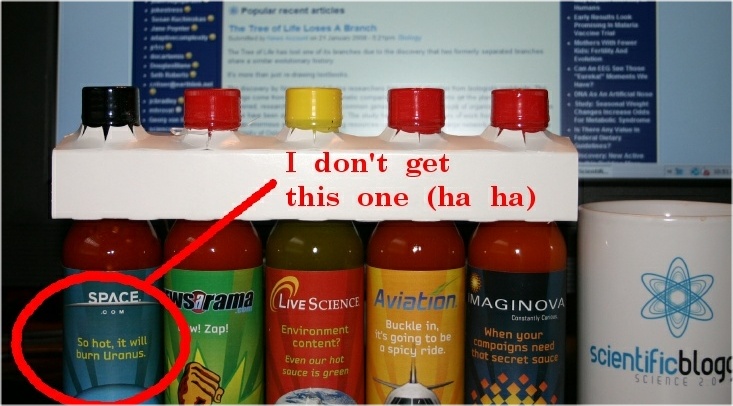
Richard Compton and his team at Oxford University are here to help make carbon nanotubes understandable to everyone - namely, by making it relevant to food. They have developed a sensitivity technique to measure the levels of capsaicinoids, the substances that make chilis hot, in samples of hot sauce. They report their findings in The Analyst.

The current industry procedure is to use a panel of taste-testers, which is highly subjective. Compton’s new method unambiguously determines the precise amount of capsaicinoids and is not only quicker and cheaper than taste-testers but more reliable for purposes of food standards; tests could be rapidly carried out on the production line.


