




Modern day logic and embedded systems are all around us. They are so ubiquitous and their design so efficient, say researchers at the RUNES (Reconfigurable Ubiquitous Networked Embedded Systems) project in Europe, that these miniature self-contained computers could be optimized to create on-the-fly wireless networks and assist in traffic control and even emergencies.

They use the example of a fire in a mountain tunnel. Ordinarily a tunnel full of smoke and fire would be a difficult situation because it would take time to pin down the location of the blaze and where people were trapped.

Wireless sensors, oblivious to smoke and heat, could make sense from chaos and route maps and instructions to firefighters through handheld terminals or helmet-mounted displays. But there's a caveat - because each system would need to be customized, the wireless networks basically have to be able to build themselves.

The productivity and biodiversity of an ecosystem is significantly affected by the rate at which organisms move between different parts of the ecosystem, according to new research. Ecologists and conservationists hope to use this knowledge to develop strategies to ensure that conservation areas are highly productive and rich in biodiversity.

The study in Nature(1) used a lab-based artificial ecosystem of communities of bacteria to examine what happens when the bacteria move around and evolve to live in different parts of the ecosystem over the course of hundreds of generations. The scientists measured the effect this dispersal of species has on the productivity and biodiversity of the ecosystem over all.

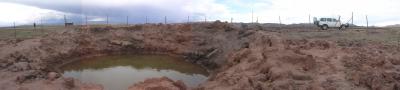
On Sept. 15, 2007, an object hurtled through the sky and crashed near the village of Carancas in Peru. Scientists dispatched to the site found a gaping hole in the ground.

Peter Schultz, professor of geological sciences at Brown University and an expert in extraterrestrial impacts, went to Peru to learn more and he presented the findings from his travels at the 39th annual Lunar and Planetary Science Conference in League City, Texas.

What Schultz and his team revealed: The object that slammed into a dry riverbed in Peru was a meteorite, and it left a 49-foot-wide crater. Soil ejected from the point of impact was found nearly four football fields away.

Developmental biologists at the University of Wisconsin School of Medicine and Public Health (SMPH) say they have gained new understanding of how digits grow and why each digit is different from the others.

Though the research was done on chick digits, it may have implications for humans born with a genetic condition known as bradydactyly, or stubby fingers and toes.

Despite decades of research, the biological basis of depression is unknown, and the molecular and cellular targets of antidepressant treatment remain elusive, although it is likely that these drugs have one or more primary targets.

Researchers from the University of Illinois at Chicago College of Medicine have discovered that a change in the location of a protein in the brain could serve as a biomarker for depression, allowing a simple, rapid, laboratory test to identify patients with depression and to determine whether a particular antidepressant therapy will provide a successful response.

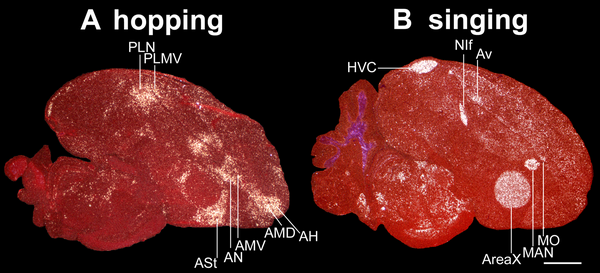
Though they perch far apart on the avian family tree, birds with the ability to learn songs use similar brain structures to sing their tunes. Neurobiologists at Duke University Medical Center now have an explanation for this puzzling likeness.

In all three groups of birds with vocal learning abilities – songbirds, parrots and hummingbirds – the brain structures for singing and learning to sing are embedded in areas controlling movement, the researchers discovered. The team also found that areas in charge of movement share many functional similarities with the brain areas for singing. This suggests that the brain pathways used for vocal learning evolved out of the brain pathways used for motor control.

Bipolar Disorder (BPD or manic-depressive illness) is one of the most serious of all mental disorders, affecting millions of individuals worldwide. Affected individuals alternate between states of deep depression and mania. While depression is characterized by persistent and long-term sadness or despair, mania is a mental state characterized by great excitement, flight of ideas, a decreased need for sleep, and, sometimes, uncontrollable behavior, hallucinations, or delusions.

BPD likely arises from the complex interaction of multiple genes and environmental factors. Unlike some brain diseases, no single gene has been implicated in BPD.

Cocaine addicts often suffer a downward emotional spiral that is a key to their craving and chronic relapse. While researchers have developed animal models of the reward of cocaine, they have not been able to model this emotional impact until now.

Regina Carelli and colleagues report experiments with rats in which they have mimicked the negative affect of cocaine addiction and even how it drives greater cocaine use. They said their animal model could enable better understanding of the emotional motivations of cocaine addiction and how to ameliorate them.

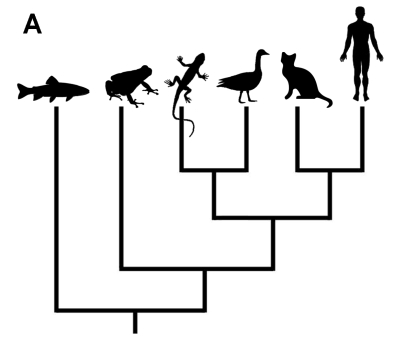
In the first installment of this series, we encountered the common misconception that the order of the terminal nodes ("tips") on an evolutionary tree reflects the actual relatedness among the species represented. Simply rotating some internal nodes without affecting the branching order ("topology") of the tree -- and thus, making no change to the relationships among species -- showed that that the order of tips on a tree is actually arbitrary. What matters is the way that the species are connected through their common ancestors.

Photosynthesis by plants, algae, and some bacteria is crucial to life on Earth. It results in food from sunlight and in its process organisms release oxygen and absorb carbon dioxide.

Scientists at the Carnegie Institution say a new discovery puts a dramatic twist on what we know - namely that certain marine microorganisms have evolved a way to break the established rules of photosynthesis.

The studies, in Biochimica et Biophysica Acta and Limnology and Oceanography, suggest these marine microorganisms get a significant proportion of their energy without a net release of oxygen or uptake of carbon dioxide.


