





Planning permission has been given for what could become the world’s largest offshore wind farm on the Dogger Bank, off England’s east coast.

If fully constructed, the project will have up to 400 turbines with a total generation capacity of 2.4 GW. That’s enough to power 1.9 million households – more than Manchester and Birmingham combined.

The NASA spacecraft Dawn has spent more than seven years traveling across the Solar System to intercept the asteroid Vesta and the dwarf planet Ceres.

Now in orbit around Ceres, the probe has returned the first images and data from these distant objects.

But inside Dawn itself is another first – the spacecraft is the first exploratory space mission to use an electrically-powered ion engine rather than conventional rockets.

Intensified land-use, sewage discharge, and climate change have likely favored disproportionate development of harmful algae in freshwaters. A new study found that blooms of one type of harmful algae, called cyanobacteria, have increased disproportionately over the past two centuries relative to other species, with the greatest increases since 1945.
Cyanobacteria pose a serious threat to drinking water sources worldwide because they can release toxins into the surrounding environment.

Evaluations of research ethics do not benefit from a tick-box approach. 

Australia’s social science research, like that in most developed countries since the infamous Milgram experiments took place at my alma mater in 1961, occurs under the watchful eye of ethics boards.

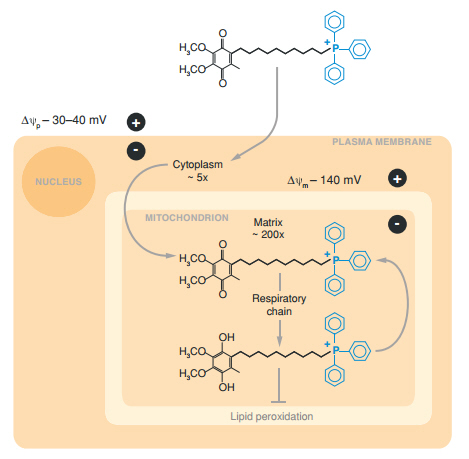
I am writing a book on mitochondria and after a few months of research you begin to see a common thread - serendipity.  Sometimes big things happen because of what seems to be luck, a group of people all happen to be in one place at one time, they are all spurred on by each other and then dramatic things occur. 

New gaps are opening up in educational achievement between teenage boys and girls, according to a comprehensive new report from the Organisation for Economic Co-operation and Development (OECD).

Analysis of its 2012 Programme for International Student Assessment (PISA) tests of 15-year-olds in reading, mathematics and science across countries, shows that unfortunately, patterns between the performance of girls and boys have not changed much over time, although some of the gaps have closed a little.

Fast food advertising doesn't emphasize healthy menu items enough, and by giving away toys in things like Happy Meals restaurants are being deceptive even by their own self-regulation standards, according to scholars who showed 100 children aged 3–7 years McDonald’s and Burger King children and adult meal ads, randomly drawn from ads that aired on national U.S. television from 2010–11.

After seeing the ad, children were asked to recall what they had seen and transcripts evaluated for descriptors of food, healthy food (apples or milk), and premiums/tie-ins. All children’s ads contained images of healthy foods, like apples and milk, but premiums/tie-ins were recalled much more frequently than healthy food.

A deadly fungus responsible for the extinction of more than 200 amphibian species worldwide has coexisted harmlessly with animals in Illinois and Korea for more than a century, a pair of studies have found.

Amphibians in Illinois have been coexisting with the fungus Batrachochytrium dendrobatidis, or Bd, for at least 126 years without adverse effects seen in other parts of the world such as mass-die offs, according to research published Jan. 13 in the journal Biological Conservation. In a study published March 4 in PLOS ONE, researchers were able to date the fungus in Korea back to 1911. The results will help scientists better understand the disease caused by Bd, chytridiomycosis, and the conditions under which it can be survived.

You can see it through a telescope, or watch a documentary about it, but you can't stick your nose out and take a whiff. Speaking of Chemistry returns this week to answer the very important question, "What does space smell like?" Matt Davenport, Ph.D., reveals the stinky secrets of the cosmos from the people who have been there.

Only 14% of young women who enter university for the first time chose science-related fields of study such as engineering, manufacturing and construction. This is one of the headline findings of a new report from the Organisation for Economic Co-operation and Development that examines gender equality in education across 64 countries and jurisdictions. In comparison, 39% of young men who entered university chose to pursue one of those fields of study.


