Deep in the heart of synthetic biology are the proteins that make it tick and that is why protein engineering is crucial to the new discipline: Scientists grow, harvest, and reprogram proteins to become new drug therapeutics, environmentally friendly fuels, and vaccines.
But producing proteins quickly and in large quantities has been and remains a major challenge in the field, so Northwestern University synthetic biologist Michael Jewett and colleagues have pioneered a new protein production method that is faster and cheaper than ever before, making synthetic biology research more accessible for laboratories everywhere--even in high schools.
In America, teachers with tenure can't be fired and so it is more important than ever that the best people get the jobs in the first place.
Accountability is not going away in the American educational system, and neither are education unions, so new mechanisms for selecting individuals into teacher preparation could boost the quality. A new
Video Assessment of Interactions and Learning (VAIL)
tool can inform teacher selection and help stop the ongoing educational reform undertaken by each new administration.
After they die, people are happy to donate their hearts, their eyes, even whole skeletons, without knowing anything at all about what will happen to them.
What about genetic information?
Under current law, your genetic information is not inherited by default, so a child with a heritable form of cancer can't access their parent's genetic information after death if no consent was ever established. Clearly there needs to be a policy in the post-Human Genome Project age.
A 10-year-old boy suffered seizures after over-indulging in licorice sweets and that has led to calls for manufacturers to put a warning on the labels of licorice.
After suffering a 2 minute tonic-clonic seizure, a 10-year-old boy was admitted to hospital in Bologna, Italy. Three more generalized seizures occurred over the next few hours and so Dr. Davide Tassinari and colleagues used cranial computed tomography (CT) and magnetic resonance imaging (MRI), to investigate the possibility of posterior reversible encephalopathy syndrome (PRES), but the major clinical conditions that lead to PRES were all ruled out.
Amyloid, an abnormal protein whose accumulation in the brain is a hallmark of Alzheimer's disease, starts accumulating inside neurons of people as young as 20, a much younger age than scientists ever imagined, according to a new study based on brains obtained from the Northwestern University Alzheimer's Disease Center Brain Bank and from pathologists throughout the United States.
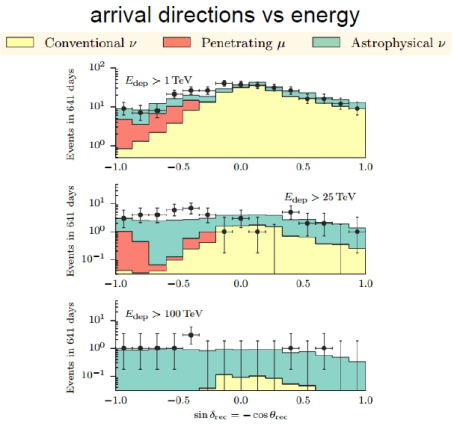
During the first afternoon session of the XVI Neutrino Telescopes conference (here is the conference blog, which contains a report of most of the lectures and posters as they are presented) Francis Halzen gave a very nice account of the discovery of cosmogenic neutrinos by the IceCube experiment, and its implications. Below I offer a writeup - apologizing to Halzen if I misinterpreted anything.
Synthetic cannabinoids ("synthetic marijuana"), with names like Spice, K2, Scooby Doo and hundreds of others, are often sold as a safe, "legal" alternative to marijuana but that is just marketing by drug dealers. Synthetic marijuana was linked to 11,561 reports of poisonings in the United States between January 2009 and April 2012.
It's no surprise that it has grown popular among teens, that is why legal businesses like cigarettes and alcohol cannot market to kids. In 2011, synthetic marijuana was used by 11.4% of high school seniors in the US, making it the most commonly used drug - after real marijuana.
Low birth weight is indicative of various problems and fortunately modern science has made it possible for more low-birth weight babies than ever to thrive, survival is over 94 percent for children born in the third trimester of pregnancy.
But low birth weight is being linked to residual effects and in a new paper researchers find that underweight infants may eventually become the grandparents of children at a higher risk for metabolic problems like high cholesterol, diabetes, and obesity, according to a new study.
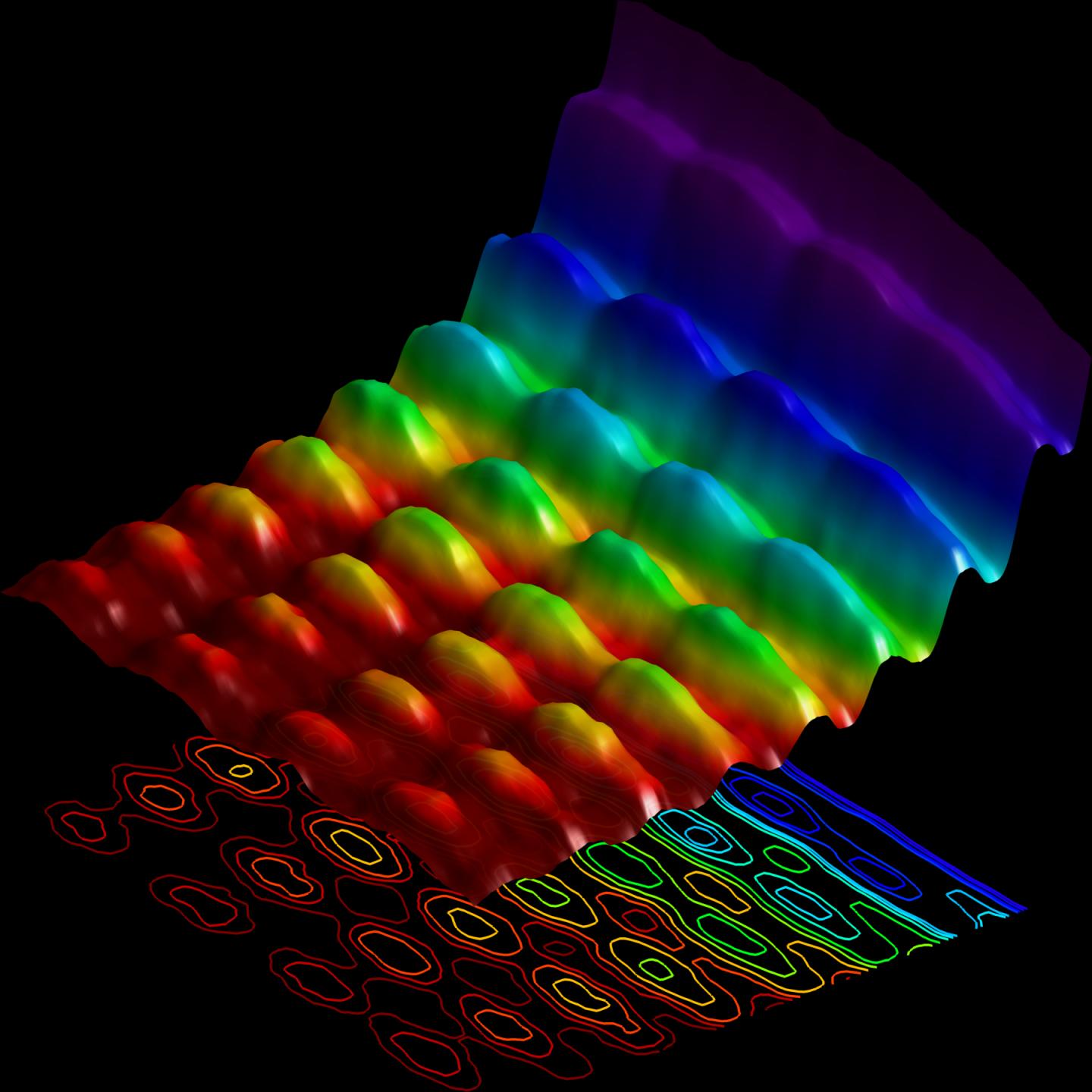
Quantum mechanics tells us that light can behave simultaneously as a particle or a wave, but researchers haven't been able to capture both natures of light at the same time; the closest we have come is seeing either wave or particle at different times.
When UV light hits a metal surface, it causes an emission of electrons. Albert Einstein explained this "photoelectric" effect by proposing that light - thought to only be a wave - is also a stream of particles. Even though a variety of experiments have successfully observed both the particle- and wave-like behaviors of light, they have never been able to observe both at the same time.
Antipsychotic medications for pediatric patients climbed 62 percent for children on Medicaid between 2002 and 2007, reaching 2.4 percent of those youth. Unless we really believe that poor kids are undergoing an epidemic of bipolar disorder and schizophrenia, it's time to examine prescription practices.
More kids nationwide are taking medications designed to treat such mental illnesses as schizophrenia and bipolar disorder, and pediatricians and psychiatrists at the University of Vermont want to know why.
David Rettew, M.D., associate professor of psychiatry and pediatrics at University of Vermont, and colleagues conducted a study to find out "whether the right youth are being prescribed the right medications at the proper time in their treatment."