





In 2008, President Obama suggested vaccines might be causing autism. In 2009, during the H1N1 swine flu pandemic, there was quickly a vaccine shortage, because the government refused to allow adjuvants, to boost vaccine effectiveness and use less raw material, or multi-dose vials, because they contained a preservative anti-vaccine believers claimed caused autism. 274,000 Americans were hospitalized.


Researchers have found that by changing the selectivity of an enzyme, a small molecule could potentially be used to decrease the likelihood of alcohol-related cancers in an at-risk population.


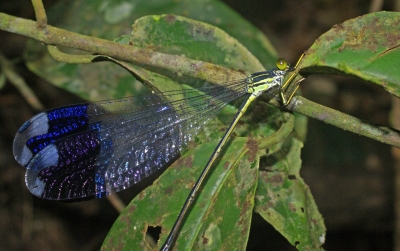
Megaloprepus caerulatus. Credit: Andres Hernandez, STRI

By Jyoti Madhusoodanan, Inside Science

(Inside Science) -- In late April, rain begins to pool in the hollows of trees on Barro Colorado Island in Panama. The water-filled tree holes may seem insignificant, but they're prime real estate – and the sites of intense battles – to giant damselflies (Megaloprepus caerulatus) seeking mates.

Hemochromatosis (HH) is the most common genetic disorder in the western world, and yet is barely known outside biology. In the US 1 in 9 people carry the mutation, though not necessarily the disease.

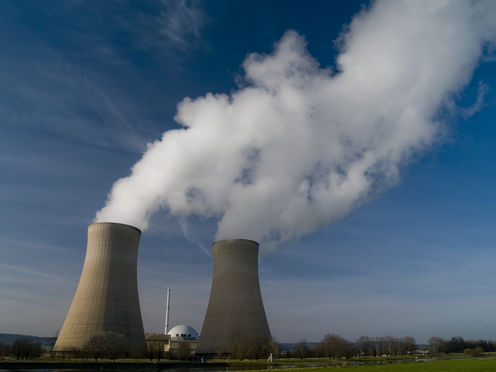
The characteristic blue glow from a nuclear reactor is present in radiation therapy, too. Investigators from Dartmouth's Norris Cotton Cancer Center, led by Brian W. Pogue, PhD, and PhD candidates Adam K. Glaser and Rongxiao Zhang, published in Physics in Medicine and Biology how the complex parts of the blue light known as the Cherenkov Effect can be measured and used in dosimetry to make therapies safer and more effective.

"The beauty of using the light from the Cherenkov Effect for dosimetry is that it's the only current method that can reveal dosimetric information completely non-invasively in water or tissue," said Glaser.

75 percent of movies released to theaters lose money, making the film industry even less able to pick winners in the private sector than the government. Surely there has to be a better method than greenlighting a movie because another studio is doing the same movie, or because someone has heard of M. Night Shyamalan.

A new study finds that brain activity visible through electroencephalography (EEG) could be a better barometer of success, at least if making money is the goal. 

Fossil "swim tracks," a type of vertebrate trace fossil gaining recognition in the field of paleontology, is  made by various tetrapods (four-footed land-living vertebrates) as they traveled through water under buoyant or semibuoyant conditions.

They occur in high numbers in deposits from the Early Triassic,  between the Permian and Jurassic 250 to 200 million years ago. Major extinction events mark the start and end of the Triassic but it is a but of a mystery why tracks from the period are so abundant and well preserved.


Tracy J. Thomson next to a block with numerous swim tracks in Capitol Reef National Park, Utah. 

Researchers in Australia have found that corals commonly found on the Great Barrier Reef will eat micro-plastic pollution - but there are obviously limits.

Microplastics are tiny fragments of plastic in the environment and are a widespread contaminant in marine ecosystems, particularly in inshore coral reefs. Corals are non-selective feeders and a new study shows that they can consume microplastics when the plastics are present in seawater, but obviously if it increases, corals could be negatively affected as their tiny stomach-cavities become full of indigestible plastic.

Despite the proliferation of microplastics, their impact on marine ecosystems is poorly understood.

Credit: Brill

In some ways, bonobos and chimpanzees are more similar to humans than they are each other and for that reason bonobos can provide an extremely powerful test of ideas about human uniqueness, as well as being crucial to determining the evolutionary processes by which cognitive traits evolve in apes.

A special issue of Behaviour includes twelve empirical studies focusing on the behavior and cognition of both captive and wild bonobos (Pan paniscus). The contributors believe that a renaissance in bonobo research is underway.


