



Less than three weeks separate us from the XVI Neutrino Telescopes, a very interesting conference held in Venice every two years. The physics of neutrinos is a very special niche in the realm of particle physics, one not devoid of cunning experimental techniques, brilliant theoretical ideas, and offering possible avenues to discover new physics. Hence I am quite happy to be attending the event, from where I will also be blogging (hopefully with the help of a few students in Padova).(NB this article, as others with neutrinos as a subject for the next month or so, appears also in the conference blog).

Malignant mesothelioma has been found at higher than expected levels in women and in individuals younger than 55 years old in the southern Nevada counties of Clark and Nye, likewise in the same region carcinogenic mineral fibers including actinolite asbestos, erionite, winchite, magnesioriebeckite and richterite were discovered.

Malignant mesothelioma is a fatal cancer associated with asbestos, a set of six naturally occurring silicate minerals, exposure that develops on the outer linings of the lungs. The 3-year survival rate is only 8% and there are limited therapeutic options.

A nationally representative survey shows that natural product use in the United States has shifted since 2007, with some products becoming more popular and some falling out of favor. Overall, natural products (dietary supplements other than vitamins and minerals) remain the most common alternative medicine.

If you think these products rise and fall based on television and diet fads that get mainstream media attention, you would be correct.

A new study from the University of Utah is adding to the small, but growing body of research that links air pollution exposure to suicide.

In research published today in The American Journal of Epidemiology, investigator Amanda Bakian, Ph.D., an assistant professor of psychiatry at the University of Utah, and her colleagues outline chemical and meteorological variables that are risk factors for suicide. Their study, titled "Risk assessment of air pollution and suicide," examines how those factors play out among different genders and age groups. The findings build on other research by Bakian released in April 2014, when she found that fine particulates and nitrogen dioxide in air pollution are linked with an increased risk for suicide.

Taking hormone replacement therapy (HRT) for the menopause, even for just a few years, is associated with a significantly increased risk of developing the two most common types of ovarian cancer, according to a detailed re-analysis of all the available evidence, published in The Lancet.

The findings from a meta-analysis of 52 epidemiological studies, involving a total of 21488 women with ovarian cancer, almost all from North America, Europe and Australia, indicate that women who use HRT for just a few years are about 40% more likely to develop ovarian cancer than women who have never taken HRT.

The "Hockey Stick" graph, a simple plot representing temperature over time, led to the center of the larger debate on climate change, and skewed the trajectory of at least one researcher, according to Michael Mann, Distinguished Professor of Meteorology at Penn State.

"The "Hockey Stick" graph became a central icon in the climate wars," Mann told attendees today last week at the annual meeting of the American Association for the Advancement of Science. "The graph took on a life of its own."

French artist Paul Gauguin has had quite the resurgence - having a painting sell for nearly $300 million will do that - but the artist noted for his colorful paintings of Tahitian life was also a highly experimental printmaker.

The techniques and materials Gauguin used to create his unusual and complex graphic works are little studied but a team from Northwestern University and the Art Institute of Chicago used a simple light bulb, an SLR camera and computational power to uncover new details of Gauguin's printmaking process -- how he formed, layered and re-used imagery to make 19 unique graphic works in the Art Institute's collection.
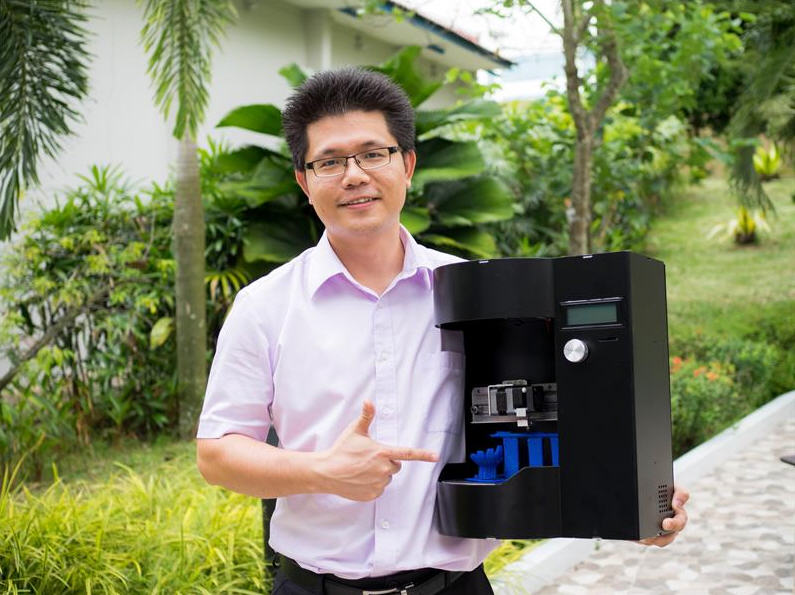
The Blacksmith Group has unveiled the world’s first compact 3-D printer that can also scan items into digitized models - and it was crowdfunded.

The Blacksmith Genesis allows users to scan any item, then edit the digitized model and print it out in 3-D. The first production run will be shipped out in March to the people who supported the crowdfunding campaign. It is available for pre-order at a cost of $2,200, with flat rate shipping to 70 countries worldwide for another $150. It is housed in a black aluminum casing, weighs 6 kilograms and features a 2-inch LCD display, Wi-Fi, an integrated SD-card reader and a USB connection for instant printing.

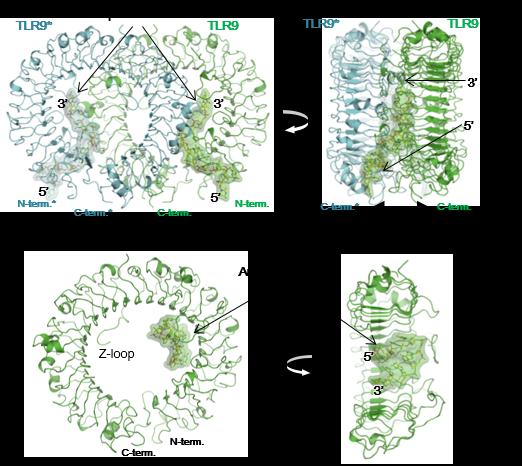
Researchers have discovered how Toll-like receptor 9 (TLR9) binds to pathogen DNA, activating the innate immune system. This discovery is vital for the design of new antiviral, antibacterial, allergy and other drugs targeting TLR9.

Invading pathogens such as bacteria or viruses leave traces in the form of DNA fragments, proteins and other biomolecules. TLR9 is a membrane-bound protein that detects these traces by recognizing a DNA sequence called Cytosine-phosphate-Guanine dinucleotide (CpG), a motif that is specific to bacteria and viruses. This brings about the release of interferon and induces inflammation, but until recently, the structure of TLR9 and how it functions remained unknown.


