





Spider-Man's breakfasts must be unreal levels of eggs. warriorpoet

By Mark Lorch, University of Hull

While stuck in a hotel room I got sucked into watching the 2002 "Spider-Man" movie. And it struck me that Peter Parker must have an enormously high-protein diet to generate all that spider silk he goes through. So being the geek that I am, I wondered what his protein consumption has to be to sustain his villain-beating lifestyle.

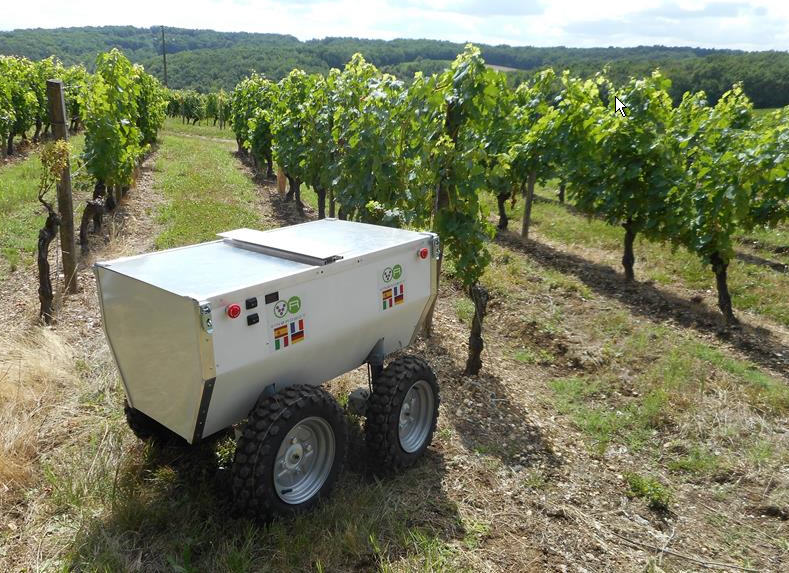
A European consortium is developing an unmanned robot equipped with non-invasive advanced sensors and artificial intelligence systems which will help manage vineyards.

The robot will be able to provide reliable, fast and objective information on the state of the vineyards to growers, such as vegetative development, water status, production and grape composition.

VineRobot, whose partners met recently at the Universitat Politècnica de València (UPV), is led by the Universidad de La Rioja. Completing the consortium are the Spanish company Avanzare, the French FORCE-A and Wall-YE, and the Italian Sivis, together with Les Vignerons de Buzet, a wine cellar cooperative near Bordeaux; and the Hochschule Geisenheim University in Germany.
Can big data analytics predict population-level societal events such as civil unrest or disease outbreaks?

That is the subject of a two-year analysis of the Early Model Based Event Recognition using Surrogates (EMBERS) system. The usefulness of this predictive artificial intelligence system for population-level events could be important. If existing models, which successfully predict the past, were good enough no one would ever lose money in the stock market.

GOCE gravity satellite. ESA

We might like to think of the earth as fixed and unmoving but that is not the case. Things are always shifting, even if we may not have noticed in the past.

More than 2 million years of life have been saved by solid-organ transplants since 1987, according to a new report in JAMA Surgery.

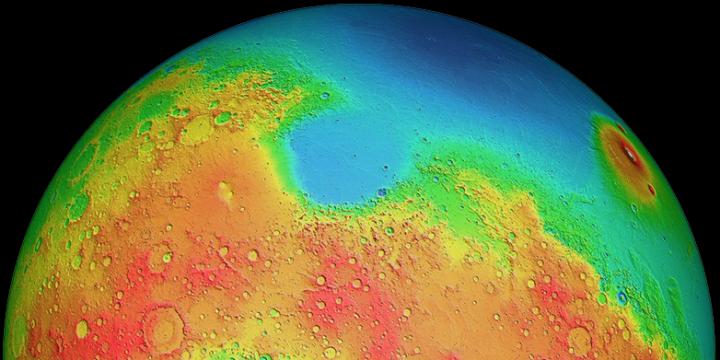
The two hemispheres of Mars are dramatically different - more distinct from each other than any other planet in our solar system.

The northern hemisphere is non-volcanic, flat lowlands while highlands punctuated by countless volcanoes extend across the southern hemisphere. Although theories and assumptions about the origin of this so-called and often-discussed Mars dichotomy abound, there are very few definitive answers. 
Wine has gotten more than its share of Miracle Product mainstream media coverage so it's no surprise that beer has been left behind - smooth, balanced beers, the kind of thing that made large brands famous, are out of fashion and now everyone wants hoppy drinks, or something else wildly exaggerated.

But beer has always been a science favorite. Sometimes you hear of breakthroughs being celebrated with a bottle of Mogen David, though it is rare.
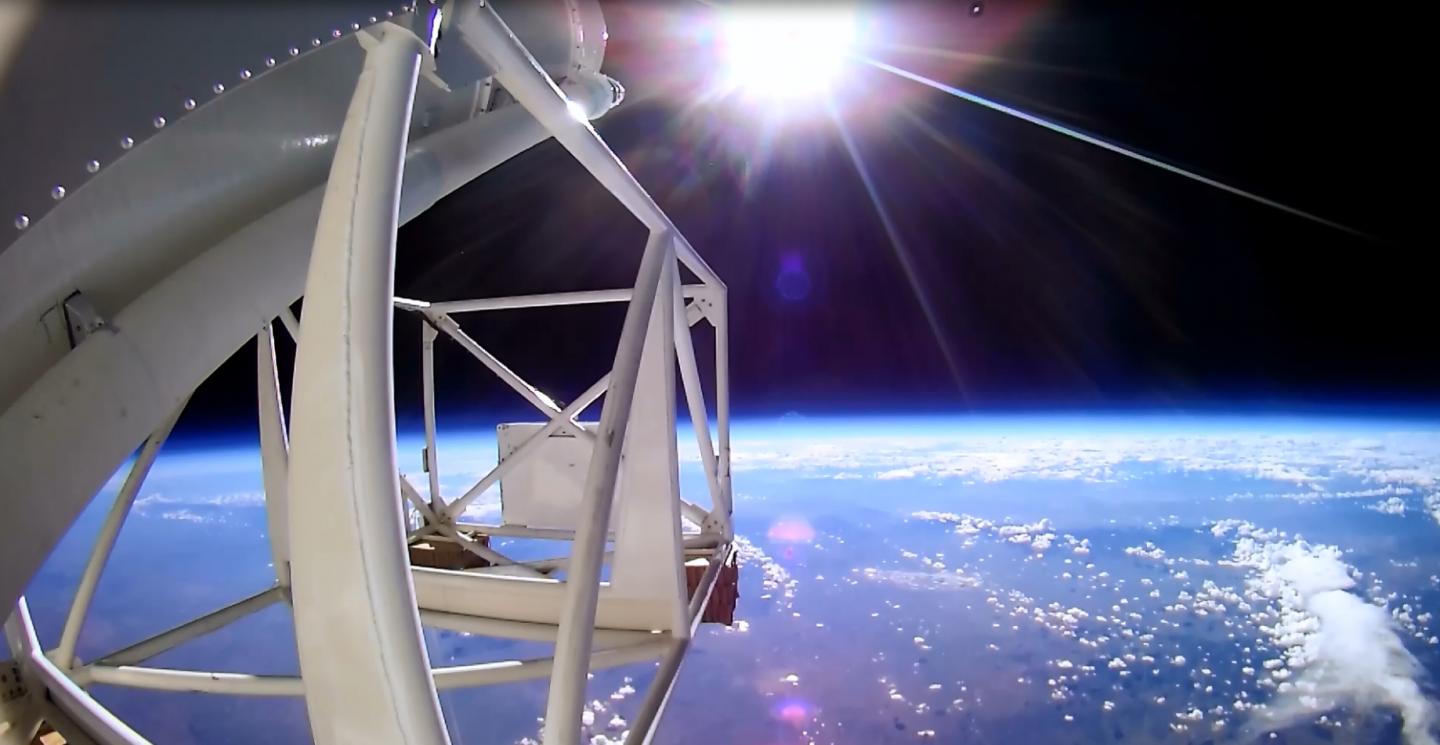
Balloons are common at childrens' birthday parties - we can thank Professor Michael Faraday of The Royal Institution for inventing "caoutchoucs" - but ever since the Montgolfier brothers took their lives in their hands and flew a hot air balloon over Paris in 1783, they have been common in science too.

They're affordable and they're reusable and since the 1950s, with the invention of the 'natural' shaped polyethylene balloon, there has been a surge in the quality and amount of science being performed with them. Researchers in everything from high-energy astrophysics (particle, x-ray and gamma-ray) to geospace uses them.

Visual distortions and hallucinations related to an elevated risk of psychosis are linked to self-destructive thought processes among adolescents with psychological symptoms, tells the recent study conducted at the Helsinki University Hospital, Finland. Early indications of the risk of psychosis can usually be detected long before the onset of a full-blown disorder.

Patients with schizophrenia are known to generally show a higher risk of suicide. Previous research on adolescents with psychological symptoms has also shown that self-destructive thought patterns are more common among those who show a higher risk of psychosis than those who do not show such a risk.

A miniscule cluster of estrogen-producing nerve cells in the mouse brain exerts highly specific effects on aggressive behavior in both males and females, according to new research.

The cells in question, known as aromatase-expressing (aromatase+) cells, represent less than five one-hundredths of a percent of the neurons in the mouse brain, but they play crucial roles in sexual differentiation during early development and in regulating sexual and social behavior in adulthood.

Though estrogen is generally thought of as a female sex hormone, during the 1970s it was discovered that the male sex hormone testosterone can be converted to estrogen in the brain by aromatase, an enzyme also found in many other mouse and human tissues.


