




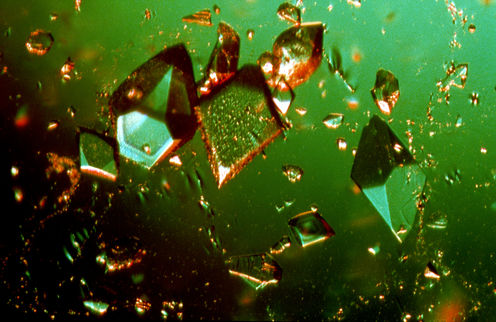




An increase in carbon dioxide in the atmosphere could initiate a chain reaction between plants and microorganisms that would unsettle one of the largest carbon reservoirs we have; soil.

Citing a new model, researchers say that the carbon in soil, which contains twice the amount of carbon in all plants and Earth's atmosphere combined, could become increasingly volatile as people add more carbon dioxide to the atmosphere, largely because of increased plant growth. The researchers developed their computer model to show at a global scale the complex interaction between carbon, plants and soil, which includes numerous bacteria, fungi, minerals and carbon compounds that respond in complex ways to temperature, moisture and the carbon that plants contribute to soil.


They should have stuck to white wine.

By Laurence Totelin, Cardiff University

Slightly over-indulged in wine this festive season?

Suffering from throbbing headache, dry mouth, and nausea after the office Christmas party?

The hair of the dog somehow does not appeal? Are you looking for time-tested cures? Fear not: these Greek and Roman remedies to alleviate a hangover or prevent one will come in handy.


Drawn directly from the flesh Public Domain Review/
Flickr, CC BY-SA

By Richard Gunderman, Indiana University-Purdue University


Let 'er rip! Simon James, CC BY-SA

By Siobhan Weare, Lancaster University

A pleasant or disgusting odor is not always just a preference, in some cases an organism's survival depends on it.

Odors can provide important information about food sources, oviposition sites or suitable mates and can also be signs of lethal hazards.  

Recent results released by the National Institute on Drug Abuse finds that use of cigarettes, alcohol, and abuse of prescription pain relievers among teens declined from 2013 while marijuana use rates were stable. 

These 2014 results are part of an overall two-decade trend among the nation's youth. The survey measures drug use and attitudes among eighth, 10th, and 12th graders, is funded by NIDA, and is conducted by researchers at the University of Michigan at Ann Arbor. Studies have found that teens have increased use of nicotine patches, e-cigarettes and energy drinks.


2014: the year crystallography went mainstream. CSIRO, CC BY-SA

By Mark Lorch, University of Hull

’Tis the season for listicles rounding up the stories of the year.

So with, the authority vested in me, here is a selection of six top, bottom and forgotten science stories of 2014.

Hutchinson-Gilford progeria syndrome is a genetic condition in children that is characterized by dramatic, rapid appearance of aging. Affected children typically look normal at birth and in early infancy but grow more slowly than other children and develop characteristic facial appearances seen in some elderly people, along with hair loss, aged-looking skin and a loss of fat under the skin - subcutaneous fat. First described in 1886, it occurs in about 1 in 4 million newborns worldwide.

There is a disease killing honeybee populations around the world but you won't be surprised to find that environmental groups never mention it.

It's called American foulbrood disease and it doesn't get much attention because groups can't use it in fundraising campaigns due to it being completely natural. Science is setting out to cure it just the same, and researchers have found a toxin released by the pathogen that causes American foulbrood disease -- Paenibacillus larvae (P. larvae) -- and developed a lead-based inhibitor against it.


Puffed rice with a bit of poison. Shutterstock

By Andy Meharg, Queen's University Belfast

There are two sides to rice: the grain that feeds half the world – and the primary carcinogenic source of inorganic arsenic in our diet.

Arsenic is a natural occurring element that is ubiquitous in the environment. It is present primarily as inorganic arsenic, which is highly toxic.


