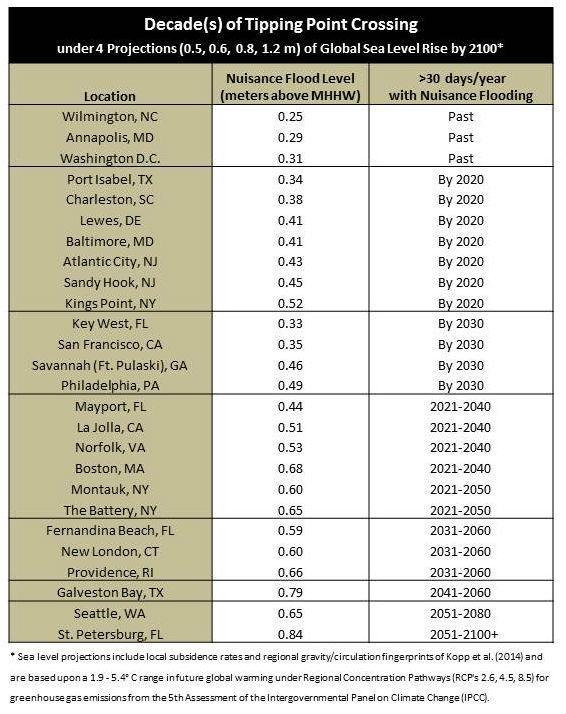







Predictions about specific effects of climate change were once common - but they turned out to be spectacularly wrong so there are fewer these days. In 2006, former Vice-President Al Gore said by 2016 it would be too late to do anything, while the Intergovernmental Panel on Climate Change (IPCC) said African farmers would be suffering 50% yield drops by 2020 and the Himalayan glaciers would be gone by 2035. 

Today, the IPCC is more scientific and cautions against attributing specific weather events to global warming. They recognize that the public loses confidence in science itself when scientists engage in advocacy. But without reliable metrics, it is hard to know how pressing the issue is so someone has to put in some numbers. 

City folk may not think much of rural living - but they are healthier.

A new study finds that diabetes, once rather uncommon, is now affecting 387 million people worldwide - and 77 percent of it is in developed nations.

The reason is stress, write the authors of a paper in the Journal of Clinical Endocrinology&Metabolism. City life - noise, crime and traffic all lead to higher stress and the body producing more of the stress hormone cortisol. Cortisol can counteract insulin, the hormone that regulates blood sugar, and slow the body's production of it and that makes people more susceptible to diabetes. 

Computers don't really boot up any faster than they have in decades and that is due to limitations in electric currents (and ignoring the bloated software rolled out after every new chip), which are also a significant power drain.

The solution may be on the horizon. A team has created a room-temperature magnetoelectric memory device, equivalent to one computer bit, that could lead to next-generation nonvolatile memory: magnetic switchability, in two steps, with nothing but an electric field. When data can be encoded without current - for example, by an electric field applied across an insulator - it requires much less energy and that means low-power, instant-on computing is a reality.

There is a running joke in America that there are three times as many people in the U.S. claiming to be Irish as there are actual people in Ireland. 

Though it's nice to claim to be Irish because of a last name, America is a melting pot. And it is so melted that the genetic ancestry of racial and ethnic groups varies significantly even across different geographic regions in the United States. A paper in the American Journal of Human Genetics, researchers analyzed the genomes of more than 160,000 African-Americans, Latin-Americans and European-Americans, providing insights into the subtle differences in genetic ancestry across the United States. 

Climate change impacts could mean uncertain transformations of global agriculture systems by 2050, according to a new paper from the International Institute for Applied Systems Analysis. 

It’s that time of the year again. You probably think I mean Christmas, but as a virologist the sight of glitter, fairy lights and moulting pine trees immediately makes me think of the flu season. And if there’s one thing that can ruin your family’s Christmas, it’s the arrival of that particular unwanted guest.

But there are lots of myths around about flu. Here’s a quick guide to some common knowledge that actually turns out to be wrong.

I finally received a Foldscope beta test kit. “Foldscope is an origami-based print-and-fold optical microscope that can be assembled from a flat sheet of paper,” according to the website. The Foldscope “can provide over 2,000X magnification with sub-micron resolution (800nm), weighs less than two nickels (8.8 g), is small enough to fit in a pocket (70 × 20 × 2 mm3), requires no external power, and can survive being dropped from a 3-story building or stepped on by a person.”

The kit came with instructions, perforated cardboard for the microscope assembly parts, lenses, magnetic strips to attach the microscope to a cell phone, and a light module.

A new paper has found that inhibiting or blocking stem cells ability to make a specific decision, leads to better cell growth and could lead to defined ways to differentiate stem cells.

Th authors say their research is the first comprehensive analysis of a pathway important for stem and cancer cell decisions known as Erk. As a result, they hope the work could contain clues to cancer treatment as well as helping to establish a platform to make stem cell treatments for gut related disorders like the pancreas or the liver. 


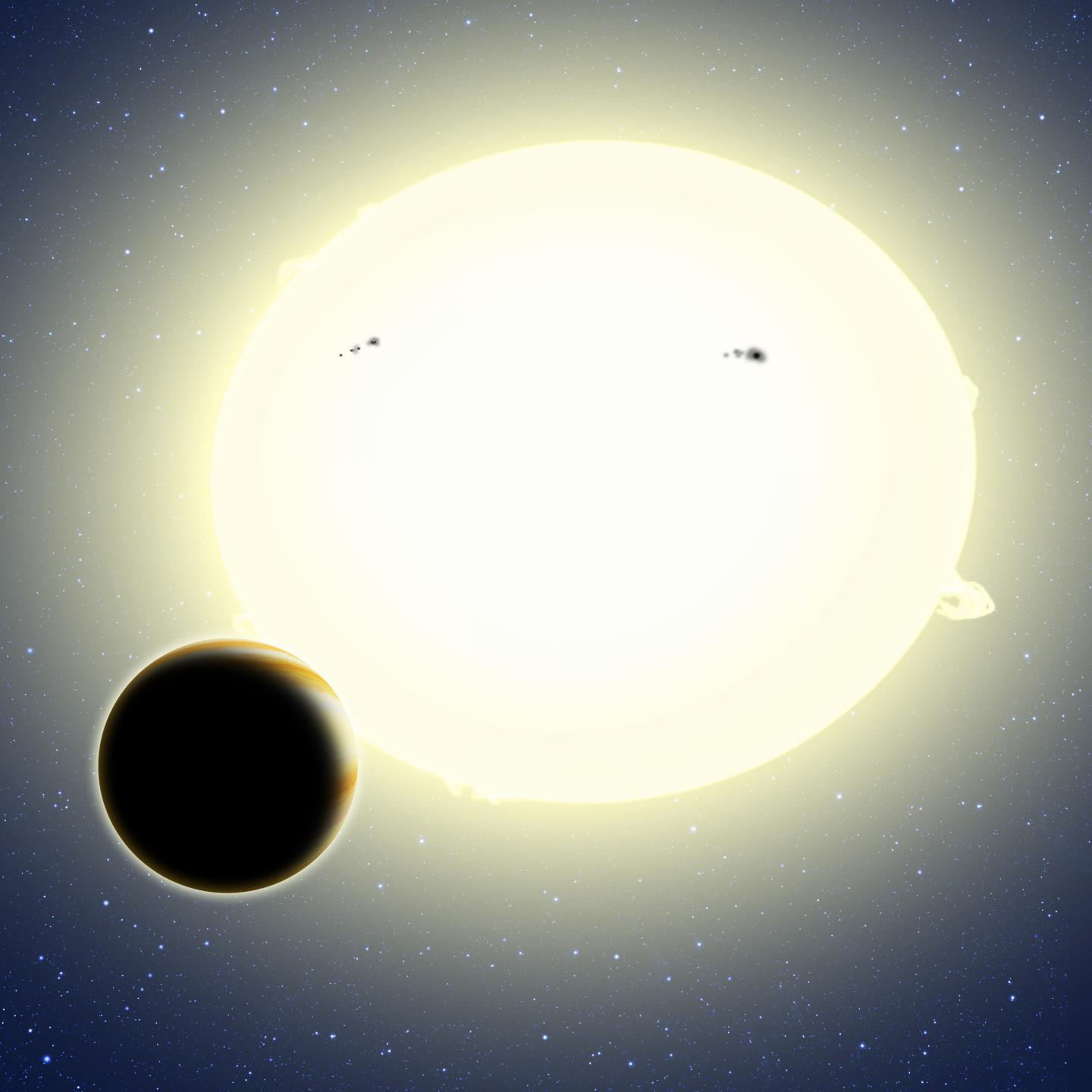
Despite a malfunction that ended its primary mission in May 2013, the Kepler spacecraft is still alive and working and its data has found a new "super-Earth".

NASA's Kepler spacecraft detected planets by looking for transits, when a star dims slightly as a planet crosses in front of it. The smaller the planet, the weaker the dimming, so brightness measurements must be precise and that requires maintaining a steady pointing. Kepler can't really do that any more, its primary functionality came to an end when the second of four reaction wheels used to stabilize the spacecraft failed. Without at least three functioning reaction wheels, Kepler couldn't be pointed accurately.

In the former mining area Herrerias in Andalusia, the deep waters of Pit Lake Guadiana show extremely high concentration of dissolved carbon dioxide (CO2). 

Levels are so high that if it were to bubble up, human beings close-by would be jeopardized. To demonstrate a possible fix, scientists of the Spanish Institute of Geology and Mining, the University of the Basque Country (UPV/EHU, Bilbao) and the Helmholtz Centre for Environmental Research (UFZ) constructed a pilot plant for degassing.

A fountain pulls deep water through a pipe to the surface, where the gas can escape from the water. The buoyancy produced by the bubbles provides the energy required for driving the flow.


