





In the 1960s, there was talk of a dystopian future where the masses starved because the ghost of Malthus came home to roost and the world could no longer feed its people.

Instead, Norm Borlaug and science ushered in a "Green Revolution" and countries that embrace science, like America, have reduced environmental strain while producing more food than ever dreamed possible. One other interesting effect the boost in agriculture has had: changing the amplitude of atmospheric carbon dioxide by about 15 percent during the last five decades. 

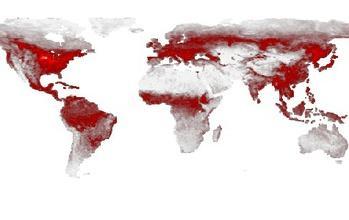
A new atmospheric model called VEGAS estimates that on average, the amplitude of the seasonal oscillation of carbon dioxide in the atmosphere is increasing at the rate of 0.3 percent every year. 

Bringing the concept of peer review to another dimension, I am offering you to read a review article I just wrote. You are invited to contribute to its review by suggesting improvements, corrections, changes or amendments to the text. I sort of need some scrutiny of this paper since it is not a report of CMS results -and thus I have not been forced by submit it for internal review to my collaboration.

When all your appliances are internet-enabled, whose hands are holding the remote control? Hands image/ Shutterstock

By Temitope Oluwafemi, University of Washington

The Earth has a magnetic field that functions as an in-built force-field against galactic cosmic rays, particles from space which prompt a chain-reaction of events in thunderclouds that trigger lightning bolts. 

The only thing more powerful than our magnetic field is that of the Sun, and it may be playing a part in the generation of lightning strikes on Earth by temporarily 'bending' the Earth's magnetic field and allowing more energetic particles to enter the upper atmosphere. Over a five year period, the UK experienced around 50% more lightning strikes and researchers found that correlates to when the Earth's magnetic field was skewed by the Sun's own magnetic field.

Each year, the biosphere balances its atmospheric budget: The carbon dioxide absorbed by plants in the spring and summer as they convert solar energy into food is released back to the atmosphere in autumn and winter. Levels of the greenhouse gas fall and rise with growth and harvesting.


An Ochre starfish, in healthier times. Amanda Bates, Author provided

By Amanda Bates, University of Southampton

We live in a time when our climate is warming more rapidly than ever before. Rising temperature and associated changes in weather are driving shifts in the distributions of species on Earth.

Some are thriving in these new climate conditions and have even moved into new regions that were historically inhospitable.

One concern for us humans is how harmful species – diseases or pests – are responding to a changing climate.

Iowa corn farmers have a lot of clout during the political cycle in America. Former US Vice-President Al Gore even sided with environmentalists and embraced ethanol - which all of science said was a bad idea - and later acknowledged it was just to appeal to Iowa. They help pick presidents and now it turns out that their 2.2 billion bushels of corn are helping to save the planet too.

By Sue Thomas, Bournemouth University

Looking over the landscape I could see an old tree standing frozen and seemingly dead, its branches coated with icy rime. Around it, mossy grass and small rocks lay beneath a coating of snow and in the distance glistening waterfalls tumbled down the sides of whitened mountains.

It looked like the wilds of Ireland in wintertime, but the view existed only in my phone. My task, using a handheld biosensor called PIP, was to bring summer to this deeply cold outdoor scene by the powers of mental relaxation.

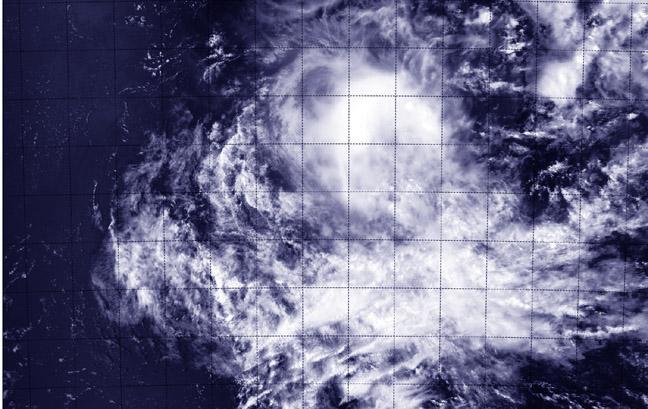
The Moderate Resolution Imaging Spectroradiometer (MODIS) instrument that flies aboard NASA's Aqua satellite captured a visible picture of Tropical Storm Adjali on Nov. 19th at 9:05 UTC (1:05 A.M. Pacific) curving to the southwest on its trek through the Southern Indian Ocean.

The MODIS image showed that the storm began curving to the southwest, and despite slight weakening, thunderstorms circled around the low-level center.

In bean sprouts, a collection of amino acids called a protein complex allows them to grow longer in the darkness than in the light. In humans, there is a similar protein complex called CSN, and its subunit CSN6 is now believed to be a cancer-causing gene that impacts activity of another gene (Myc) tied to tumor growth.


