









Let’s talk about gastrulation. For those unfamiliar with the term, it’s not as disgusting as it sounds. Gastrulation is a process in early embryonic development which leads to the generation of the three germ-layer tissues- ectoderm, endoderm, and mesoderm- from which all other tissue-types in the body are erived. 

The early (amniote) embryo coverts from a bilaminar structure of epithelial tissue plus and extra-embryonic layer, to a trilamiarone. A second function of gastrulation is that it defines the anterior-posterior body axis for the first time. In other words, it begins to distinguish the head end of the embryo from the tail end- this is pretty important if you want all your bits and pieces in the right place later on! 


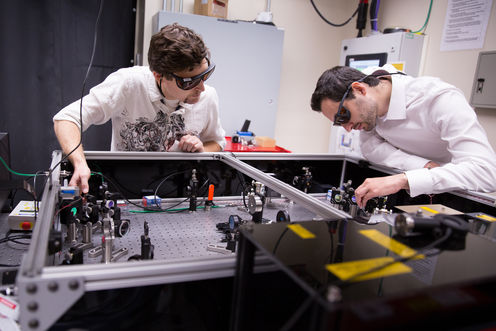
SLAC National Accelerator Laboratory at Stanford

By Ian Bailey, Lancaster University

Scientists working on an experiment at the SLAC National Accelerator Laboratory in the US have taken a step forward in developing a technology which could significantly reduce the size of particle accelerators. The technology is able to accelerate particles more rapidly than conventional accelerators at a much smaller size.

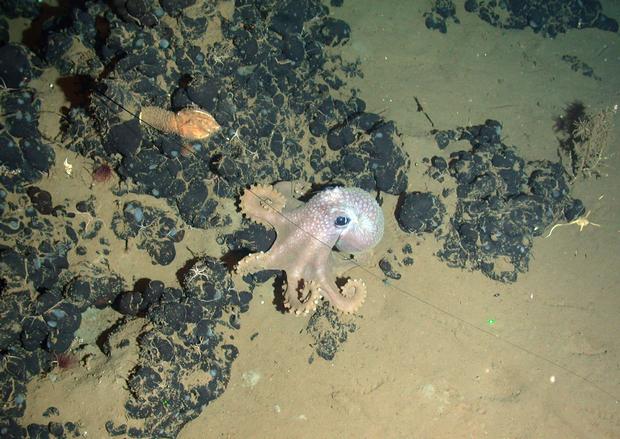
Over a mile beneath the West African ocean, off the coast of Angola, are over 2,000 mounds of asphalt containing a wealth of deep-water creatures.

A paper in Deep-Sea Research 1 examined the images and data captured at the site to build an intriguing picture of the life and geology of this underwater area. The naturally-occurring asphalt mounds are made up of the same substance that covers our roads. They range in size from single football-sized blobs to small hills several hundred meters across.

The fame of Lady Gaga is the stand-out phenomenon of 21st-century celebrity – the go-to example for any commentator. But in a recent interview for 60 Minutes she complained that being so famous wasn’t all peachy. Apparently, some people can’t see through her clothes (ironic given the frequency of very sheer fabrics and flesh-baring garments in her kaleidoscopic wardrobe).

But what I’m interested in here is how she clothes her face: all too often with sunglasses.

Will the medicines you take make their way back into your food?  They might, especially of you take your cue from an old Yorkshire song which deals with human recycling in the food chain, via worms and ducks.  Now, research [1] from the university of York (where else?) has studied one step of this process in detail.

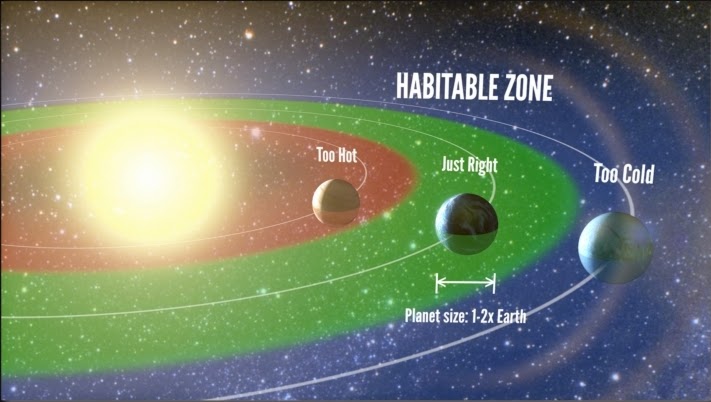
Think of our poor sister world Venus – almost the same size as Earth, it probably had oceans at the beginning. But Venus orbits closer to the sun -- and was never in the Continuously Habitable Goldilocks Zone, or CHZ.

Instead our poor sister world quickly spiraled into a greenhouse effect that erased its oceans and drove all the water away, leaving a desert planet, coated with dense clouds of sulfuric acid and carbon dioxide.

What is the best way to learn a dance sequence?

Professional dancers make it look easy. A choreographer rattles off a long list of moves, kicks and turns and the dancers somehow remember it all. But what about the rest of us who will be hitting the club this weekend?

Researchers from Bielefeld University and the Palucca University of Dance in Dresden are here to help. They  researched whether dancers learn a dance sequence better by seeing or by listening, that is, if a dance instructor first demonstrates the sequence, or if he or she first gives a spoken explanation.

An experiment with 42 people under functional magnetic resonance imaging (fMRI) found that if people see pictures of others being loved and cared for, it subsequently reduces
the brain's threat monitor, the amygdala,
 response to threats. 

This occurred even if the person was not paying attention to the content of the first pictures.

The study in Social, Cognitive and Affective Neuroscience, suggests that being reminded of being loved and cared for dampens the threat response and may allow more effective functioning during, and activation of soothing resources after, stressful situations. This was particularly true for more anxious individuals.


It’s been a disappointing couple of weeks for the Scotch whisky industry.

Diageo reported that it is delaying plans on a £1 billion new-build distillery just north of Inverness following a slow-down in the company’s key whisky markets, particularly Latin America and China.

In World War II, did people with bird feeders have substantially different chirping friends than we see today?

Probably not, but a group of researchers warns than 2075 might look a lot less like then, or even 1975, or today. The distribution of birds in the United States could change a lot.

A new U.S. Geological Survey study in PLOS ONE predicts where 50 bird species will breed, feed and live in the conterminous U.S. by 2075. While some types of birds, like the Baird's sparrow, could lose a significant amount of their current U.S. range, other ranges could nearly double.


