










Proponents of the Affordable Care Act are getting exactly the cultural result they wanted. They are able to declare victory because of a decrease in health care costs but don't mention it is because there has been a decrease in people using their insurance because of high out-of-pocket costs.

In this election season, it is imperative to remember those who voted for this disaster without having read the bill, those who demonized people who raised valid questions about access to care, costs and rationing, and those who cried racism when valid points were raised about how the quality of care would necessarily drop because there was never enough money to subsidize a substantial number of the 30 million newly insured people.

A new psychology paper says people feel sad up to 240 times longer than they do ashamed, surprised, irritated or even bored.

The reason may be because sadness often goes hand in hand with events of greater impact such as death or accidents and so we need more time to mull over and cope with what happened to fully comprehend it, say Philippe Verduyn and Saskia Lavrijsen of the University of Leuven in Belgium, who asked 233 high school students to recollect recent emotional episodes and report their duration. The participants also had to answer questions about the strategies they use to appraise and deal with these emotions.


J. Marion Sims by Jim.Henderson, CC BY-SA

By David T. Z. Mindich, St. Michael's College

On an October day in 1894, a group of New York City’s leading doctors gathered to unveil a statue in honor of one of the greatest surgeons of his day and the founder of New York’s Women’s Hospital, J. Marion Sims, an Alabama doctor and a man they called “the father of modern gynecology.”


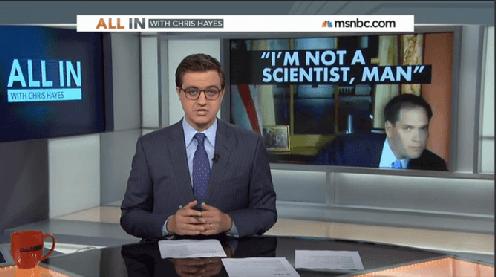
For MSNBC, climate change is an opportunity to stoke anger over conservative “denialists.” MSNBC 5/12/14

By Matthew Nisbet, Northeastern University

Recent Pew Research Center studies offer valuable insight on the ideological makeup of those Americans most likely to voice their opinion in politics generally and the climate debate specifically, including the news sources they rely on to articulate their arguments.

In 2012, the Obama administration made the National School Lunch Program, which has provided free or reduced-cost meals in more than 100,000 public and non-profit private schools and other child-care institutions nationwide since 1946, into a political football and used beliefs that lacked any scientific basis to mandate what should be served.

Schools and communities went into open revolt. For the children we care most about, those school lunches might be the best meal they got, and those were being replaced by an agenda-based menu that no one wanted to eat.


By Val Giddings, Genetic Literacy Project

With little fanfare, last summer the U.S. Fish  &  Wildlife Service announced it would formally ban the use of seeds treated with neonicotinoid pesticides, (a newer, safer generation of seed treatments to protect against pests) and the use of crops improved through biotechnology throughout the fish and wildlife refuge system.

Measles is one of the most contagious of vaccine-preventable diseases, with the average person with measles capable of infecting 12-18 people if susceptible, and the contagiousness of measles infection highlights gaps in vaccination in the United States that have appeared over the last decade, because of skepticism about childhood vaccination in coastal states like California and Oregon and Washington. In those states, otherwise educated people worry that vaccines may cause autism and would prefer that other children provide herd immunity for theirs.

A recent study compared two of the most commonly performed bariatric surgery procedures.

There are tradeoffs between the two surgical approaches in potential risks and benefits and so there has been an ongoing debate about which can achieve weight loss, with conflicting results in systematic reviews. 

The two procedures were laparoscopic Roux-en-Y gastric bypass (RYGB) and adjustable gastric banding (AGB). The result was that RYGB resulted in much greater weight loss than AGB but had a higher risk of short-term complications and long-term subsequent hospitalizations. 

Induced pluripotent stem cells (iPSCs) became the target of researchers a decade ago due to restrictions on federal funding for human embryonic stem cells (hESCs). While media reports were claiming biology was dead if President Bush didn't violate President Clinton's Dickey-Wicker law, researchers instead moved to iPSCs and now they have been able to generate functional, three-dimensional human stomach tissue in a laboratory.


