


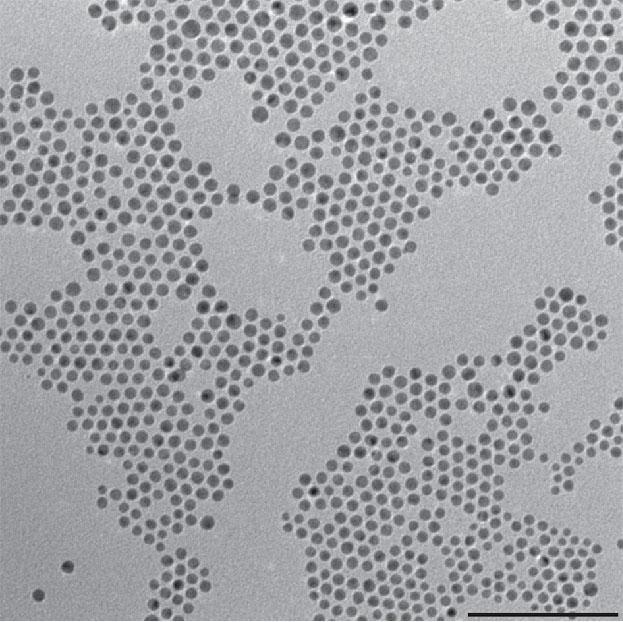








The very small is very weird; I explained that the last time in Small Is Ugly 1 already with help of the example of water being in the driest of places (Vastness and Fastness of the Small helps Evolution is of course somewhat related). And today, I still do not mean supposed "quantum weirdness", which is not about small stuff.

There's a common trope in Hollywood celebrities who gain weight and receive attention for it. They talk about how much healthier and better they feel about themselves at higher weight - and then they immediately lose weight and talk about how much healthier and better they feel about themselves.

Severely obese people who aren't famous also experience much better spirits once they shed weight through diet, lifestyle changes or medical intervention but Valentina Ivezaj and Carlos Grilo of the Yale University School of Medicine write in Obesity Surgery that it is not a psychological magic bullet.

Antidepressants are the most commonly used treatment for social anxiety disorder but we know they don't work for many people and their efficacy goes down over time.

New research finds they are not even needed in many instances. 

Social anxiety disorder is a condition characterized by fear and avoidance of social situations. It affects as many as 13 percent of the Western world. For most people, it is not severe, and they never receive treatment for the disorder but those who do get treatment are usually assigned medication.


Healthy food might be bad for patients. Food for thought. Photo by By Amanda Squire, Cardiff Metropolitan University

The appeal of artificial photosynthesis, in which the electrochemical reduction of carbon dioxide is used to produce clean, green and sustainable fuels, is that we can turn an atmospheric byproduct into a renewable energy technology.

However, finding a catalyst for reducing carbon dioxide that is highly selective and efficient has proven to be a huge scientific challenge.

Peidong Yang, a chemist with Berkeley Lab's Materials Sciences Division, led a study in which bimetallic nanoparticles of gold and copper were used as the catalyst for the carbon dioxide reduction. The results experimentally revealed for the first time the critical influence of the electronic and geometric effects in the reduction reaction.


UN Women Goodwill Ambassador and actor Emma Watson launched the HeForShe Campaign at the United Nations headquarters in New York, September 20th. Credit: EPA/JASON SZENES

By Evita March, Federation University Australia

In less than a week since actor Emma Watson’s stirring United Nations speech on gender inequality, two big things have happened – but you’ve probably only heard about one of them.


Taking over one neuron at a time. Credit: viipeer, CC BY-NC-SA

By Nick Bostrom, University of Oxford


Sympathetic or jealous? Credit: Belly by Shutterstock

By Arthur Brennan, St George's, University of London

Harry Ashby, the 29-year-old security guard who was signed off work with morning sickness, cravings, a growing stomach and breasts during his girlfriend’s pregnancy, was told he had Couvade syndrome.


Surprises in the dark. Credit: NASA GSFC, CC BY

By Rene Breton, University of Southampton

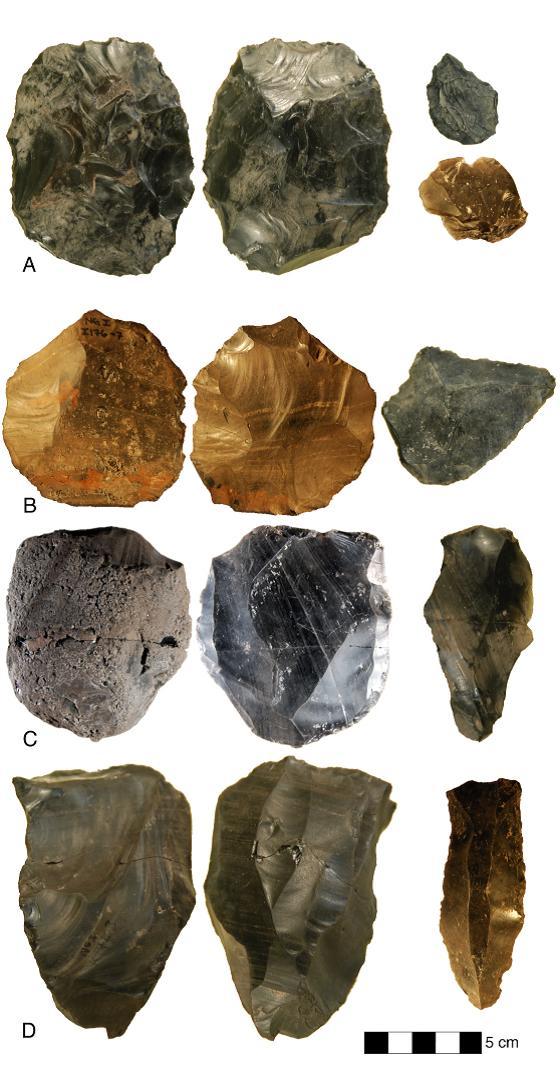
A new discovery of thousands of Stone Age tools has provided a major rethink about human innovation 325,000 years ago - and how early technological developments spread across the world. 

The researchers found evidence which challenges the belief that a type of technology known as Levallois – where the flakes and blades of stones were used to make useful products such as hunting weapons – was invented in Africa and then spread to other continents as the human population expanded.

They discovered at an archaeological site in Armenia that these types of tools already existed there between 325,000 and 335,000 years ago, suggesting that local populations developed them out of a more basic type of technology, known as biface, which was also found at the site.

