







Does simultaneously using a mobile phone, a laptop and other media devices change the structure of our brains? Sure, so did reading that sentence. We all have different experiences and therefore different brains.

No one knows you like you know yourself so if you think your memory is slipping, you may be onto something. Self-reported memory complaints are strong predictors of clinical memory impairment later in life. 

 Richard Kryscio, PhD, Chairman of the Department of of Biostatistics and Associate Director of the Alzheimer's Disease Center at the University of Kentucky, and colleagues asked 531 people with an average age of 73 and free of dementia if they had noticed any changes in their memory in the prior year. The participants were also given annual memory and thinking tests for an average of 10 years. After death, participants' brains were examined for evidence of Alzheimer's disease.

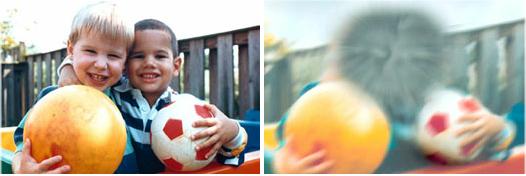
Almost 2 million Americans have an advanced form of age-related macular degeneration (AMD) and about 100,000 are blind from the disease. In AMD, cells in the retina, that layer of tissue in the back of the eye, begin to break down. What was once sharp central vision becomes blurry. 

An example of unidirectional cause and effect: bad weather means umbrella sales rise, but buying umbrellas won't make it rain. Credit: Mariusz Olszewski/Flickr, CC BY-NC-ND

By Jonathan Borwein (Jon), University of Newcastle and Michael Rose, University of Newcastle

Surveys are interesting and surveys can sometimes indicate what a certain number of people in a group might be thinking - but so can betting services. In the 2012 election, the Intrade betting service got as many states right in the presidential election as Democratic statistical wunderkind Nate Silver did - and Intrade is mostly Europeans who know nothing at all about American politics.

In our hyperactive media climate, where every incident is proof or not proof of something, it has become common to see claims that wildfires have become worse due to global warming even as American CO2 emissions have dropped.

Scientists have put a fire retardant on claims that Colorado's Front Range wildfires are becoming increasingly severe.


Australian Football League. Credit: Deirdre/Flickr

By Steve Ellen, Monash University

It’s Grand Final season – it might seem that nothing else matters about now.

Writing about the psychology of football is like writing about the psychology of love. A fool’s business. Nothing (so far) has quite made sense of how 100,000 people turn up to shout and scream, cry and gasp, and pin their fortunes on a bunch of athletes running around crashing into each other at the limits of human endurance.

It’s just good honest fun. Well, mostly honest.

Fan passion

The first animal model for ALS dementia, a form of ALS that also damages the brain, has been developed. This advance will allow researchers to directly see the brains of living mice, under anesthesia, at the microscopic level and will allow direct monitoring of test drugs to determine if they work. 

Within the first 5 years after the birth of a child, women are considered at an increased risk of developing metastatic breast cancer.

Why that happens has been considered a puzzle but the fact remains that women diagnosed with postpartum breast cancer have a decreased disease free survival time compared to women that have never given birth.

The aggressive tendency of postpartum breast cancer suggests that the post-birth breast environment promotes tumor metastasis. A new study in the Journal of Clinical Investigation, suggests that dying tumor cells in postpartum breast tissue promote metastatic disease.

Stroke is one of the leading causes of death worldwide and while there are obvious environmental factors such as diet, exercise and behavior, many lines of evidence suggest that the risk of stroke is heritable. Yet until now, only a small number of genes associated with stroke have been identified. 

A new study in the Journal of Clinical Investigation identifies two genes that underlie cerebral small-vessel disease (CSVD), a risk factor for stroke.

Ordan Lehmann and colleagues at the University of Alberta analyzed genome-wide association data from individuals that received brain MRI scans as part of the Cohorts for Heart and Aging Research in Genomic Epidemiology (CHARGE) study.

