
Are you in the target market to eat insects? The easiest uptake will be by a young male who claims to care more about the environment, believes they are progressive and adventurous about food, and already doesn't care about meat. 

Matching those criteria, the likelihood that this type of person is willing to eat insects as a meat substitute is estimated more than 75%, according to a new paper published in Food Quality and Preference.

High resolution photograph of cracks in thin layer of glass atop a silicon wafer. The colors come from optical interference between the thin wafer and the glass above. Image credit: Joël Marthelot (ESPCI). Rights information: Used with permission

By:  Gabriel Popkin, Inside Science


Humans transport microbes around their environment. Image: Argonne National Laboratory

By Emma Saville, The Conversation and Penny Orbell, The Conversation

Microbial communities vary greatly between different households but are similar among members of the same household – including pets – according to research published in Science today.

Glass is ideal for applications that require resistance to thermal shock or to chemically harsh environments and manufacturers commonly use additives such as boron oxide to tweak its properties by changing the atomic structure of glass.

Image: If only neuroscience was that easy. Credit: quixotecr, CC BY-NC-ND

By Matt Wall, Imperial College London

During World War II, residents on the islands in the southern Pacific Ocean saw heavy activity by US planes, bringing in goods and supplies for the soldiers. In many cases, this was the islanders' first exposure to 20th century goods and technology.

Bending, stretching, twisting, folding, modern materials that are light, flexible and highly conductive are the future of products like artificial skin or electronic paper. 

But these "aerogel monoliths" have required precious gold and silver nanowires, which keeps them squarely in the field of basic research.  Making such concepts affordable with copper nanowires and a PVA "nano glue" could be a game-changer, and researchers at Monash University and the Melbourne Centre for Nanofabrication have developed a way. 

Despite its conductivity, copper's tendency to oxidation and the poor mechanical stability of copper nanowire aerogel monoliths are why its potential has been largely unexplored.

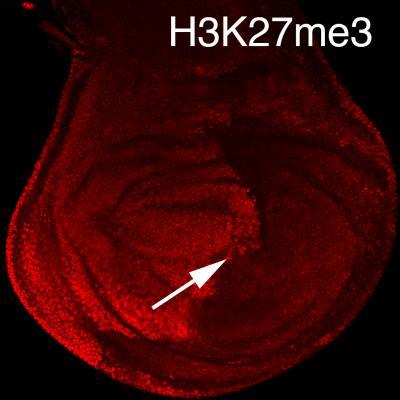
In a cell's nucleus, chromosomal DNA is tightly bound to structural proteins known as histones, an amalgam biologists call chromatin.

Until a few decades ago, histones were regarded as a nuclear "sidekick," the packing material around which the glamorous DNA strands were wrapped. 

Many of us care deeply about the possibility of tigers, lemurs and such like becoming extinct in the wild. I'd like to suggest that we care as much about the possibility of microbes on Mars and elsewhere in our solar system becoming extinct through human activities.


Artistic rendering of Philae on the comet 67P/Churyumov-Gerasimenko. Credit: ESA/ATG, CC BY

By Ian Wright, The Open University

The MERS coronavirus has caused disease outbreaks across the Arabian Peninsula and spread to Europe several times, claiming the lives of several hundred people since its discovery in 2012.

How easily the pathogen spreads from human to human has remained a mystery but recent work shows human transmission is low. Still, a third of infected persons with symptoms die.