A new study says that kids who are allowed to watch R-rated movies are much more likely to believe it's easy to get a cigarette than those who aren't allowed to watch such films.
The researchers found that parental permission to watch R-rated movies was one of the strongest predictors of the perception that cigarettes are available, about as strong as having friends that smoked. If allowed to watch R-rated films, nonsmokers were almost twice as likely, and smokers were almost three times as likely to say it would be easy for them to get cigarettes.
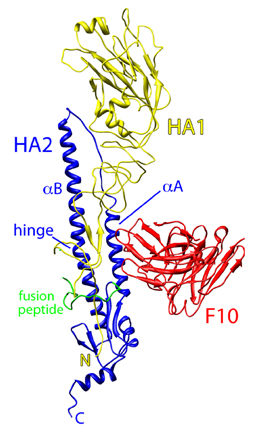
Scientists have identified a small family of lab-made proteins that neutralize a broad range of influenza A viruses, including the H5N1 avian virus, the 1918 pandemic influenza virus and seasonal H1N1 flu viruses.
These human monoclonal antibodies, identical infection-fighting proteins derived from the same cell lineage, also were found to protect mice from illness caused by H5N1 and other influenza A viruses. Because large quantities of monoclonal antibodies can be made relatively quickly, after more testing, these influenza-specific monoclonal antibodies potentially could be used in combination with antiviral drugs to prevent or treat the flu during an influenza outbreak or pandemic.
Show Me The Science Month Day 19

Some fish have two sets of teeth: oral teeth, set towards the front of the mouth (like ours), and so-called pharyngeal teeth, set far back in in the throat in a strange, second set of jaws. Based on what we learn from the fossils of ancient jawless fish, it appears that teeth first appeared on these deep pharyngeal jaws. So how did most vertebrates come to have the more common set of oral teeth? A group of scientists based in Georgia and Tennessee used paleontology and modern genetics to show that tweaks to
an ancient gene regulatory network enabled the evolution of oral cavity teeth possessed by most vertebrates.
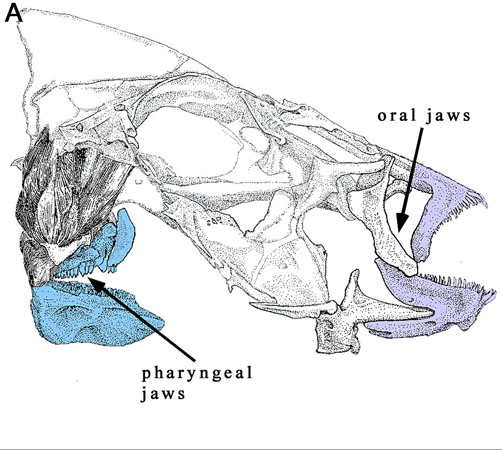 Figure 1 from Fraser, et al.
Someone on this site recently posed the following thought experiment questioning the postulate of special relativity that no object can travel faster than the speed of light - c. Imagine a one dimensional problem in which two travelers, move close to the speed of light, but in opposite directions - one moving close the speed of light in the positive direction and the other traveler moving close to the speed of light in the negative direction.
Wouldn't these observers perceive the relative velocity of the respective other as exceeding the speed of light (i.e., approx. 2c)?
Special relativity posits the following:
Last night, I watched on BBC Television
Natural World, 2008-2009 - 14. A Farm for the Future in which
Wildlife film maker Rebecca Hosking investigates how to transform her family’s farm in Devon into a low energy farm for the future, and discovers that nature holds the key.
Show Me The Science Month Day 19
Merriam-Webster's dictionary says the word 'evolution' originated in 1622 and derives from the Latin
evolutio, "unrolling, from", as in a parchment, and this is actually the perfect way to think of both Darwin and Evolution in their context.
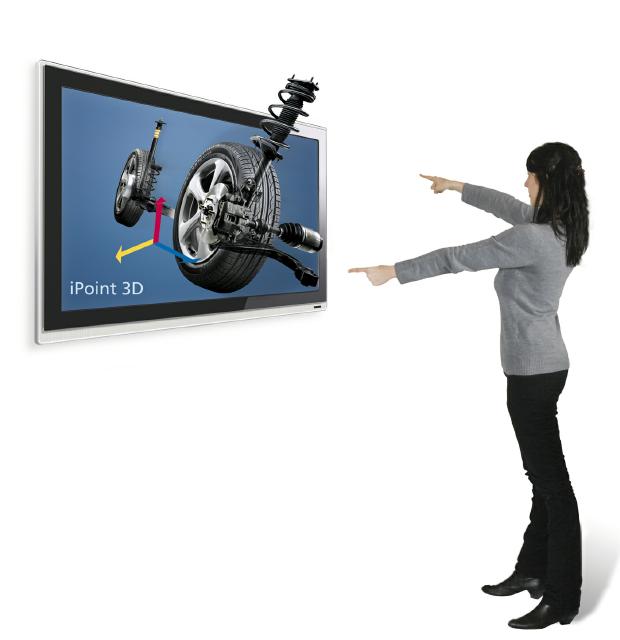
Maybe you just want to wait until you can control television with your thoughts or even have it beamed directly into your brain but if you don't mind interim steps, and won't feel vaguely silly with two hands pointed at a screen, the iPoint 3D may be just what you want next.
The iPoint 3D allows people to communicate with a 3-D display through simple gestures – without touching it and without 3-D glasses or a data glove. What until now has only been seen in science fiction will be presented at CeBIT from March 3-8 by experts from the Fraunhofer Institute for Telecommunications, Heinrich-Hertz-Institut, HHI (Hall 9, Stand B36).
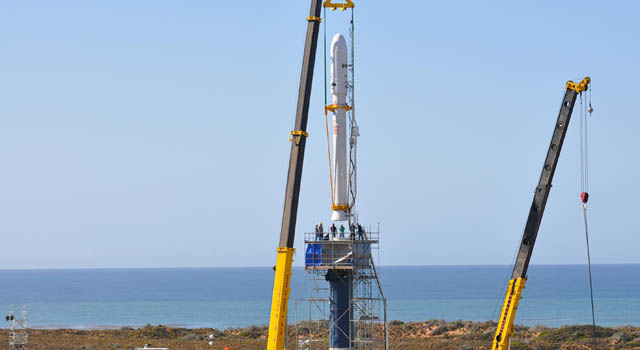
Here are some quick facts about the Earth-orbiting satellite, scheduled to launch on Feb. 24, 2009.
-- It will study carbon dioxide sources (where it comes from) and sinks (where it is pulled out of the atmosphere and stored). Carbon dioxide is a major contributor to global warming. The new data will help scientists more accurately forecast global climate change.
-- Data collected by the OCO mission may help policymakers and leaders make more informed decisions to ensure climate stability and retain our quality of life.
Chuckanut Drive, in northwestern Washington provides a visual feast from sea to sky. An amazing array of plants and animals call this coastline home.
For the fossil enthusiast, it is a chance to slip back in time and have a bird’s eye view to a more tropical time. Snug up against the Pacific Ocean, this 6000 m thick exposure yields a vast number of tropical and flowering plants that you might see in Mexico today. Easily accessible by car, this rich natural playground makes for an enjoyable daytrip just one hour south of the Canada/US Border.
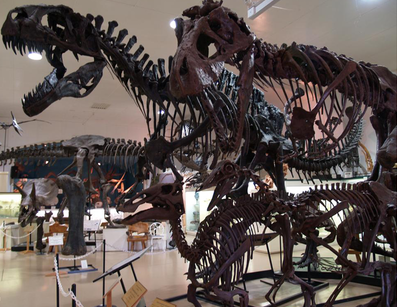
A team of biomechanical and paleontological researchers at University of Manchester are exploring a question that teenaged dinosaur girls have wondered for years: how thin should a dinosaur model be?
Karl Bates and his team built their supermodels using a framework reconstructed from museum-installed skeletons, using an infrared laser scanning technique called LiDAR.