TreePeople, a Los Angeles-based nonprofit corporation that does not seem to be one of the groups filing lawsuits every time anyone recommended responsible forest management that would have prevented the numerous wildfires that have ravaged southern California in recent years, today announced that it has received a $1 million grant from The Boeing Company to launch a comprehensive California Wildfire Restoration Initiative in response to the numerous wildfires that have ravaged southern California in recent years.

The grant fulfills a pledge Boeing made in the wake of last year’s wildfires to contribute $1 million toward rebuilding efforts in the region.

Scientists have been trying to understand how and when we gain or lose fat cells, and now a paper in this week's issue of Nature reports that nuclear bombs are the key to solving this problem.

To understand how our bodies regulate our weight, researchers are interested in knowing how the number of fat cells changes over our lifetime - do we stop making more fat cells after adolescence? Do we keep the same fat cells all of our adult lives, or do some die off and get replaced by new ones? The typical way to study the birth and death of cells in live animals is to use radioactive tracers that label DNA, but these experiments are too toxic to try in humans. It turns out though, that the US and Soviet militaries did the experiment for us, with above-ground nuclear bomb tests in the late 1950's, tests which spewed large amounts of radioactive carbon in the atmosphere. That radioactive carbon is now in our DNA (at least for those of us alive during the cold war), and it provides a convenient "manufactured on" date for our long-lived fat cells.

I've written this post to address some of the issues raised in the comments to my first post on the evolution versus creationism debate.  

(1) A major reason that Biblical creationism thrives in certain parts of America is because -- unlike every other highly developed country in the world -- we do not have a national science curriculum.  America has a very strong tradition of "home rule" which means that state and local school boards can choose, if they wish, to exclude any discussion of evolutionary mechanisms in biology classes.  (I was elected to my own local school board in Princeton, NJ, where the teaching of evolution has never been disputed.)  Children who go to public schools (or Catholic schools) in western Europe and Asia learn biology (life sciences) in a complete sense, which incorporates evolutionary thinking at every level of analysis from genes to cells to whole organisms, populations, and ecosystems.  These educated children have opportunities to pursue scientific careers that creationists don't even know exist.  This is why the exclusion of 50% of America's children from knowing about evolution diminishes our country's competitiveness.

(2) To "do" science of any kind, you must learn what has been done previously and what the state of the field is at the present time. I am not ashamed of the fact that I needed to take three years of college courses in physics and math (16 courses in all) before I was able to understand quantum mechanics and general relativity to a degree where I could actually use these concepts to investigate unknowns. However, even with a Master's degree in physics (I switched to biophysics for my Ph.D.), I don't have the capacity to critique modern ideas like string theory -- but I am not ashamed of this either.  Unfortunately for students today, you can't even begin to take in-depth courses in modern molecular biology without first completing college-level courses in physics, chemistry (organic and inorganic), and math.  Then you'll need to study formal genetics, population genetics, biochemistry, cell biology etc. before you can truly understand the modern synthesis of evolution-genetics-developmental biology that is driving the biomedical enterprise.   This is not an insult against anyone's beliefs or knowledge.  It is simply a fact of the depth and breadth of modern science.

Mathematicians and astrophysicists recently discovered that work on the Fundamental Theorem of Algebra and gravitational lensing had a common answer.

The Fundamental Theorem of Algebra (FTA), proofs of which go back to the 18th century, is a bedrock mathematical truth, elegant in its simplicity: Every complex polynomial of degree n has n roots in the complex numbers.

In the 1990s, Terry Sheil-Small and Alan Wilmshurst explored the question of extending the FTA to harmonic polynomials. In a surprising twist in 2001, Khavinson, together with G. Swiatek, applied methods from complex dynamics to settle one of the cases of Wilmshurst's conjecture, showing that for a certain class of harmonic polynomials, the number of zeros is at most 3n - 2, where n is the degree of the polynomial.

Until recently, the debate about intelligence had little in the way of data, with proponents of genetic factors in IQ squared off against proponents of environmental factors without any gaining much ground.

But new research, led by Swiss postdoctoral fellows Susanne M. Jaeggi and Martin Buschkuehl, working at the University of Michigan in Ann Arbor, suggests that at least one aspect of a person's IQ can be improved by training a certain type of memory.

Most IQ tests attempt to measure two types of intelligence--crystallized and fluid intelligence. Crystallized intelligence draws on existing skills, knowledge and experiences to solve problems by accessing information from long-term memory.

The last time you had a cappuccino, did you think 'I bet I can learn something about type-I superconductors here?' Well, a team of Ames Laboratory physicists did and have found that the bubble-like arrangement of magnetic domains in superconducting lead exhibits patterns that are very similar to everyday froths like soap foam or frothed milk on a fancy coffee.

The similarities between the polygonal-shaped patterns in conventional foams and "suprafroths," the patterns created by a magnetic field in a superconductor, establish suprafroths as a model system for the study of froths.

Ruslan Prozorov, Ames Laboratory physicist and primary investigator, discovered the suprafroth pattern last year, seeing an unexpected foam-like design when he applied a magnetic field to a lead sample in a magneto-optics system. Since the term "superfroth" was already in use for an unrelated product, Prozorov coined "suprafroths" in a nod to history: in the 1930s, superconductors were called "supraconductors."

If you're anything like us, you're wondering how shockingly bad films like Battle for the Planet of the Apes get made. The simple reason is that sequels, even bad ones, tend to make more money than original films, according to a new study in the July Journal of Business Research.
And timing is everything – the sooner the period between releases, the better.

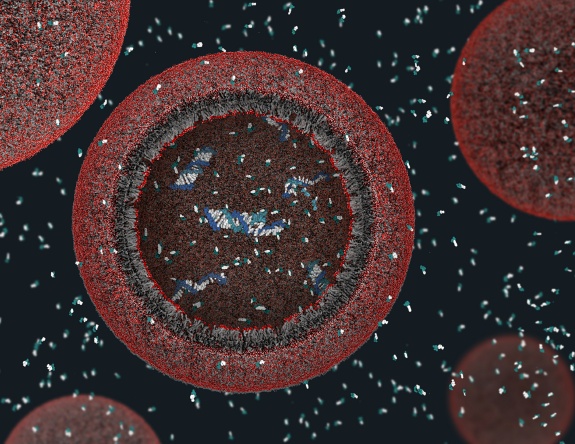
A team of researchers at Harvard University have modeled in the laboratory a primitive cell, or protocell, that is capable of building, copying and containing DNA.

Since there are no physical records of what the first primitive cells on Earth looked like, or how they grew and divided, the research team's protocell project offers a useful way to learn about how Earth's earliest cells may have interacted with their environment approximately 3.5 billion years ago.

The protocell's fatty acid membrane allows chemical compounds, including the building blocks of DNA, to enter into the cell without the assistance of the protein channels and pumps required by today's highly developed cell membranes. Also unlike modern cells, the protocell does not use enzymes for copying its DNA.

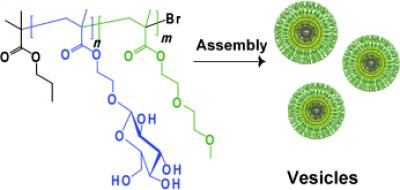
Cameron Alexander and George Pasparakis at the University of Nottingham have been able to facilitate a conversation between bacterial cells and artificial polymer vesicles by way of sugar groups on the vesicle surface.

For an organism to develop and function, the individual cells must exchange information, or communicate, with each other. Is it possible to learn their language and "talk to" the cells?

Apparently so. In the journal Angewandte Chemie Alexander and Pasparakis report that this first communication occurred by way of sugar groups on the vesicle surface. The vesicles subsequently transfer information to the cells—in the form of dye molecules.

Could macro-scale chemical engineering be used to stop a volcanic lava flow in its tracks and save potentially thousands of lives and homes when the next eruption occurs? R.D. Schuiling of Geochem Research BV, based in The Netherlands, thinks so.

During the 1960s, Schuiling pioneered the discipline of geochemical engineering, which involves the use of natural processes to solve environmental and civil engineering problems. He recently turned his attention to the ongoing problem of how to tame volcanic lava flows. Lava flows regularly threaten and sometimes destroy human settlements. In 1973, the Icelanders had some success slowing the advance of lava from Heimaey by dousing the flow with huge volumes of seawater. Meanwhile in Sicily, the town of Zafferana was saved from being ravaged by the 1991-1993 eruption cycle of Etna by huge earth walls built to divert the lava flow.