




By assessing electronic medical records (EMR) of 32,835 unique individuals from six Dallas-Fort Worth area hospitals, and noting abnormalities in temperature, heart rate, blood pressure, respiratory rate, and oxygen saturation within 24 hours of discharge, scholars determined that nearly 20 percent had one or more abnormalities, with elevated heart rate being the most common vital sign instability (affecting about 10 percent.) About 13 percent were readmitted or died, and individuals with three or more instabilities had a nearly four-fold increase in the odds of death.  

How to be a healthy eater depends on culture. A recent study shows that in the U.S. and Japan, people who fit better with their culture have healthier eating habits. The results appear in Personality and Social Psychology Bulletin.

"Our results suggest that if you want to help people to eat healthier--or if you want to promote any type of healthy behavior--you want to understand what meaning that behavior has in that culture, and what motivates people to be healthy in that culture," says lead author Cynthia Levine.

Healthy eating can help reduce one's risk for a number of different diseases down the line, including heart disease, type 2 diabetes, and certain types of cancer.

The Piltdown Man scandal is arguably the greatest scientific fraud ever perpetrated in the UK, with fake fossils being claimed as evidence of our earliest ancestor.

Published 100 years on from Dawson's death, new research reveals that the forgeries were created using a limited number of specimens that were all constructed using a consistent method, suggesting the perpetrator acted alone.

It is highly likely that an orang-utan specimen and at least two human skeletons were used to create the fakes, which are still kept at the Natural History Museum.

Health researchers predict that the transmission of dengue could actually decrease in a warmer climate, countering previous apocalyptic cocktail projections which included that the lethal virus would spread more easily.

Hundreds of millions of people are already infected with dengue each year, with some children dying in severe cases, so increasing a significant global health problem is an alarming concern. The model instead finds that a warmer climate would mean the ecologically useless mosquitoes that carry Dengue (and also Zika) would die off in the drier sections of the wet tropics of northeast Australia.

For years scientists and dieticians have argued over the health benefits of dietary fat. Research published this week, however, shows that piggybacking onto natural fat absorption pathways can dramatically enhance the utility of some drugs.

One of the key goals of drug development has long been to produce a therapy that can be taken orally (therefore cheap and easy to deliver) and is absorbed as directly and quickly into the blood stream as possible.

Many medications, however, are broken down in the liver before even making it into the blood stream. This is called "first past metabolism" whereby the drugs we swallow go via the gut and the liver (where breakdown occurs) before even entering the blood.

Nagoya, Japan - During cultivation of wild cereals such as rice for human agricultural use, a number of domestication-related traits have been selected for over time. These include an upright growth habit, the ability of the plant to keep its seed when ripe rather than dispersing it, and a lack of awns, which are bristles that grow from grass ears. Both Asian and African cultivated rice species share these traits despite their geographical isolation from each other. This suggests the traits' usefulness in promoting agriculture. Indeed, awnlessness aids planting, harvesting, and storage of seeds. It was recently shown that awn development has been lost through human selection on sets of genes that differ between Asian and African rice.

The upconversion of photons allows for a more efficient use of light: Two photons are converted into a single photon having higher energy. Researchers at KIT now showed for the first time that the inner interfaces between surface-mounted metal-organic frameworks (SURMOFs) are suited perfectly for this purpose - they turned green light blue. The result, which is now being published in the Advanced Materials journal, opens up new opportunities for optoelectronic applications such as solar cells or LEDs. (DOI: 10.1002/adma.201601718)

In recent years in Britain, we have heard much about bovine tuberculosis, which affects a wide variety of mammalian species, including mustelids, including the European badger Meles meles. There has been much argument over whether badgers should be culled to control the spread of the disease among cattle: indeed, badger culling in the United Kingdom has been a fraught and controversial subject.

In recent years, litigation attorneys and environmental epidemiologists have attempted to link flame retardants, which were put in furniture and electronics to prevent immolation by national mandate, to health problems. Studies have shown that the substances, or their constituents, can leach out of products, and end up in indoor dust,  over time. In a world where we can now detect parts per quadrillion, they can also be found in us.

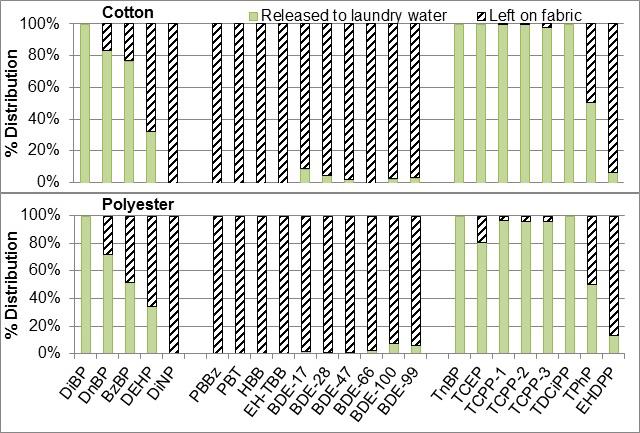
A new paper in Environmental Science&Technology discusses how flame retardants in our homes could also be ending up in surface water, via our laundry.

Heavy users of partisan media outlets are more likely than others to hold political misperceptions that are in defiance of facts. So if you think Republicans blocked Zika funding by withholding money for Planned Parenthood, or that Hillary Clinton is having DNC staffers whacked, it is a good indication you partake in fringe media sites.

