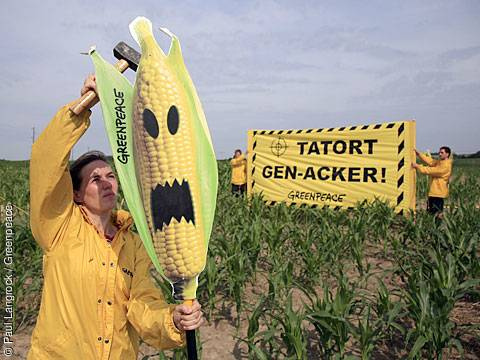

Some Americans may regard the half of U.S. science that works in academia as overtly partisan due to a lack of political diversity, but it doesn't affect science issues. Though the anti-vaccine, anti-GMO and anti-energy movements are overwhelmingly populated by the left, scientists readily attack those positions because evidence matters most to American scientists.

Not so much in Europe. American academia may have a political litmus test for getting a faculty job but that doesn't bleed over into science research. In much of Europe you are more likely to need to check off all of the correct cultural boxes to get a job in the first place. And you had better not deviate from the plan.
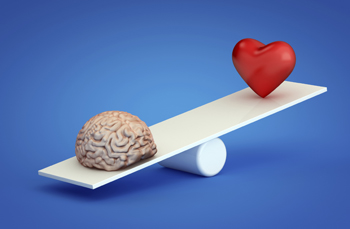
If you think of your 'sense of self', do you locate it in your heart or your brain? 

It can tell people a lot about your decision-making process. Obviously, advertising is one area.  Messages targeted at people with independent self-construals (your head tells you buying this car is the right decision because it has good value) will work better for those people than messages targeted at people with interdependent self-construals (Your heart tells you buying this car is the right decision because it has the highest safety ratings for families.) 

Our belief in evil influences our feelings about capital punishment, according to Donald Saucier, associate professor of psychology at Kansas State University and Russell Webster at St. Mary's College of Maryland.

They drew their conclusion after about 200 participants were given a summary of a case in which a murderer confessed to his crime. They then asked each participant about his or her support for different types of sentences, such as jail time with community service, jail time with the opportunity for parole, jail time without the possibility for parole and other options.

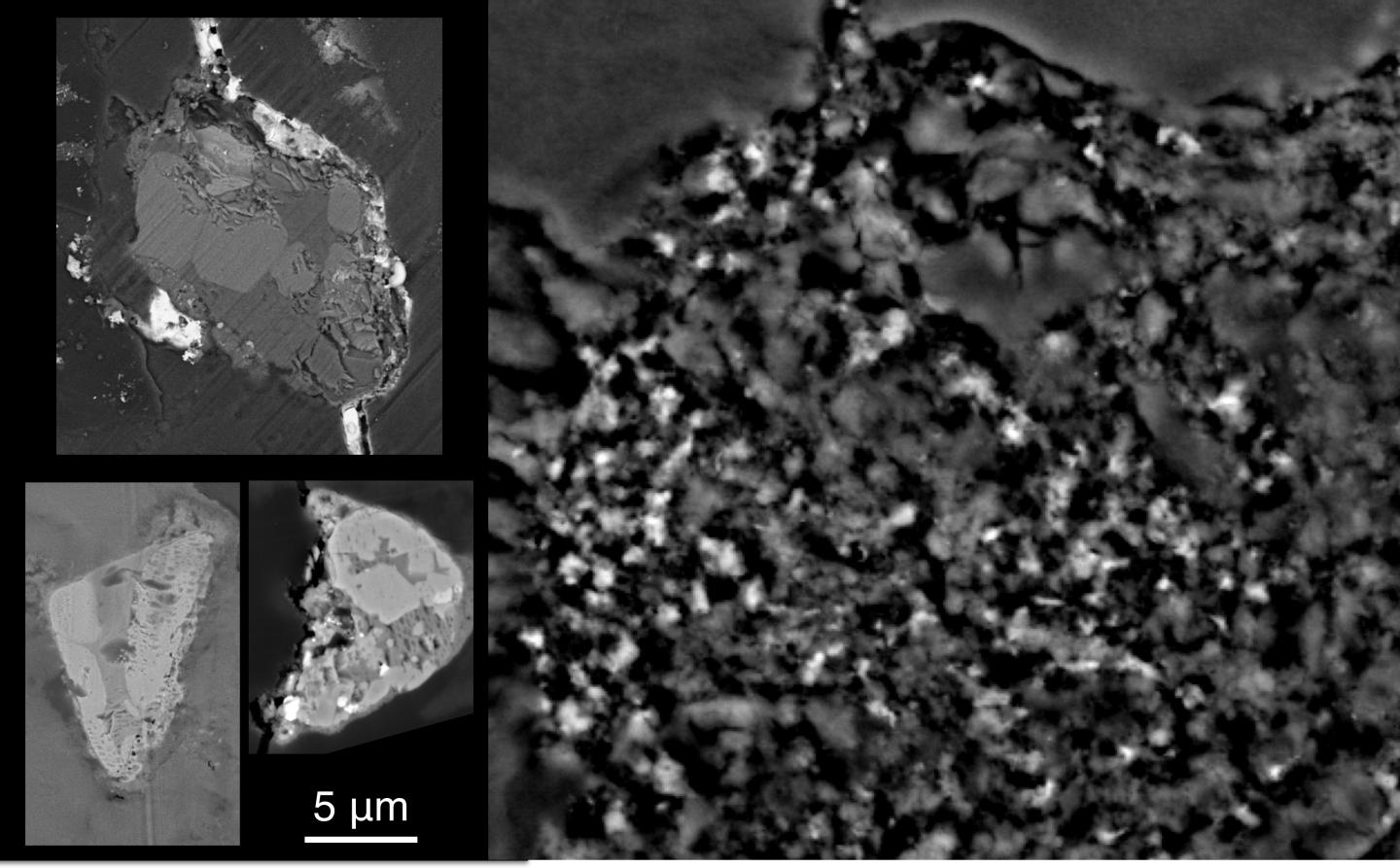
Our solar system started as a disk of microscopic dust, gas, and ice around the young Sun and the amazing diversity of planets, moons, asteroids, and comets came from this primitive dust. 

NASA's Stardust mission has returned to Earth with samples of comet Wild 2, a comet that originated outside the orbit of Neptune and was subsequently kicked closer to Earth's orbit in 1974 when Jupiter's gravity altered Wild 2's orbit. 

Can scientists learn from listening to public reaction to the products they develop? And should they?


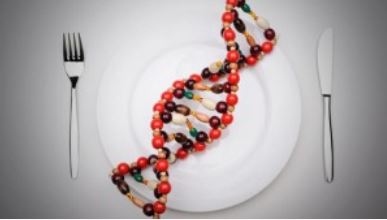
As a philosopher by training (and as a science journalist by profession) I am delving into ethical questions surrounding genetic modification. My reflections were triggered by an article by my friend Alle Bruggink, a professor in industrial chemistry at the University of Nijmegen in The Netherlands. He explored why the public remains suspicious about biotechnology – a surprise to many biotechnological researchers.

Many of us are familiar with electrolytic splitting of water from their school days: if you hold two electrodes into an aqueous electrolyte and apply a sufficient voltage, gas bubbles of hydrogen and oxygen are formed. If this voltage is generated by sunlight in a solar cell, then you could store solar energy by generating hydrogen gas.This is because hydrogen is a versatile medium of storing and using "chemical energy".

An international team, including archaeologists from the University of Southampton, has found evidence suggesting leprosy may have spread to Britain from Scandinavia.

The team, led by the University of Leiden, and including researchers from Historic England and the universities of Southampton, Birmingham, Surrey, and Swansea, examined a 1500 year old male skeleton, excavated at Great Chesterford in Essex, England during the 1950s.

The bones of the man, probably in his 20s, show changes consistent with leprosy, such as narrowing of the toe bones and damage to the joints, suggesting a very early British case. Modern scientific techniques applied by the researchers have now confirmed the man did suffer from the disease and that he may have come from southern Scandinavia.

Tomorrow at TedX Sydney’s Opera House event, high-profile neurosurgeon Charlie Teo will talk about brain cancer.

Last Saturday Teo was on Channel 9’s Sunrise program talking about the often malignant cancer that in 2012 killed 1,241 Australians.

During the program he said:

Unfortunately the jury is still out on whether mobile phones can lead to brain cancer, but studies suggest it’s so.

At the 2015 American Urological Association annual meeting in New Orleans, Dr. Jonathan Harper will present the findings of an FDA-registered "first in humans" trial to non-surgically propel and expel kidney stones from the body.

Harper and colleagues in the Department of Urology and Applied Physics Laboratory at the University of Washington have invented a new way to facilitate kidney stone passage or dislodge large obstructing stones, using ultrasound.

 Ultrasound technologies have been successfully used for many years on the International Space Station (ISS), primarily to perform imaging of the astronauts' eyes, bones, and internal organs.

Males rule in most of the animal world. But when it comes to conventional gender roles, lemurs -- distant primate cousins of ours -- buck the trend. Lemur girls behave more like boys, thanks to a little testosterone.