









A broccoli variety modified to have two to three times more of the naturally occurring compound glucoraphanin, which is linked to antioxidants and other health benefits, also reduces blood LDL-cholesterol levels by around 6%, according to results of human trials. 

Glucoraphanin is thought to work by helping maintain cellular metabolism. Mitochondria, the energy factories of the cell, convert sugars and fats into energy, but if they aren't working efficiently, one response is to channel excess into cholesterol.  
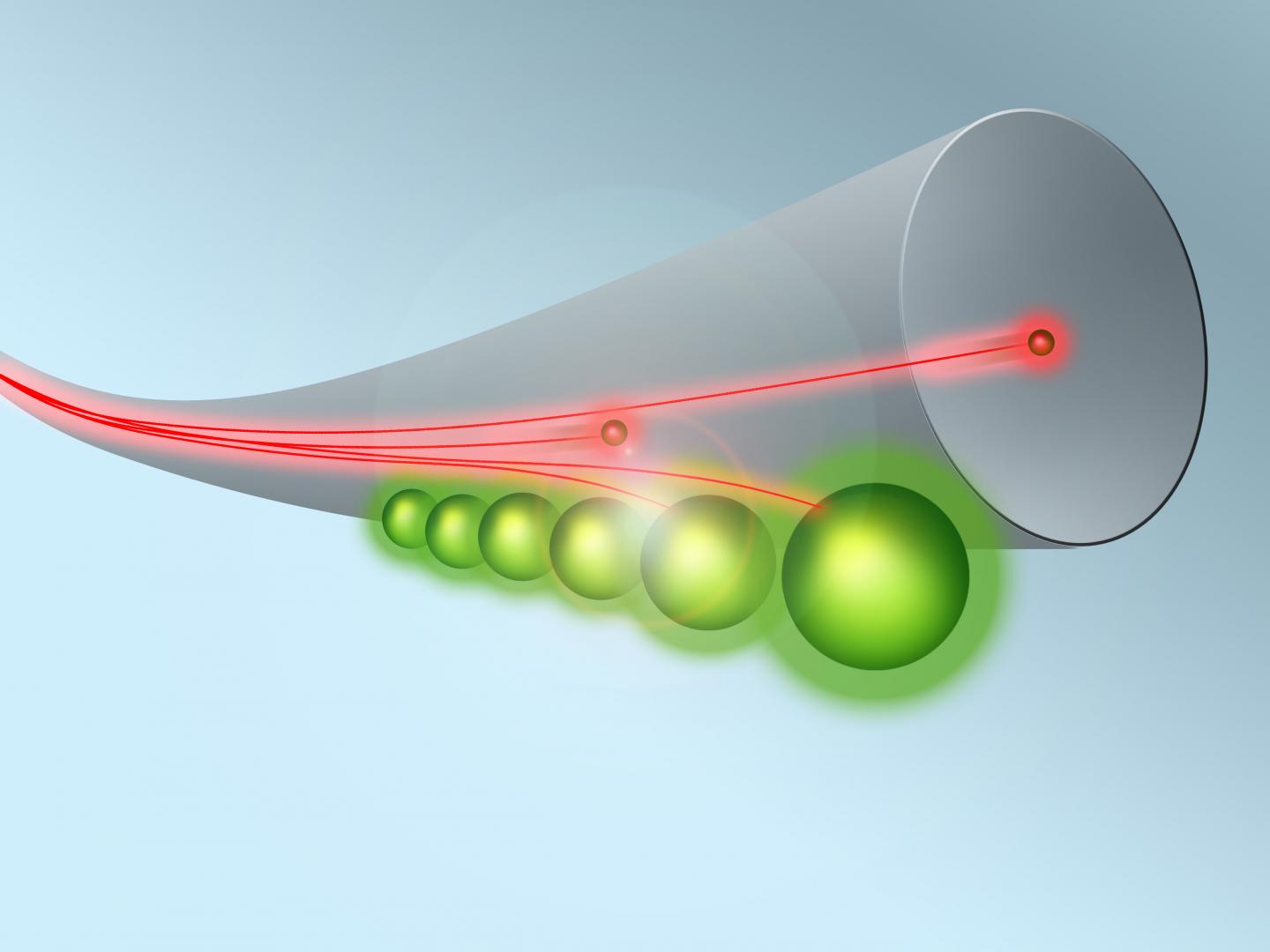
Light is a useful tool for quantum communication, but it has one major disadvantage - it travels at the speed of light and sometimes things need to be kept in place, or at least slowed down.

Like with trains all sharing a track, you can't have one express line with no brakes for very long. 

A team researchers has demonstrated they can put the brakes on light, and not in some arcane quantum system but rather in glass fiber networks we are already using today. By coupling atoms to glass fibers light was slowed down to train speed - 90 miles per hour - and they even managed to bring the light to a complete stop and to retrieve it again later.

Life has adapted to all sorts of extreme environments on Earth, among them, animals like the deer mouse, shimmying and shivering about, and having to squeeze enough energy from the cold, thin air to fuel their bodies and survive.

In a new paper, Scott, Cheviron et al., have examined the underlying muscle physiology from a group of highland and lowland deer mice. Peromyscus maniculatus - deer mice - were chosen because they exhibit the most extreme altitude range of any North American mammal, occurring below sea levels in Death Valley to more than 4,300 meters high in the mountains. 

Researchers have taken a step toward using the implantation of stem cell-generated neurons as a treatment for Parkinson's disease.

 Parkinson's, which affect as many 10 million people in the world, is linked to a depletion of dopamine-producing neurons in the brain. Current treatments include medications and electrical implants in the brain which cause severe adverse effects over time and fail to prevent disease progression. Several studies have indicated that the transplantation of embryonic stem cells improves motor functions in animal models but the procedure has shown to be unsafe, because of the risk of tumors upon transplantation. 


A new analysis of the long-necked dinosaur family tree says Apatosaurus excelsus is oh so wrong and Brontosaurus is oh so right.

Just like a hundred plus years ago.

Science is considered a source of truth and the importance of its role in shaping modern society cannot be overstated. But in recent years science has entered a crisis of trust.

The results of many scientific experiments appear to be surprisingly hard to reproduce, while mistakes have highlighted flaws in the peer review system. This has hit scientific credibility and prompted researchers to create new measures in order to maintain the quality of academic research and its findings.

Particle physics is so cool - you get to build huge detectors with a specific goal clearly stated in your letter of intents and technical proposals, but are then allowed to use them to study many other things.

Clearing grasslands to make way for biofuels may seem counterproductive, but University of Wisconsin-Madison researchers show in a study today (April 2, 2015) that crops, including the corn and soy commonly used for biofuels, expanded onto 7 million acres of new land in the U.S. over a recent four-year period, replacing millions of acres of grasslands.

Is there any point to the World Health Organization (WHO) making a recommendation that 3 people out of 1,000 can achieve? If not, Americans won't take WHO seriously, and the British respect those guidelines even less. Only 1 in 1,000 in the UK can meet WHO's targets for potassium and sodium.

The World Health Organization recommends we consume no more than 2,000 mg of sodium a day - less than a teaspoon of salt - supposedly because of studies showing it impacts heart disease and stroke. And they recommend at least 3,510 mg of potassium daily, again to lower our odds of heart disease and stroke.

A new study of 311 childless Danish women initiating assisted reproduction using donor semen finds that single women seeking treatment are no different than cohabiting women seeking treatment when it comes to sociodemographic characteristics or attitudes toward motherhood

The authors used baseline data collection in a multicenter cohort study from alll nine public fertility clinics in Denmark to examine sociodemographic characteristics, family backgrounds, reproductive histories, and attitudes towards motherhood in single vs. cohabiting women seeking treatment with donor semen.

