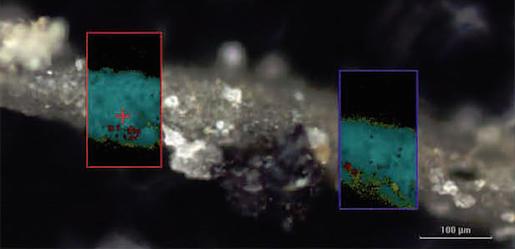











A new study demonstrates for the first time how elemental carbon became an important construction material of some forms of ocean life after one of the greatest mass extinctions in the history of Earth more than 252 million years ago. 

As the Permian Period of the Paleozoic Era ended and the Triassic Period of the Mesozoic Era began, more than 90 percent of terrestrial and marine species became extinct.

Various proposals have been suggested for this extinction event, including extensive volcanic activity, global heating, or even one or more extraterrestrial impacts.

How we get along as siblings is a deeply personal issue and profoundly effects our lives as individuals. It’s an issue that crosses cultures and economies, levels of class and fame.

This point was reinforced to me when I did an interview on the Today Show about the importance of sibling conflict. Co-host Karl Stefanovic torpedoed in at the end and dismissed everything I was saying as nonsense. He made it clear that his lifelong domination of his younger brother, Peter, is perfectly normal and acceptable. If anything he seemed to be very proud of it.

A new study has found that nearly all pancreatic cancers enslave and deform mitochondria, the powerhouses of cells, and force them to divide unnaturally, to lose their normal shape and collapse around the cell's nucleus. 

This creates an environment even more conducive to tumor growth. 

John Baez writes in "The Crackpot Index - A simple method for rating potentially revolutionary contributions to physics":

Sulfolobus islandicus microbes can go dormant, ceasing to grow and reproduce, in order to protect themselves from infection by Sulfolobus spindle-shaped virus 9 (SSV9).

The dormant microbes are able to recover if the virus goes away within 24 to 48 hours, otherwise they die.  

Sulfolobus is a species of archaea (a domain of single-celled organisms distinct from bacteria) found in acidic hot springs all over the world, where free viruses are not as common as in other environments. These microbes will go dormant in the presence of just a few viruses, whether active or inactive. While inactivated virus particles cannot infect a host, researchers found they could still cause dormancy, and ultimately, death in Sulfolobus. 

Today most people do not get enough sleep.

The Centers for Disease Control and Prevention (CDC) has called insufficient sleep an epidemic.

While we are finally paying attention to the importance of sleep, the need for dark is still mostly ignored.

That’s right. Dark. Your body needs it too.

Being exposed to regular patterns of light and dark regulates our circadian rhythm. Disruption of this rhythm may increase the risk of developing some health conditions including obesity, diabetes and breast cancer

Inhalable particles include all particulate matter with a diameter smaller than 10 micrometers (PM10), which is broken down into finer particles smaller than 2.5 micrometers (PM2.5), which can enter the lung, and ultrafine particles with diameters less than 0.1 micrometers (100 nanometers), which can enter the blood stream.

Last summer’s Lake Erie toxic algae outbreak shut down the water supply for almost half a million people in Toledo and the surrounding suburbs.

Bottled water ran out in stores across the area, and residents fled the city in search of clean water — an option not available to Lake Erie’s diverse and fascinating array of wildlife.

The resulting call for action focused on setting toxin standards and reducing discharges of the fertilizer phosphorus, the primary driver of the toxic algae, to Lake Erie.

America has expensive health care but it also has the best health care. As the Federal government has discovered in trying to implement the Affordable Care Act, giving something away for free will not maintain that level of quality.

Instead, the future could be one where there are two classes of care - those with private insurance and those without. Higher treatment costs are already linked to better survival rates, according to a study by Yale School of Medicine researchers in the Cancer Outcomes Public Policy and Effectiveness Research (COPPER) Center at Yale School of Medicine and Yale Cancer Center.  

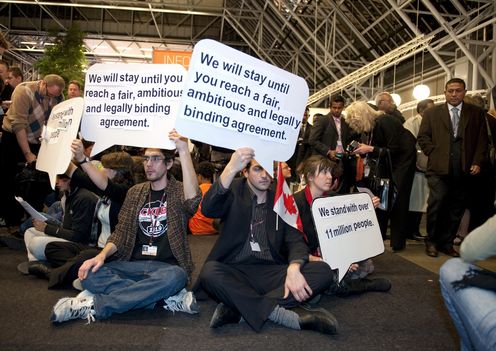
With only nine months to go before the most important international meeting on climate change since Copenhagen in 2009, what are the chances of success at this year’s Paris talks?

What might “success” mean?

And can the mistakes and challenges that have befallen previous meetings be avoided and tackled?

To help address these questions, let’s first dispense with three pervasive myths that continue to make the task of achieving an adequate global response to climate change harder.

Myth 1: the international climate negotiations have failed

