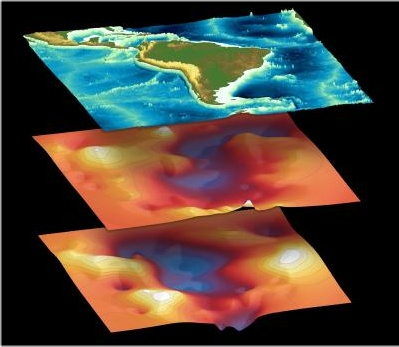







The same processes that determined how continents were generated on Earth more than 2.5 billion years ago have continued within the last 70 million years - and they profoundly affect the planet's current life and climate.

A new study details how relatively recent geologic events , namely volcanic activity 10 million years ago in what is now Panama and Costa Rica, hold the secrets of the extreme continent-building that took place billions of years earlier. This provides new understanding about the formation of the Earth's continental crust, the masses of buoyant rock rich with silica, a compound that combines silicon and oxygen. 


There has been much press lately about President Obama’s plan to address the growing crisis of antibiotic-resistant bacterial pathogens. And I agree with many that there is much to like in the plan.  But I also find a number of key deficiencies that will lead us nowhere.


The goals of the plan are all laudable –

Government subsidies for renewable energy rebounded strongly last year, registering a solid 17% increase after two years of declines. Major expansion of solar installations in China and Japan and government=backed investments in offshore wind projects in Europe helped propel green energy spending to $270 billion.

The 2010 eruption of the Icelandic volcano Eyjafjallajökull grounded thousands of air flights and spread ash over much of western Europe, yet it was puny compared to the eruption 200 years ago of Tambora, a volcano that probably killed more than 60,000 people in what is now Indonesia and turned summer into winter over much of the Northern Hemisphere.

Saurichthys is a predatory fish characterized by a long thin body and a sharply pointed snout with numerous teeth. This distinctive ray-finned fish lived in marine and freshwater environments all over the world 252-201 million years ago during the Triassic period.

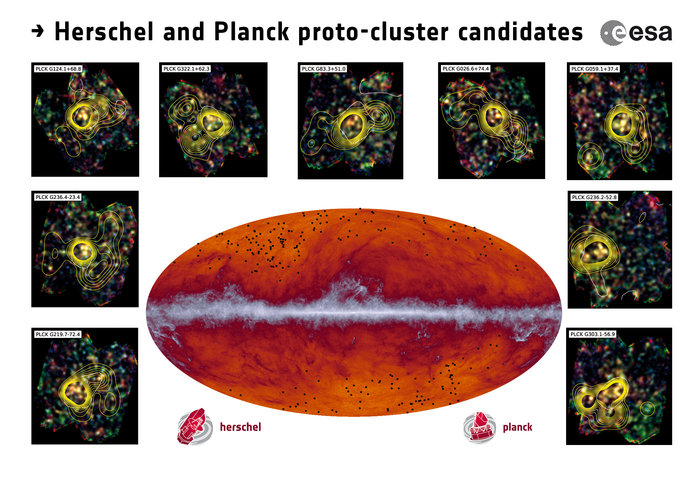
Cosmologists may have discovered what could be the precursors of the vast clusters of galaxies that we see today. Galaxies like our Milky Way, with its 100 billion stars, are usually not found in isolation. 13.8 billion years after the Big Bang, many are in dense clusters of tens, hundreds or even thousands of galaxies. 

Triple-negative breast cancers are around 15% of all breast cancers and they lack any of the three receptors (oestrogen, progesterone or HER2) that would make them responsive to targeted drugs.

Triple-negative breast cancer patients have a higher risk of disease recurrence and shorter survival than those with other breast cancers and tend to fall into two categories: those that succumb to their disease within 3-5 years, regardless of treatment; and those that remain disease free for longer than the average non-triple-negative breast cancer patient (at least 8 years post-diagnosis).  Survival prospects tend to be either very good or very bad because triple-negative breast cancers are two distinct diseases that likely originate from different cell types.

Up to 1 billion people globally have insufficient or deficient vitamin D levels even though many western nations fortify milk with it. The reason is lack of sun exposure in some places but with a culture war on both sunshine and diet low vitamin D levels have become more common, even for elite college athletes, according to a new study. 

But don't be duped into buying supplements, you can get it from your diet. Just eat more fish.

The work found that more than one-third of Division I college athletes may have low levels of vitamin D, which is critical in helping the body to absorb calcium needed to maintain bone mass, and to minimize musculoskeletal pain and injury risk.

Though the Intergovernmental Panel on Climate Change (IPCC) has asked science journalists and political writers wearing a scientific beard to not attribute every weather event to climate change, it is still common to have every storm, drought and temperature to be listed as proof of climate change.

But that isn't science.  Scientists at the California Institute of Technology (Caltech) and ETH Zurich have instead shown that global warming actually tends to reduce temperature variability.
Compared to most languages in the developed world, Icelandic is quite conservative. Formal German is almost useless in actual German society due to slang and informal terms, for example, while English has few rules but so many exceptions and colloquial phrases it can be difficult for tourists to understand eating in a restaurant.

Icelandic, by contrast, has a vocabulary well preserved in Old Norse roots and Icelanders want to keep it that way.  The purist tradition of preferring native words to foreign ones is thought to be connected to Iceland’s long process of liberation from Denmark, which was noticeable in the Icelandic language from the second half of the 19th century to some decades after the final independence in 1944.


